Laser Welding vs MIG Welding: Which One to Choose
Choosing between laser welding and MIG welding depends on your specific manufacturing requirements. Laser welding technology excels in precision applications where minimal heat input and superior accuracy are crucial, making it ideal for the automotive, aerospace, and electronics industries. A modern laser welding machine delivers unmatched speed and quality for thin materials and complex geometries. Conversely, MIG welding offers versatility and cost-effectiveness for heavy industrial applications, thick materials, and general fabrication work. Your decision should align with factors including material thickness, production volume, precision requirements, and budget considerations.
Introduction
Advanced welding technologies play a major role in modern production to guarantee both operational efficiency and product quality. Your production throughput, precise capabilities, and overall cost-effectiveness can all be significantly impacted by your decision between laser and MIG welding. Decision-makers in production and procurement must comprehend these technologies.
Laser welding is the best option for high-accuracy applications in a variety of sectors because it uses a high-energy concentrated beam to produce incredibly clean and accurate welds. When working with thin materials, fragile assemblies, and components that need to have as little thermal distortion as possible, this method performs exceptionally well.
In contrast, MIG welding uses a wire feed system in conjunction with shielding gas to provide strong, adaptable welding solutions. When flexibility and convenience of use are more important than perfect precision, this method works especially well with thicker materials and a variety of substrates.
Critical elements, including material compatibility, manufacturing volume needs, quality standards, and long-term operating expenses, are all evaluated throughout the selection process. Understanding each technology's capabilities will help you match your welding solution with certain company goals and production requirements. Both technologies serve different manufacturing needs.
Understanding the Core Differences Between Laser Welding and MIG Welding
Fundamental Operating Principles
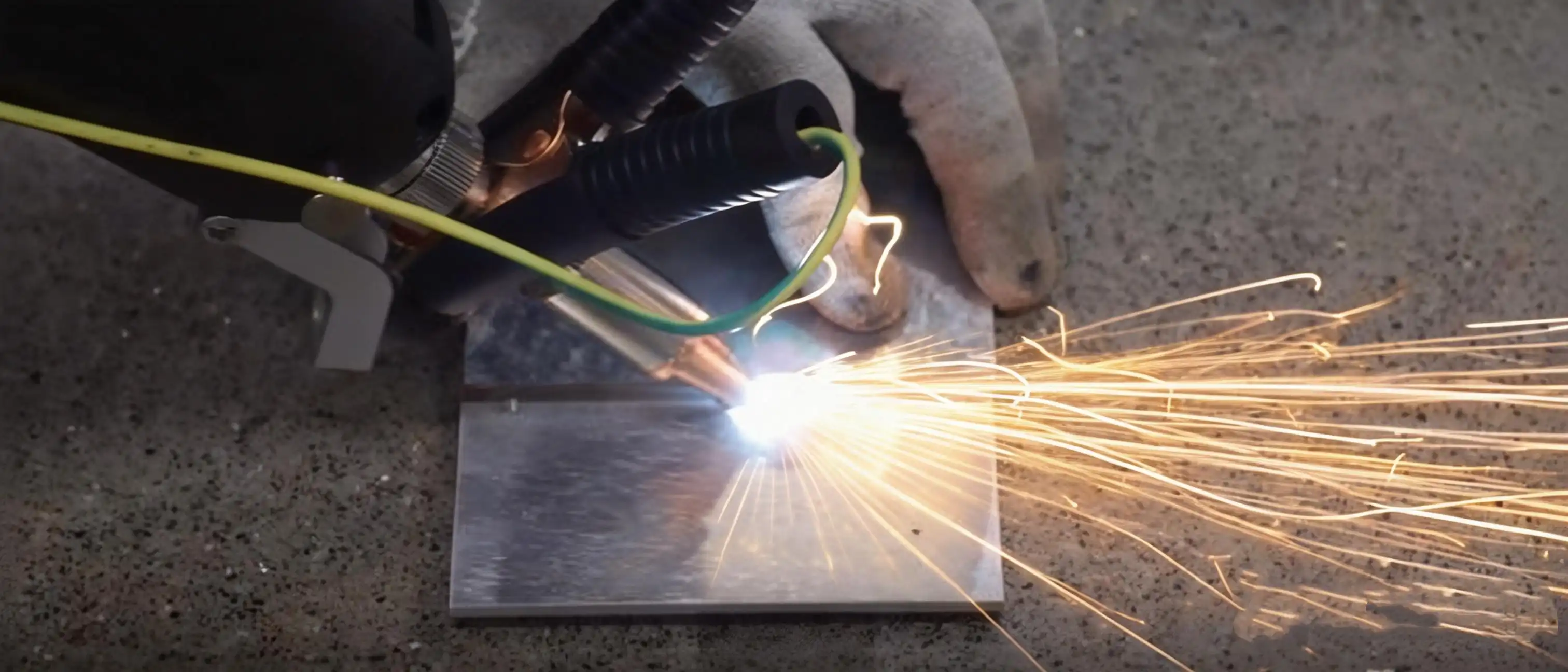
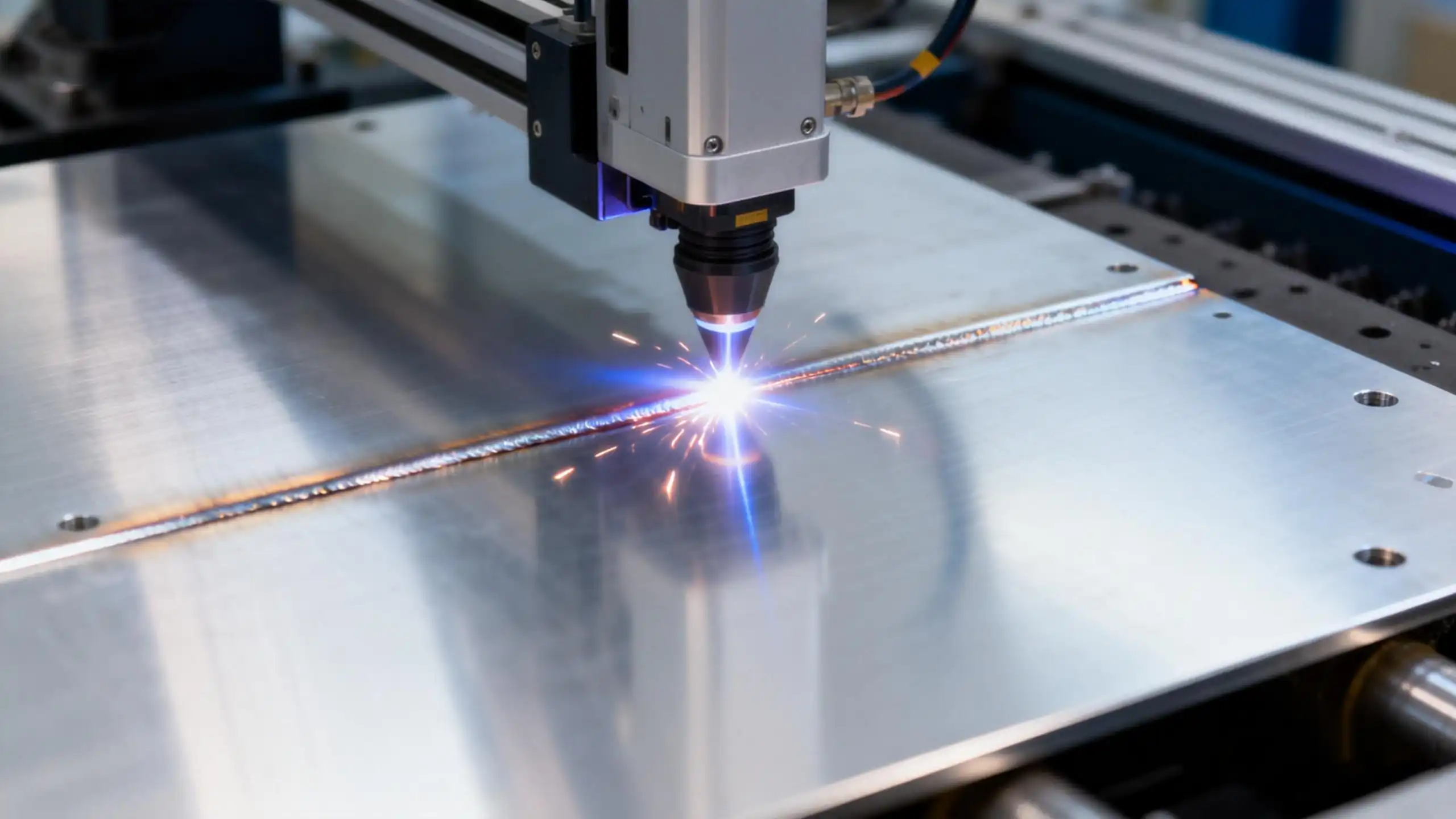
The laser welding technique uses concentrated light energy to create a highly controlled heat source. In a particular area, the focused beam generates temperatures beyond 10,000°C, enabling rapid material fusing with minimal heat-affected zones. This concentrated energy source allows for excellent control over weld form and penetration depth.
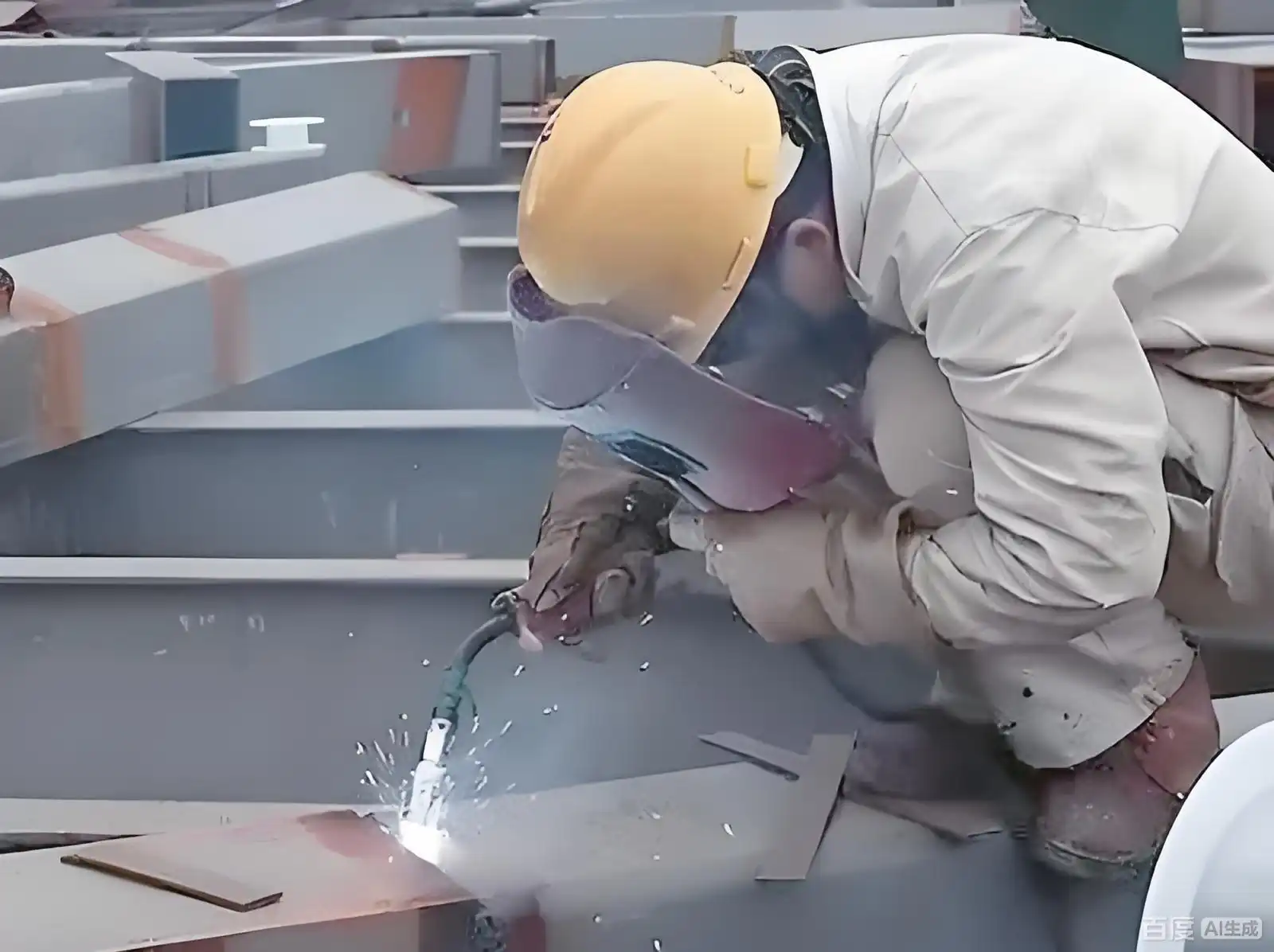
During MIG welding, a continuous wire electrode feeds into the weld pool and uses protective gas to shield the molten metal from airborne impurities. In contrast to laser technology, the electric arc that develops between the wire and base material creates a greater heat-affected zone.
Speed and Precision Comparison
For laser systems, speed is a crucial benefit. Particularly on thin materials, modern fiber laser welding equipment may achieve welding rates up to ten times quicker than conventional MIG techniques. Increased production throughput and shorter cycle times are directly correlated with this velocity advantage.
These technologies differ greatly in their precision capabilities. Precision assembly and complex work on electronic components are made possible by laser welding, which provides positional accuracy within 0.1 mm. Even while MIG welding is quite powerful, its accuracy ranges are usually between 1 and 2 mm, which makes it appropriate for structural applications where precision is not crucial.
Material Compatibility and Thickness Range
Although it works best on smaller portions, laser welding machine works best on materials with thicknesses between 0.1 and 20 mm. The technology handles dissimilar metals effectively, including aluminum-steel combinations that challenge traditional welding methods.
On thicker materials, MIG welding performs exceptionally well, handling portions ranging from 1 mm to 50 mm or more. The method works especially well on steel, stainless steel, and aluminum applications and can handle a wider variety of filler materials.
Evaluating the Benefits and Limitations of Each Welding Method
Laser Welding Advantages and Challenges
Beyond only increasing precision, laser welding technology has several advantages. The following are the main benefits that make this technology appealing for contemporary manufacturing:
• Minimal thermal distortion reduces post-weld machining and finishing requirements, particularly beneficial for precision components
• High-speed processing enables dramatic productivity improvements, especially on thin materials and high-volume production runs
• Superior weld quality creates clean, smooth joints with minimal spatter and excellent mechanical properties
• Automation compatibility allows seamless integration with robotic systems and automated production lines
• Non-contact processing eliminates tool wear issues and enables welding in confined spaces or complex geometries
These benefits successfully address production issues pertaining to requirements for precise manufacturing, throughput, and quality consistency in a variety of sectors.
Manufacturers must take into account the limits of laser systems, though. Careful ROI analysis is necessary since equipment prices are still much greater than those of traditional alternatives. The technology requires certain maintenance procedures and operator training. Certain metals, especially highly reflective alloys like copper and aluminum, might provide problems due to material reflectivity.
MIG Welding Strengths and Limitations
MIG welding technology offers compelling advantages for many manufacturing scenarios. The key benefits include:
• Cost-effectiveness provides accessible welding solutions with lower initial investment requirements and reduced operational costs
• Operator accessibility enables faster training programs and broader availability of skilled technicians
• Versatile material compatibility accommodates diverse base materials and filler wire combinations for varied applications
• Thick section capability delivers excellent penetration and joint strength on heavy structural components
• Field repair suitability offers portable solutions for maintenance and on-site fabrication requirements
These advantages make MIG welding particularly helpful in shipbuilding, construction, and general fabrication applications where flexibility and cost control are crucial factors.
Environmental sensitivity, spatter production that requires post-weld cleanup, and consistency problems that might reduce manufacturing quality are some of the limitations. The larger heat-affected zone may limit use in high-accuracy manufacturing environments and cause distortion issues on precision components.
Practical Applications and Industry Use Cases
Laser Welding in High-Precision Industries
Automotive manufacturing represents one of the largest applications for laser welding technology. Modern automotive plants utilize laser welding machines, including fiber laser systems, for joining lightweight aluminum body panels, creating strong, clean welds that maintain vehicle aesthetics while meeting crash safety requirements. The technology proves particularly valuable for electric vehicle battery pack assembly, where precision and joint integrity are crucial.
The outstanding quality that laser welding provides is required for aerospace applications. The low heat input and excellent mechanical qualities are advantageous for turbine blades, structural components, and aircraft engine parts. Innovative design solutions are made possible by the ability to weld disparate materials while upholding the high levels of quality necessary for aviation applications.
The manufacturing of semiconductors and devices depends on precise welding abilities. Laser technology can handle delicate materials without producing heat damage, as shown in the production of precision instruments, the assembly of medical devices, and the micro-welding of electronic components.
MIG Welding in Heavy Industry Applications
The MIG welding technique has historically found strongholds in shipbuilding and maritime construction. MIG welding is essential for maritime applications because it can handle big steel plates, operate in harsh environments, and offer affordable solutions. Requirements for corrosion resistance and structural integrity fit very nicely with MIG capabilities.
The field mobility and flexibility of MIG welding are advantageous for construction and infrastructure projects. The technology's capacity to provide robust, dependable connections in a variety of materials and climates is essential for pipeline installation, bridge construction, and building construction.
Heavy machinery manufacturing utilizes MIG welding for fabricating robust components that withstand demanding operational conditions. The technology's thick section capability and strong joint characteristics prove essential for equipment subject to high stress and vibration loads.
Procurement Decision-Making: Choosing the Right Welding Machine
Cost Analysis and ROI Considerations
Investment decisions require comprehensive analysis beyond initial equipment costs. Laser welding systems command higher upfront investment but deliver operational advantages that can justify the expenditure through improved productivity and quality outcomes. Energy efficiency, reduced finishing requirements, and faster cycle times contribute to overall cost benefits.
MIG welding equipment offers lower entry costs and broader service network availability, reducing long-term maintenance expenses. The technology's established infrastructure and widespread technician availability create operational advantages for many manufacturing environments.
Technology Selection Criteria
Production volume requirements significantly influence technology selection. The speed and consistency benefits of laser welding are advantageous for high-volume manufacturing processes, whereas the flexibility of MIG welding may be preferred in lower-volume or diversified production circumstances.
Quality requirements represent another critical factor. Laser welding skills are usually needed for applications that need excellent accuracy, low distortion, or enhanced visual appeal. MIG welding properties may be more appropriate for structural applications where joint strength and penetration are crucial.
Material considerations affect technology suitability. Thin materials, heat-sensitive alloys, and precision assemblies favor laser welding, while thick sections and general structural materials work well with MIG technology.
Perfect Laser: Your Trusted Partner for Advanced Welding Solutions
Perfect Laser Co., Ltd. is a renowned producer of industrial laser equipment with more than thirty years of innovation and welding industry experience. Since 1995, we have been a dependable partner for manufacturers in the automotive, aerospace, electronics, and heavy industrial sectors because of our commitment to developing cutting-edge laser technology.
Our comprehensive laser welding machine portfolio addresses diverse manufacturing requirements with specialized solutions. The channel letter laser welding machine delivers precision joining for signage and architectural applications, while our double-path channel letter welder enhances productivity through dual-operation capability. Spot jewelry laser welding systems provide the micro-precision required for precious metal applications, ensuring virtually invisible seams and exceptional finish quality.
Our continuous laser welding equipment, which has sophisticated fiber laser sources that provide reliable, fast performance over long production runs, is useful for industrial applications. The laser welder made specifically for the mold and kitchenware industries meets their unique needs and offers dependable solutions for both consumer product manufacture and precise tooling.
Our innovative 3-in-1 welding, cutting, and cleaning systems represent the future of manufacturing versatility. These advanced machines feature LCD control boards for intuitive operation, continuous fiber laser sources for reliable performance, and mobile, flexible designs that adapt to diverse production environments. The handheld welding gun configuration enables precise work on complex geometries while maintaining compact footprint requirements.
High-precision positioning, quick processing rates, pollution-free operation, and smooth welding surfaces that reduce post-processing needs are some of the technological benefits of Perfect Laser systems. These skills are useful in the automobile, electronics, steel, aerospace, shipbuilding, and luxury goods sectors.
In our activities, quality assurance is still crucial. While TUV and SGS certificates show our dedication to global quality standards, CE accreditation attests to the safety and performance standards of our equipment. With the help of two specialized R&D facilities and 63 patents that propel technical progress, our skilled development team blends software know-how with hardware innovation.
Conclusion
The decision between MIG and laser welding machines is based on your production goals, quality standards, and particular manufacturing needs. Particularly useful for the production of electronics, automobiles, and aircraft, laser welding technology performs very well in precise applications requiring low distortion and high speed. For heavy industry applications needing robust joint properties and thick section capacity, MIG welding offers cost-effective adaptability. Making educated judgments that match welding technology with your operational requirements and corporate objectives is made possible by being aware of these basic distinctions.
Frequently Asked Questions
1. What safety precautions are essential for laser welding operations?
Comprehensive safety measures, such as appropriate eye protection, ventilation systems for fume extraction, and training on laser safety practices, are necessary for laser welding. To ensure safe working conditions, operators must be aware of emergency shutdown protocols and beam containment concepts.
2. How do maintenance requirements compare between laser and MIG welding systems?
Specialized maintenance is needed for laser systems, such as cooling system service, fiber integrity monitoring, and optics cleaning. MIG equipment requires routine replacement of consumables, gas delivery system inspections, and wire feed mechanism maintenance. Preventive maintenance procedures enhance the longevity and performance of both technologies.
3. Are leasing options available for welding equipment purchases?
Many manufacturers provide a range of financing alternatives, including lease agreements, equipment loans, and rental programs. These options give companies access to state-of-the-art welding technology while effectively managing capital expenditures and cash flow requirements.
Partner with Perfect Laser for Your Welding Success
Ready to transform your manufacturing capabilities with advanced welding technology? Perfect Laser offers personalized consultations to help you select the ideal laser welding machine for your specific applications. Our expert team provides comprehensive support from initial assessment through installation and ongoing technical assistance. As a leading laser welding machine manufacturer, we deliver proven solutions backed by nearly 30 years of industry experience. Contact our specialists at [email protected] to discuss your requirements and discover how our innovative welding systems can enhance your production efficiency.
References
1. Zhang, W., & Chen, L. "Comparative Analysis of Laser and MIG Welding Technologies in Modern Manufacturing." International Journal of Advanced Manufacturing Technology, 2023.
2. Johnson, R.M. "Industrial Welding Processes: Selection Criteria and Performance Optimization." Materials Science and Engineering Review, 2022.
3. Smith, A.K., et al. "Laser Welding Applications in Automotive and Aerospace Industries: A Comprehensive Study." Welding Technology International, 2023.
4. Brown, D.P. "Cost-Benefit Analysis of Advanced Welding Technologies in Manufacturing Operations." Industrial Engineering Quarterly, 2022.
5. Martinez, C.S. "Quality Control and Precision Requirements in Modern Welding Applications." Manufacturing Excellence Journal, 2023.
6. Thompson, J.H. "Technological Advances in Laser and Arc Welding: Performance Comparison and Selection Guidelines." Welding Research International, 2022.

share your inquiry, get the quotation accordingly.
第一张审核员说包含其他公司不能用_1755049724891.webp)
Perfect Laser – Global Manufacturer of Reliable Laser Solutions


