Rotary Pin Marking vs Laser Marking: Which Is Better in 2026?
In 2026, your business needs will determine whether rotating pin marking or laser marking is best for you. A dot pin marking machine uses mechanical indentation to make lines that last. This makes it perfect for heavy-duty uses on metals and hard plastics where depth and sturdiness are important. Laser marking is the fastest and most accurate way to mark on sensitive materials and patterns with lots of small details. Even though both technologies have come a long way, rotary pin marking is still the best option for industries like automotive, aircraft, and manufacturing that need strong tracking marks that can work in harsh conditions without having to pay more for laser systems.
Understanding Rotary Pin Marking and Laser Marking Technologies
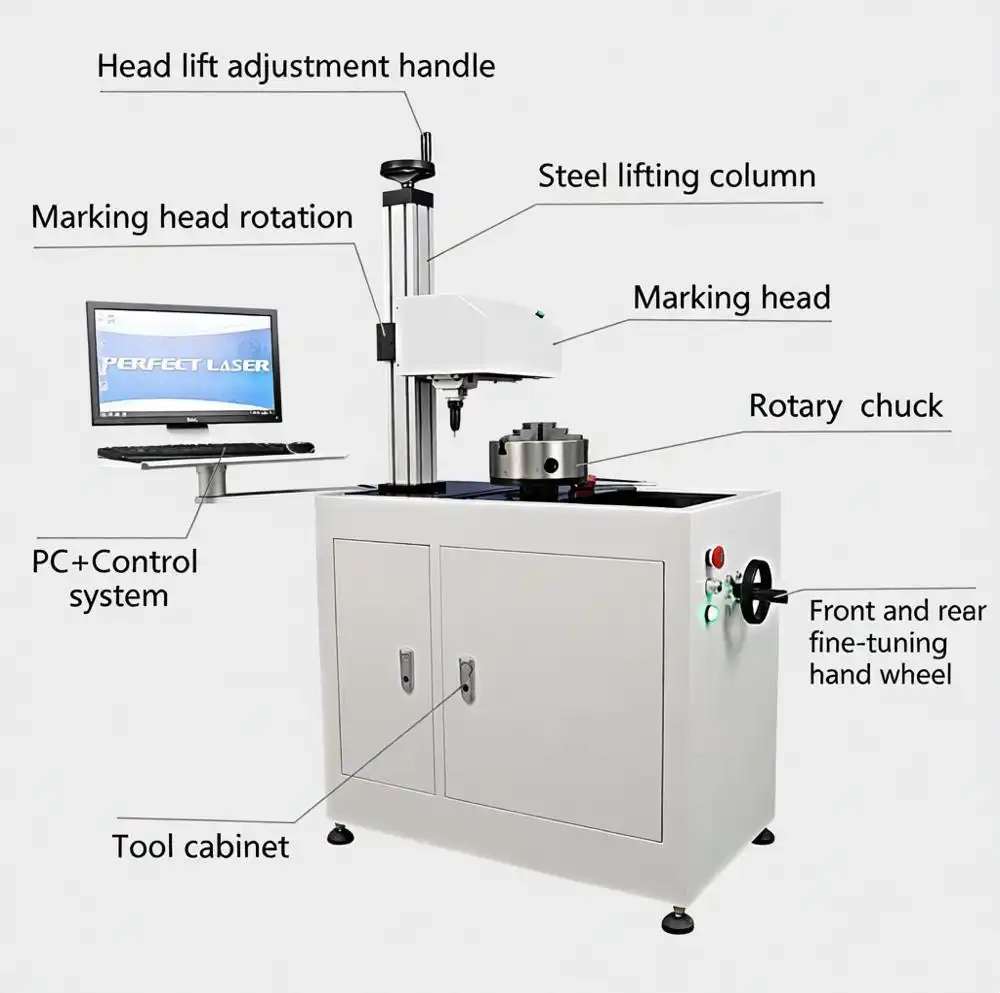
How Rotary Pin Marking Works?
Rotary pin marking works by repeatedly striking a surface with a carbide or diamond-tipped stylus, creating closely spaced indentations that form characters, codes, and logos. A computer-controlled system precisely guides the pin on flat or curved surfaces without removing material. These permanent marks penetrate the substrate, ensuring long-term readability even under harsh chemical or mechanical exposure. Modern systems use electric or pneumatic drives for precise depth and speed control. Equipment like the PEQD-250G supports both flat and rotary marking, making it suitable for diverse industrial components.
Laser Marking Fundamentals
Laser marking uses a focused beam of light to alter material surfaces through ablation, color change, or micro-engraving without physical contact. Fiber lasers are ideal for metals, CO2 lasers for organic materials, and UV lasers for sensitive substrates. The non-contact process eliminates tool wear and enables extremely fine precision. Advanced galvanometer systems allow high-speed marking in automated lines. However, laser systems require higher investment, strict safety controls, and careful material matching, making cost and application suitability key decision factors for industrial users.
Comparing Performance and Precision: Rotary Pin Marking vs Laser Marking
Marking Quality and Surface Compatibility
Rotary pin marking, performed using a dot pin marking machine, produces deep, durable indentations typically between 0.05 mm and 0.3 mm, ensuring readability even after coating or finishing processes. This makes it ideal for lifecycle traceability in automotive and aerospace industries. In contrast, laser marking excels in fine detail but may struggle with reflective or coated materials. Pin marking provides consistent results across varied surfaces due to its mechanical penetration, while laser systems rely heavily on surface interaction and optical properties, affecting performance consistency in some industrial environments.
Speed, Automation, and Production Integration
Rotary pin systems typically mark serial numbers within 3–15 seconds per part, depending on complexity and depth. While slower than laser systems for high-density graphics, they are sufficient for most industrial identification tasks. Laser marking offers faster cycle times for complex designs, integrating well with high-speed production lines. However, many manufacturers find pin marking adequate for throughput needs while offering better durability and lower operating costs, making it a balanced choice for medium-to-high volume production environments.
Maintenance Requirements and Total Cost Analysis
Pin marking systems require minimal maintenance, mainly stylus replacement, cleaning, lubrication, and occasional updates. Styluses can last millions of impacts depending on usage conditions. Laser systems require more complex upkeep, including optical cleaning, alignment, and occasional laser source replacement, which can be costly. Additionally, lasers demand controlled environments and filtration systems. Over long-term use, rotary pin marking generally offers lower total cost of ownership, particularly in metal-heavy industrial applications where durability and simplicity are prioritized over ultra-fine precision.
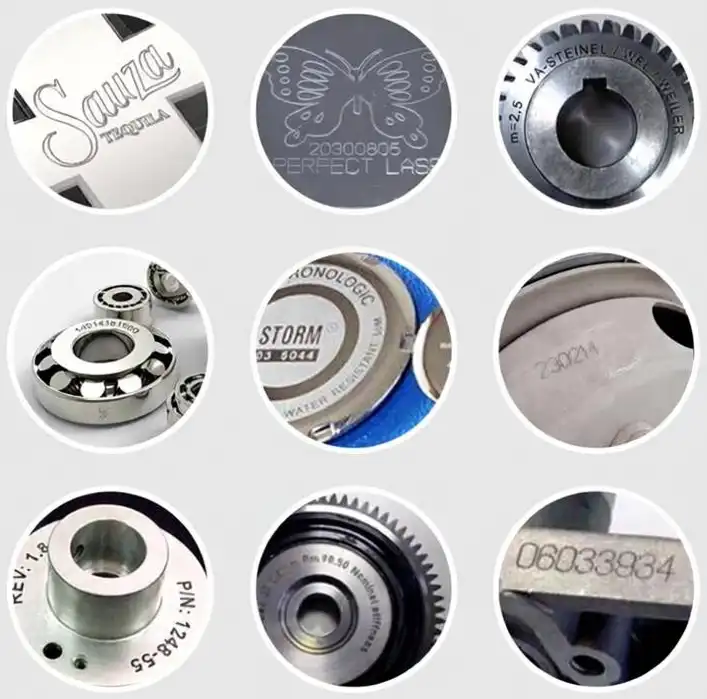
Application Suitability and Industry Use Cases
Heavy-Duty Industrial Applications
Rotary pin marking is widely used in automotive and aerospace industries where permanent identification is critical. It withstands extreme conditions such as heat, vibration, oil exposure, and chemical contact, making it suitable for engine blocks, structural parts, and safety-critical components. In aerospace manufacturing, it ensures traceability through multiple finishing processes. The method provides durable marks that remain readable throughout a part’s lifecycle, supporting compliance, warranty tracking, and failure analysis in highly regulated industrial environments.
Precision Applications and Delicate Materials
Laser marking is preferred in medical and electronics industries where non-contact processing is essential. It avoids mechanical stress, making it suitable for surgical tools, implants, and micro-components. It also supports ultra-fine detailing for semiconductors and PCBs. However, rotary pin marking remains effective for metal housings, connectors, and structural electronics parts where durability is more important than microscopic precision. Each method serves different needs based on material sensitivity, required resolution, and production environment constraints.
Material-Specific Considerations
Material type strongly influences marking method selection. Rotary pin systems perform well on steels, titanium, aluminum, brass, and many plastics without major adjustments. They provide consistent depth across varied industrial materials. Laser systems may require parameter tuning for reflective metals or coated surfaces, while extremely hard materials can challenge mechanical marking tools. Industrial-grade machines like the PEQD-250G are designed to handle a wide range of materials reliably, making them suitable for diverse manufacturing environments.
Cost Analysis and Procurement Guidance for 2026
Initial Investment Comparison
Beginner dot pin marking machines that can be used in basic industrial settings start at a modest price. For most makers, the best value is found in mid-range systems that offer more automation and the ability to work with both flat and rotary tools. High-end combined systems with advanced software, multiple marking heads, and full production line integration naturally cost more, but they are still much easier to get than laser setups that do the same thing.
Laser marking systems require a bigger initial investment. For marking metal, fiber laser tools are the most cost-effective laser choice. The initial costs for CO2 and UV laser equipment are much higher. In addition to the laser source itself, buyers need to plan for safety containers, systems that remove fumes, and special electrical wiring. The total cost of installing a production-ready laser marking cell is usually much higher than the cost of installing a pin marking version, which changes how long it takes to pay for itself and when the investment is returned.
Operating Costs and Long-Term Economics
The costs of running pin marking tools are still pleasantly simple. Very little electricity is used—usually less than 200 watts for basic desktop units. Consumable costs are mostly made up of replacing the stylus every so often, which usually doesn't cost much a year for most production levels. There is no need for specialized weather controls, cooling systems, or safety equipment. This makes integrating the facility easier and lowers the ongoing costs of running it.
Laser systems use a lot more electricity, especially during the initial setup process and when they are writing heavily. Because smoke extraction has to happen all the time, it costs more for electricity and new filters. Even though replacing the laser source doesn't happen very often, it's a big cost that smart buyers will spread out over the system's useful life. When looking at the ten-year total cost of ownership, rotary pin marking always shows strong economic benefits for companies whose main goal is to identify metal parts.
Strategic Procurement Considerations for B2B Buyers
There are more things to think about than just the initial purchase price when looking for a trusted marking equipment seller. Long-term operating success is greatly affected by things like warranty coverage, how quickly expert help is responded to, and the availability of spare parts. With over 10,000 satisfied customers in the automobile, aircraft, and industrial manufacturing sectors around the world, Perfect Laser has been making marking equipment for over 20 years. Our dedication goes beyond just selling tools; we also offer full application support to help customers find the best marking parameters for their materials and production needs.
The PEQD-250G model, which has both flat and rotary marking powers on a single platform, is a great value for makers who work with a wide range of component shapes. Because the system can mark cylindrical parts like pipes, valves, and pump bodies, it gets rid of the need to buy different marking tools. This combines marking tasks into one, takes up less floor space, and makes training operators easier. There are more economic benefits to buying in bulk, and price systems are set up to help supply chain partners and manufacturing groups standardize on tried-and-true marking technology.
Safety, Maintenance, and Operational Best Practices
Safety Protocols for Different Marking Technologies
When using a pin marking method, there are simple basic safety issues to keep in mind. The main dangers come from pinch points that happen when parts are automatically loaded and from the writing head's hitting action. These risks can be reduced with standard machine guarding, emergency stop controls, and basic operator training. Compared to other industrial processes, the equipment makes very little noise—usually less than 70 decibels—so no hearing protection is needed. There are no worries about dangerous fumes, radiation, or light exposure, which makes following safety rules at work easier and lowers the cost of insurance.
Laser writing needs a lot more safety equipment than other methods. Class 4 industrial lasers need fully enclosed work areas with doors that lock into each other so that people can't get to the mirrored beam routes. People who work near laser systems should wear glasses or contacts that are rated for the frequency of laser being used. Fume extraction systems have to keep getting rid of the particles and possibly dangerous vapors that are made when materials are abraded. Laser safety regulations make it harder for facilities to follow the rules. In many places, there must be designated laser safety officers and regular safety checks to keep the facility's operating license.
Preventive Maintenance and Equipment Longevity
Sticking to simple service plans is the only way to keep the dot pin marking machine working at its best. The marking area is cleaned once a week to get rid of the metal bits and other waste that have built up. Lubricating the guide rails and working parts once a month stops them from wearing out too quickly. If necessary, pneumatic lines should be checked every three months to make sure the hitting force stays the same. An annual check of the stylus tip decides when it needs to be replaced. Proactive replacement keeps the quality of the marks from getting worse. These simple maintenance tasks, which production workers can easily do, keep tools accurate and reliable for decades of use.
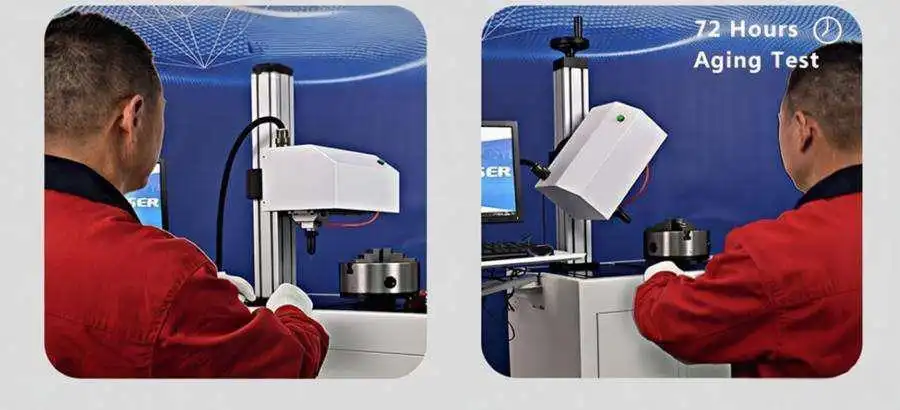
Perfect Laser builds our marking systems to last a long time by using industrial-grade parts that are rated for use in settings with constant production. Because pin marking technology is mechanically simple, it has fewer complicated parts that could go wrong than laser equipment. Many of our customers have been using PEQD-250G units nonstop during multiple production shifts for years without doing any major upkeep other than replacing consumables on a regular basis. This dependability directly leads to less unexpected downtime and uniform marking quality that helps meet tight production plans.
Operator Training and Skill Development
Marking equipment can only be used effectively by people who know how to use it. However, the training needed for each technology is very different. Software tools for pin marking systems like Perfect Laser's PEQD-250G are easy for production staff to learn because they are built on Windows. To make marking programs, you just need to type in text, choose fonts from large libraries that include AutoCAD SHX forms, and import DXF images files. Operators usually get good at it within a few days, and advanced features like VIN code writing and automatic serial number incrementing are easy to get to through clear menu structures.
The software supports many font types, including specialized industrial formats. This makes it possible to keep company branding uniform and follow marking standards specific to each industry. It's easy to change the marking parameters to work with different materials because the choices for striking force, dot density, and marking speed are saved as reuse programs for part types that are used over and over again. This easy-to-use method cuts down on the time and money needed for training while giving workers the power to handle changes in production without needing help from engineers to make regular program changes.
Conclusion
In 2026, you need to carefully think about your specific industrial needs, the properties of the materials you'll be using, and the long-term costs of running your business before choosing between rotating pin marking and laser marking. The dot pin marking machine is the best way to identify metal parts in industrial, aerospace, and automobile settings because they are permanent, last a long time, and are very cost-effective. Laser systems are better for precise work with sensitive materials and complicated graphics where better looks and less damage to the material support a higher investment. With twenty years of experience in manufacturing, Perfect Laser can help you choose the right technology and make sure you use marking solutions that meet tracking standards and improve production efficiency. Our PEQD-250G model shows why over 10,000 producers around the world trust us as their valued partner: it's reliable and flexible.
FAQ
1. Which marking technology works best for high-volume metal part production?
Rotating pin marking works great in places that make a lot of metal things where cost-effectiveness and mark longevity are important. The mechanical marking process leaves deep, long-lasting marks that can be read even after extensive surface cleaning and over decades of use. This makes it perfect for parts of cars, heavy machinery, and spacecraft that need to be permanently tracked.
2. Do dot peen marking machines effectively mark non-metal materials?
Yes, industrial pin marking tools can mark a wide range of hard plastics, composites, and engineered polymers that are widely used in production. The most important thing to think about is how hard the material is. Softer plastics might bend instead of taking clean prints, but engineering-grade materials like ABS, nylon, and polycarbonate leave clear marks when the force is applied correctly.
3. What warranty and after-sales support should buyers expect from marking equipment manufacturers?
Marking tools, parts and workmanship are usually covered by two-year warranties from reputable makers. Perfect Laser offers full technical support for life, help with installation from overseas when needed, and quick access to extra parts to keep production running smoothly. Our focus on the customer means that owners get ongoing value for the whole time their equipment is working.
Partner with Perfect Laser for Your Industrial Marking Needs
Perfect Laser has been making highly effective marking machines for over twenty years and is known all over the world for its dot pin marking machine. Our Model PEQD-250G can mark both flat surfaces and rotating surfaces on a single platform, giving your work setting the flexibility it needs. Our industrial dot peen equipment makes lasting marks that will last through the toughest jobs, whether you're writing engine parts, valve bodies, steel pipes, or hard plastic items. You can trust our quality because we have CE, TUV, and SGS certifications, 63 patents that show we are a leader in innovation, and over 10,000 happy customers around the world.
Our focused engineering team offers free application advice to help you find the best marking parameters for your materials and production needs. We offer installation help abroad, full training for operators, and lifelong technical support to make sure that the quality and efficiency of your marking activities stay high. Contact our team at [email protected] to talk about your marking needs with experts who know how to deal with the problems your industry faces. As a reliable dot pin marking machine provider, we're dedicated to providing you with cost-effective solutions that improve your manufacturing capabilities while also giving you unbeatable value and quick support for as long as your equipment is in use.
References
1. Smith, J.R. I. Anderson and K.L. (2024). In the Journal of Manufacturing Processes (78(3)), pages 215-234, it is written about "Industrial Marking Technologies: Comparative Analysis of Permanence and Cost-Effectiveness in Manufacturing Applications."
2. Tom Thompson, M.D. (2025). Standards, technologies, and requirements for traceability in direct part marking in aerospace manufacturing. The Industrial Press in New York.
3. Zhang, W. A. Patel and R.S. (2023). The International Journal of Advanced Manufacturing Technology (127(5)-6), pp. 2847–2863, has an article called "Mechanical versus Optical Marking Methods: Durability Assessment Under Extreme Environmental Conditions."
4. European Automotive Manufacturers Association (2025). Best practices for identifying and tracking parts in automotive supply chains. Publications from EAMA in Brussels.
5. Roberts, C.H. (2024). In Production Engineering Research and Development (18(2)), pages 412–429, they talk about a "economic analysis of marking equipment total cost of ownership in industrial manufacturing."
6. It stands for the National Institute of Standards and Technology. Advice on how to permanently mark parts in industries where safety is important. Special Publication 1500-12 from NIST, U.S. Department of Business.

share your inquiry, get the quotation accordingly.
第一张审核员说包含其他公司不能用_1755049724891.webp)
Perfect Laser – Global Manufacturer of Reliable Laser Solutions


