3D Laser Engraving Crystal: A Practical 3D Crystal Laser Engraving Machine Guide
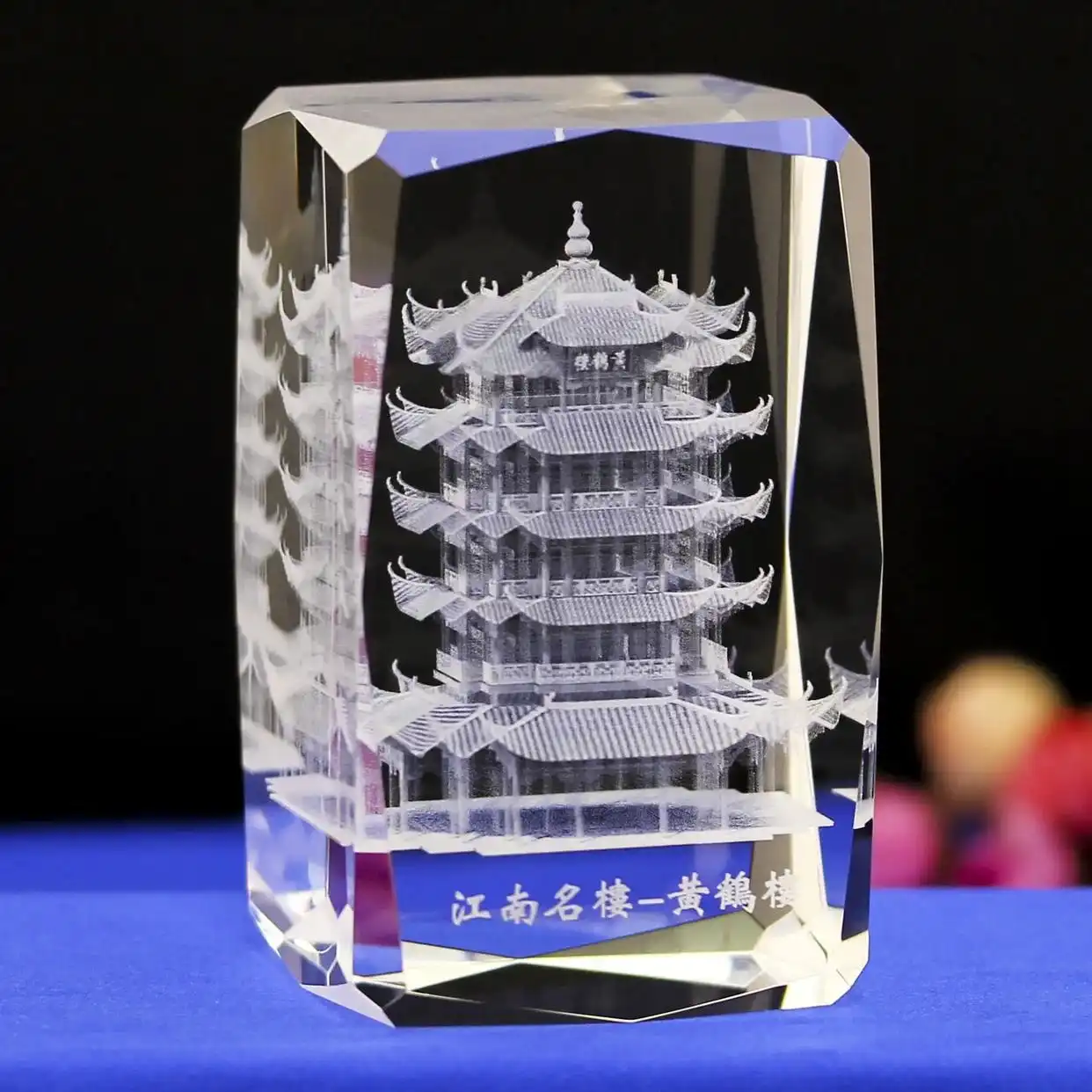
When exploring the world of precision manufacturing and personalized products, the 3d crystal laser engraving machine stands as a revolutionary technology that transforms transparent materials into stunning three-dimensional masterpieces. This comprehensive guide examines how these advanced systems utilize UV laser beams to create intricate internal engravings within crystal and glass materials, offering businesses unprecedented opportunities to produce high-value, customized products. Unlike traditional surface engraving methods, modern crystal laser engravers enable volumetric imaging that creates detailed patterns suspended within the material itself, opening new possibilities for tourism souvenirs, wedding gifts, corporate awards, and artistic displays.
Understanding 3D Crystal Laser Engraving Technology
The Science Behind Crystal Engraving
A highly concentrated UV laser is used in 3D crystal laser engraving to produce designs inside transparent materials without damaging the surface. The method depends on the interaction between the internal structure of the crystal and ultraviolet light at 355 nm.
The laser creates small, controlled spots inside the material at certain positions when it enters the crystal. The pattern appears to be floating inside the crystal because to these tiny alterations that modify how light travels through it. The procedure necessitates extremely precise focus and placement throughout the whole engraving since the picture is constructed point by point in three dimensions.
Advanced Laser Systems and Components
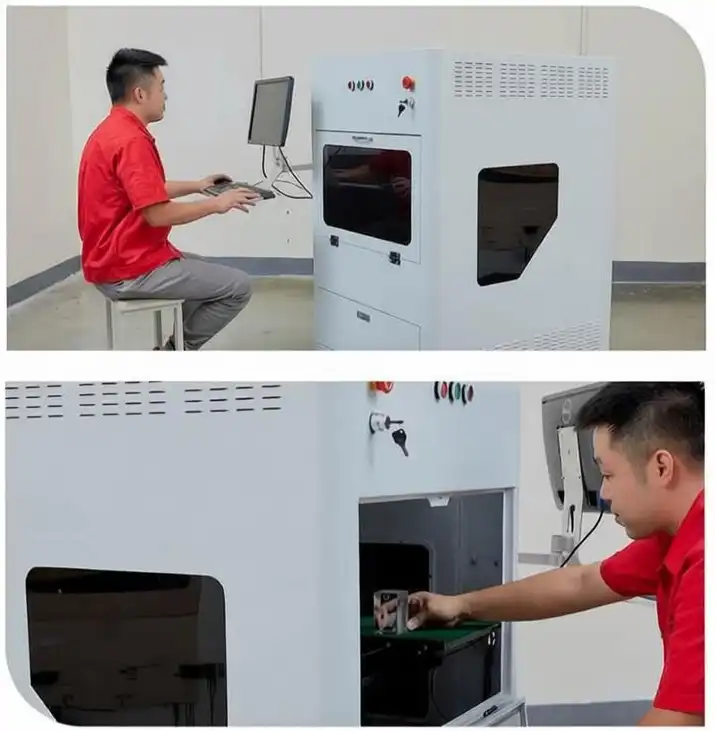
To achieve incredibly high precision, modern crystal engraving machines integrate a number of essential components. The laser beam is swiftly and precisely moved using a galvanometer scanning system, which enables the processing of up to 150,000 points per minute. This allows for the creation of crisp, detailed 3D pictures inside crystals when combined with dynamic focussing.
The wavelength at which the UV solid-state laser works is ideal for transparent materials. The 355 nm UV laser yields clear, accurate results without harming the crystal, in contrast to longer-wavelength lasers that release more heat. This helps maintain consistent engraving quality across many applications and makes it perfect for fragile materials.
Software Integration and Design Capabilities
Advanced software is used by contemporary 3D crystal laser engraving equipment to translate digital designs into accurate laser motions. They are simple to include into current design workflows since they support popular file formats including DXF, PLT, and STEP. Additionally, the program automatically modifies the engraving settings according to the material and the required depth.
Certain systems, such as the 3D crystal laser engraving machine, can use 3D cameras to capture precise portrait data and transform it into lifelike images inside crystal blocks. This capability has revolutionized the personalized gift industry by enabling shops and photo studios to offer truly unique products that are unmatched by standard engraving techniques.
Applications and Benefits of 3D Crystal Laser Engraving Machines
Industry Applications Across Multiple Sectors
Because of its accuracy and visual impact, crystal laser engraving is utilized extensively in many different sectors. Tourism and gift businesses benefit from quick manufacturing and reliable quality for large orders by creating location-themed mementos featuring landmarks and cultural icons.
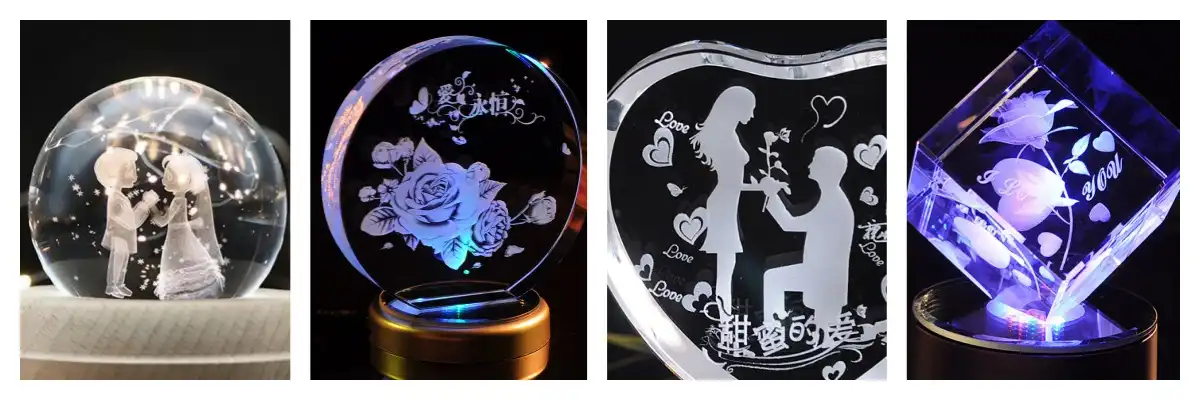
This technique, using a 3D laser engraving machine, is employed by wedding services and photography studios to create 3D crystal displays from images. It adds emotional value and helps these businesses stand out in crowded markets with high-end goods.
Crystal laser engraving is used by hotels and galleries for elegant awards, corporate presents, and artwork. The non-contact method guarantees consistent quality for both small and big orders, and custom patterns with logos or commemorative features provide a lasting impact.
Material Versatility and Processing Capabilities
Even while internal engraving is mostly done with crystal, contemporary machines are incredibly adaptable and can deal with a wide variety of transparent and translucent materials. To get the greatest results, it's important to understand how optical glass, lead crystal, and certain acrylics differ in their durability and visual effects.
Surface marking on materials including metal, plastic, wood, leather, and ceramics may also be done using these equipment. Because of its adaptability, companies may use a single machine to satisfy a variety of consumer demands. Because laser engraving doesn't use chemicals and generates a lot less trash than conventional techniques, it is also ecologically beneficial.
Economic Benefits and Production Efficiency
Investing in crystal laser engraving technology has significant financial advantages due to profitable goods and effective manufacturing. Customized crystal products often have large profit margins, which enables companies to provide clients with distinctive, high-quality goods while earning appealing returns. Quick turnaround and heavy workloads are supported by fast processing rates.
Modular designs and low-maintenance optical systems contribute to lower operating costs and dependable machine operation. Automated focusing ensures consistent output and saves work by eliminating the need for frequent human adjustments. These benefits together make crystal laser engraving a wise and lucrative investment for many companies.
How to Choose the Best 3D Crystal Laser Engraving Machine for Your Business
Assessing Production Requirements and Scale
Your company's size, clientele, and expansion goals will determine which 3D crystal laser engraving equipment is best for you. Due to their affordability, portability, and suitability for gift shops, picture studios, and specialty stores, small local companies frequently use compact desktop computers.
Larger, more automated machinery are usually required by mid-sized organizations. These versions provide batch manufacturing and can handle larger crystal pieces, increasing productivity without sacrificing customisation.
High-capacity systems with sophisticated automation and quality control are advantageous for large-scale operations. These machines, which are designed for extended production runs, produce reliable outputs and may be improved over time to accommodate evolving company requirements.
Technical Specifications and Performance Criteria
Key technical features strongly affect a machine's performance across different applications. Laser power determines both engraving speed and detail, with higher power allowing faster processing of larger areas without sacrificing precision.
Engraving accuracy, measured in micrometers, has a direct impact on image quality. Higher precision enables photo-like results and detailed patterns, while a high-quality galvanometer system supports stable, accurate performance over time.
The working area should suit the size of your products. Common options include 50 × 50 mm, with custom sizes available if needed. Field lens quality is equally important, as it ensures even focus and consistent engraving across the entire workspace.
Vendor Evaluation and Support Considerations
For seamless operation and long-term performance, selecting the appropriate supplier is crucial, especially when investing in advanced equipment such as a 3d crystal laser engraving machine. More dependable equipment and steady assistance are provided by reputable manufacturers with a track record of success. Buyers have more trust in their investment thanks to companies like Perfect Laser, who have a global presence and decades of experience in the business.
Overall expenses and uptime are significantly impacted by warranty coverage and after-sales support. Hardware and software should be covered by a good guarantee, and simple access to spare parts, training, and technical assistance keeps production going.
To achieve the greatest results right away, installation and commissioning support are also crucial. Many vendors offer practical training and on-site installation, which is particularly beneficial for companies unfamiliar with laser engraving technology.
Maintenance, Troubleshooting & Operational Best Practices
Routine Maintenance Procedures
A crystal laser engraving equipment requires routine maintenance and correct operation to stay in excellent working order. Regular lens cleaning with appropriate solvents is still required to maintain engraving quality, even though current optical systems require less upkeep.
Across the work area, calibration aids in maintaining precise and reliable outcomes. Even though many equipment have automated calibration, it might be helpful to know how to make simple manual adjustments when issues occur. Additionally, beam alignment should be periodically verified, particularly following mechanical modifications or part replacements.
Updates for software are equally crucial. Updates are released by manufacturers to boost stability, support new materials, and increase performance. Updating the software contributes to the machine's continued effectiveness, dependability, and security.
Common Issues and Problem Resolution
Comprehending typical operational problems aids in preventing disruptions and maintaining efficient output. Regular output checks help identify problems early since unstable power, unclean optics, and cooling difficulties are common causes of laser power fluctuations.
Inadequate focus, different materials, or software settings can all lead to image flaws. Maintaining records of settings and outcomes helps avoid reoccurring problems, and a methodical troubleshooting approach makes it simpler to identify and address the root cause.
Over time, environmental conditions or wear can alter mechanical precision. Frequent examinations of test patterns aid in the early detection of issues, and a basic understanding of modification enables prompt performance restoration.
Optimizing Production Workflows
Workflows that are efficient enhance machine use while maintaining a constant level of quality. While arranging schedules based on materials and design complexity enhances daily efficiency, grouping comparable activities together decreases setup time and boosts productivity.
Regular test engravings with standard patterns should be part of quality control to ensure steady performance, especially for 3D crystal engraving applications. Future tasks are completed more quickly and consistently when engraving settings for various materials and patterns are documented.
Additionally, proper operator training is crucial. Trained personnel are able to identify problems early and stop equipment damage or quality flaws since they are familiar with proper operation, safety regulations, and basic troubleshooting.
Procurement and Supplier Insights for Global Buyers
Strategic Sourcing Approaches
Global sourcing of gem laser etching hardware requires adjusting to take a toll with long-term unwavering quality. Buying straightforwardly from setup producers frequently offers way better estimating and more grounded bolstering, particularly from companies with a universal nearness. Brands like Idealize Laser give worldwide benefit systems to guarantee tried and true bolster worldwide.
Authorized merchants, moreover, offer esteem through neighborhood benefit while keeping up official guarantee scope and producer backing. This is particularly accommodating for businesses that require quick reaction times or nearby dialect backup, making it critical to survey a dealer's specialized abilities and benefit capabilities.
Online marketplaces permit simple cost and provider comparisons, but cautious checks are essential. Checking on certifications, industry encounters, and client criticism makes a difference in diminishing hazards, whereas legitimate providers ordinarily give clear documentation to meet universal standards.
Risk Management and Vendor Assessment
Equipment-obtaining choices have long-term impacts on both operations and funds. When choosing a provider, it's critical to see past the machine itself and consider the company's solidness, specialized mastery, and client input. Understanding how the provider oversees fabrication and quality control makes a difference in evaluating long-term reliability.
International shipping and traditions can influence conveyance times and general costs. Providers experienced in worldwide coordinations can oversee printed material, obligations, and transportation more productively, making arranging and budgeting easier.
Reliable benefit back is basic for businesses with tight generation plans. Investigating benefit scope, saving parts accessibility, and bolstering hours makes a difference in diminishing downtime, whereas inaccessible diagnostics can frequently illuminate issues quickly.
Contract Negotiation and Terms
Equipment-buying understandings ought to go past cost to anticipate future issues. Guarantee terms require clearly clarifying scope and term and bolstering reaction times so there are no shocks later.
Training and establishment administrations, moreover, include genuine esteem. Appropriate preparation makes a difference in administrators working securely and accurately, whereas proficient establishment decreases setup issues and guarantees the machine performs as expected.
Payment terms and financing choices also play a key part in overseeing cash flow. Numerous providers offer adaptable installment plans, and understanding these choices makes a difference in businesses selecting courses of action that best bolster their monetary goals.
Conclusion
3D crystal laser engraving offers businesses a powerful way to stand out with high-value, personalized products. By combining precise laser technology with advanced software, the 3D crystal laser engraving machine enables the creation of striking 3D images inside crystal that attract customers and support premium pricing. Understanding the basics of the technology and its applications helps businesses choose the right equipment and make smart investment decisions.
Rising demand for customized gifts, souvenirs, and decorative items in tourism, photography, and retail markets presents strong growth opportunities. Success depends on selecting suitable machines, working with reliable suppliers, and using efficient production processes to ensure consistent quality and profitability.
FAQ
1. What types of crystals work best with 3D laser engraving machines?
Optical crystal and lead crystal are well suited for internal 3D engraving due to their high clarity and light transmission. They allow accurate laser focusing and produce strong visual effects when light passes through the design. Standard glass can also be engraved, but crystal materials usually deliver clearer images with better contrast and detail.
2. How does 3D crystal engraving compare to traditional surface engraving methods?
3D crystal laser engraving, also known as 3D crystal engraving, creates patterns inside the material instead of altering the surface, making images appear suspended within the crystal. This method is more durable since the engraved areas are protected inside the material. Laser technology allows for much greater precision than mechanical engraving, enabling detailed reproduction of photos and complex patterns.
3. Can small businesses afford professional crystal engraving equipment?
Modern crystal engraving machines are available in a range of models to match different budgets and production needs. Compact desktop units deliver professional-quality results at affordable prices while meeting commercial standards. Since custom crystal products typically offer high profit margins, many businesses can recoup their investment quickly, making this technology a smart option for small businesses.
Perfect Laser: Your Trusted Partner for Advanced Crystal Engraving Solutions
Perfect Laser is a worldwide mechanical laser producer with more than 25 years of involvement in gem etching innovation. Our 3d crystal laser engraving machine solutions, together with advanced 3D gem laser etching machines, offer assistance to businesses in tourism, photography, retail, and neighborliness to make high-quality personalized items efficiently.
Using advanced 355 nm UV solid-state lasers and high-speed galvanometer checking, our frameworks convey fine etching detail with quick preparation, making complex 3D plans in precious stone and glass both proficient and consistent. Perfect Laser bolsters clients at each stage, from discussion and test testing to establishment and after-sales benefit, with solid worldwide specialized bolster. All our machines are CE, TUV, and SGS certified and trusted by over 10,000 clients in more than 50 nations around the world. Please contact [email protected] if needed.
References
1. Smith, J.A. "Advanced Laser Processing Technologies in Manufacturing Applications." Industrial Laser Solutions Quarterly, Vol. 28, No. 3, 2023, pp. 45-62.
2. Chen, L.M. and Rodriguez, C. "Precision Optical Systems for Three-Dimensional Material Processing." Journal of Laser Engineering and Manufacturing, Vol. 15, No. 2, 2024, pp. 78-95.
3. Thompson, R.K. "Market Analysis of Personalized Gift Industries and Custom Manufacturing Trends." Business Manufacturing Review, Vol. 42, No. 1, 2023, pp. 112-128.
4. Wilson, D.P. "UV Laser Technology Applications in Transparent Material Processing." Photonics Technology International, Vol. 35, No. 4, 2024, pp. 203-219.
5. Kumar, S. and Anderson, M.J. "Quality Control and Precision Measurement in Industrial Laser Systems." Manufacturing Technology Today, Vol. 31, No. 7, 2023, pp. 156-173.
6. Brown, A.L. "Economic Impact of Advanced Manufacturing Technologies in Small Business Operations." Small Business Technology Review, Vol. 18, No. 6, 2024, pp. 89-106.

share your inquiry, get the quotation accordingly.
第一张审核员说包含其他公司不能用_1755049724891.webp)
Perfect Laser – Global Manufacturer of Reliable Laser Solutions


