Laser Cutting Cardboard and Paperboard: Speed and Power Guide
When working with cardboard and paperboard, picking the right cutting technology makes a huge difference in how quickly and well the job gets done. When it comes to cutting these cellulose-based products accurately and quickly, a CO2 laser cutter is unmatched. An infrared laser beam with a frequency of 10.6μm is used in this technology to vaporize material cleanly without touching it. This means that there is no edge fraying or material warping that can happen with mechanical cutting methods. If you know how to adjust the speed and power settings, you can get consistent results while getting the most work done in applications like making advertising signs, promotional packaging, custom gifts, and fast prototyping.
Understanding CO2 Laser Cutting Technology for Cardboard and Paperboard
A CO2 laser stimulates nitrogen, helium, and carbon dioxide in a closed tube. This concentrates infrared light. This beam passes via precise mirrors before reaching a focusing lens, which concentrates the energy on the item. Due to their wavelengths, CO2 lasers perform better with biological materials like cardboard and paperboard than fiber lasers or diode systems.
How CO2 Wavelength Interacts with Cellulose Materials
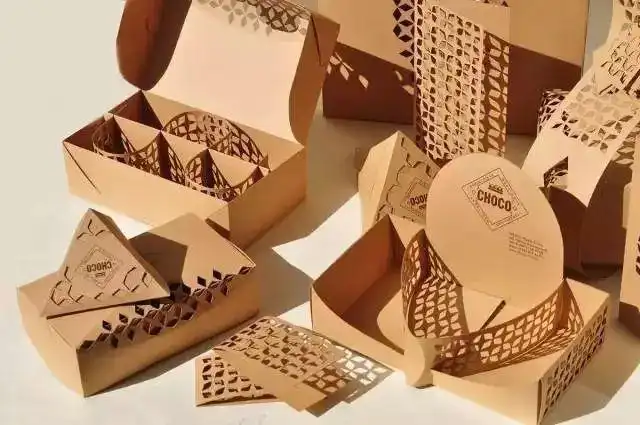
The 10.6µm frequency of CO2 laser systems is readily absorbed by cellulose fibers in cardboard and paperboard. This absorption allows laser light to swiftly evaporate material at the focal point. This creates smooth, sealed, and unbreakable lines. Laser cutting creates structurally sound lines in intricate patterns, whereas mechanical cutting breaks and bends fibers. Since edges impact product value, this is very beneficial for constructing sophisticated designs for signage, attractive box windows, or elaborate advertising displays.
Core Advantages for Manufacturing Applications
CO2 laser cutting has several industrial applications. The narrow kerf width (typically less than 0.3 mm) saves more useable material from each sheet, reducing waste. More manufacturing possibilities are available since you don't need to change equipment to cut 2mm cardboard or engrave fine details on 0.5mm paperboard. Short runs and design modifications are allowed because to setup time being less than die-cutting. These advantages allow advertising organizations that manufacture bespoke signage, gift companies that make customized wrapping, and product development shops to launch new items quicker and cheaper.

Comparing Cardboard Processing Methods
Traditional die-cutting needs expensive tools and wait times that last for weeks, so it's only cost-effective for big production runs. CNC cutters can handle a wide range of designs, but they make a lot of dust, need to have their bits replaced often, and have trouble cutting thin materials that move around while they're being cut. Drag knives are flexible, but they leave rough edges that need to be smoothed out again. The CO2 laser cutting machine gets rid of these problems by mixing design freedom with production-level edge quality for all types of cardboard, from thin chipboard to thick corrugated materials.
Optimizing Speed and Power: Practical Guidelines for Cardboard and Paperboard
To get the best results, you need to find the right balance between laser power output and cutting speed for the material. This connection impacts both the speed of production and the quality of the cuts, so accurate tuning is necessary for activities to run smoothly.
Recommended Settings for Common Thicknesses
The needed power and speed mix are directly related to the thickness of the material. Light paperboard between 0.3 mm and 1 mm thick usually works well with 15 to 25 watts of power and cutting speeds of 50 to 80 mm per second, giving you clean cuts that don't get too charred. Medium cardboard (1 mm to 3 mm thick) works best with 30 to 50 watts of power and speeds of 30 to 50 mm per second. This is enough power to fully pierce the cardboard while keeping the quality of the edges. To cut through multiple layers of heavy curved materials that are 3mm to 5mm thick, you need 60–80 watts of power and slower speeds of 15–30 mm per second. You can make these basic choices even better by changing them based on the type of cloth, the humidity in the room, and the edge characteristics you want.
Balancing Speed Against Power Output
Increasing the power of the laser lets you cut things faster, but there are some trade-offs you should think about. When the machine is running at full speed and higher power settings, the edges may get a little discolored or burned, which is fine for parts inside packaging but not so good for high-end store displays. On the other hand, lowering the speed and power often results in clean edges that are perfect for high-visibility items like plaques, prizes, and artistic signs. By testing pieces of the material in different combos, you can find the best balance for your needs. A lot of operations keep several sets of saved parameters so they can quickly switch between production runs that focus on speed and ending work that focus on quality.
Performance Insights
A company that makes promotional items that we worked with used Perfect Laser tools set up with a 60-watt CO2 tube to make unique gift boxes. By finding the best settings for their 2mm plywood, they were able to cut consistently at 45mm per second with almost no edge darkening. With this setup, they were able to make 120 boxes an hour while still giving them the high-end look that their store buyers wanted. Another advertising business that made outdoor signs from 4mm perforated plastic found that the problems they were having with their old mechanical cutting system went away when they slowed it down to 25 mm per second and increased the power to 70 watts.

Operational Safety and Maintenance Practices
Because melting causes smoke and particles, sufficient airflow is still needed while cutting cardboard. Installing the correct vent systems protects workers and cleans optics to maintain beam quality. Regular lens cleaning prevents dirt from spreading the beam and reducing cutting efficiency. Aligning the mirrors monthly maintains the optimal beam path, preventing uneven cutting or power loss at the focal point. These frequent maintenance operations extend tool life and maintain laser cutting's production precision.
Cooling system maintenance requires particular attention. To avoid laser tube breakage, water-cooled CO2 tubes require clean coolant and unobstructed flow. Checking coolant temperature and flow rate for daily starting should be routine. Air-cooled systems require clean intake screens and air-flow-friendly cooling fans. These maintenance processes prevent unplanned downtime and maintain output schedule precision.
Comparing CO2 Laser Cutters for Cardboard and Paperboard Applications
If you know how CO2 technology stacks up against other cutting methods, you can buy equipment that fits your needs and your budget.
Why CO2 Outperforms Fiber Lasers for Paper Materials
Fiber laser systems are great for working with metal, but they don't work well with cardboard and paperboard. Fiber lasers have a wavelength of 1.06μm, which can pass through many biological materials with little absorption. To cut through these materials, much higher power levels are needed. Because of this frequency mismatch, fiber devices are too expensive to use for processing cardboard specifically. The laser cutter CO2 technology absorbs more energy better in cellulose materials, allowing for faster cutting speeds with less power use, better edge quality, and lower operating costs.
CO2 Advantages Over CNC Router Systems
When CNC routers cut, they touch the material, which creates mechanical forces that can bend or break lighter cardboard grades. Wear and tear on tools means they need to be replaced often, which adds to the cost of consumables and stops production for bit changes. When routing processes happen, dust is created, which needs strong collection devices and cleanup. With co2 laser cutting machine, there is no direct touch, so even thin paperboard doesn't get damaged. Cutting tools that don't need to be replaced often lower running costs and eliminate downtime for tool changes. The cleaner process cuts down on building upkeep and makes the workplace better.
Selecting Equipment Scale for Production Requirements
Prizes, plaques, small signs, and promotional items may be engraved on 600x400mm, 900x600mm, 1300x900mm, or 1600x1000mm CO2 laser engravers. These tiny devices are simple to fit in most work spaces and provide excellent job precision. After 20 years of developing small-format instruments, Perfect Laser has 20 years of experience. They are durable, simple to operate, and fast in processing materials.
Large-format flatbed machines with 1300x1800mm, 1300x2500mm, or 1600x2600mm work surfaces can process entire sheets for signage, packaging samples, and garment patterns. These industrial-grade tools can perform a lot of labor while remaining precise for complex designs. Cutting and engraving acrylic, wood, and fabric are frequent jobs in commercial and garment enterprises that employ both kinds of equipment.
Key Features Driving Equipment Selection
Production capacity is based on processing speed; faster systems cost more but produce more with the same amount of work. Precision specs affect how well it works for detailed work. For example, positioning accuracy of ±0.01mm makes it possible to make designs that would not be possible with less powerful systems. The size of your work area needs to be big enough to fit your usual materials, plus enough space for securing and placing them. Software compatibility affects how easy something is to use. For example, famous programs like Lightburn make it easier to transfer designs and run machines. Having access to after-sales help is important for keeping uptime, which makes established makers with responsive service networks useful, even if they may cost more to buy.
Procurement Considerations for CO2 Laser Cutters in Cardboard Processing
To make sure that the tools you buy will hold its value and be able to produce what you need, you need to think about more than just the initial purchase price.
Critical Specification Requirements
Most cardboard processing tasks can be done with laser power outputs between 40 and 150 watts. Higher power lets you cut thicker materials faster. Positioning accuracy specs tell you how much detail a system can handle, and systems with repetition of ±0.01mm can handle the toughest jobs. Maximum cutting speed affects productivity, but quoted speeds need to be tweaked to work with different materials. The size of your work area needs to be big enough to fit your usual materials and still leave enough room for securing and aligning them. Access needs for repair and material loading, as well as floor room available, are things to think about when figuring out a machine's footprint.
Understanding Total Cost of Ownership
Long-term prices include more than just the initial investment in tools. Power use changes depending on the laser's power and duty cycle, which affects the long-term cost of electricity. You need to set aside money every so often to change consumables like new lenses, mirrors, and laser tubes. Maintenance needs include cleaning materials, work on the cooling system, and preventative maintenance. Running an exhaust system adds to the cost of electricity and replacing filters. Taking these operating costs into account when making decisions about what to buy keeps budgets in check and keeps people from underestimating how much equipment really costs.
Evaluating Supplier Capabilities
Manufacturer image influences long-term happiness by impacting equipment reliability and help availability. CE, TUV, and SGS approvals prove Perfect Laser follows worldwide safety and quality requirements. Our experts create software, design hardware, test systems, and provide field service. We can give comprehensive support as long as your equipment lasts. Investing in R&D has led to 63 patents for innovative innovations that provide organizations speed, precision, and reliability advantages over rivals.
Geographical distribution influences technical support and spare parts availability. Regional service networks enable Perfect Laser devices in Germany, Japan, Italy, Russia, South Korea, Turkey, Brazil, India, UAE, and Saudi Arabia. Laser marking tools are protected for two years, larger production systems for one. Free consultation and online support are accessible 24/7.
Financing and Logistics Planning
The lead time for equipment is usually between four and eight weeks, but it depends on how complicated the setup is and how busy production plans are at the moment. Perfect Laser keeps popular setups in stock, including the laser cutter co2, so that orders can be delivered faster, and they can also make changes to meet specific needs. Coordinating freight forwarding, customs clearance, and final delivery while making sure there is enough entry to the building for installation is part of shipping logistics. Financing choices help spread the cost of capital investments across running budgets, and equipment financing partners offer lease options.
Troubleshooting and Maintaining Your CO2 Laser Cutter for Cardboard Applications
For consistent performance, you need to know how to deal with common problems and set up preventative maintenance schedules that make tools last longer and work better.
Diagnosing Common Cutting Problems
Incomplete cuts usually mean that not enough power is hitting the material. This can be because the glasses are dirty, the mirrors are out of place, or the laser tubes are breaking. When you look at the beam path, you can see that it is dirty and needs to be cleaned, or the balance needs to be fixed. If there is too much charring or burning, it means that the cutting speed is using too much power. The parameters need to be changed to balance the transfer of energy. If the cut depth isn't the same across the working area, it means that the bed isn't level or there are focus issues that need to be fixed mechanically.
Routine Maintenance Procedures
For optimal beam quality and cutting performance, optical parts must be regularly examined. Weekly cleaning of focusing lenses with the correct chemicals removes dirt that scatters light and diminishes power. Once a month, mirror alignment checks ensure the beam reaches the focal point, preventing uneven cutting or power loss. Every three months, inspect the laser tube and high-voltage cables for issues before unforeseen downtime.
Maintaining the cooling system prevents pricey laser tubes from overheating. Checking coolant quality and quantity monthly prevents contamination that reduces cooling efficiency. Every three months, cooling system filters are cleaned to maintain flow rates. Checking the coolant temperature while the machine is operating reveals cooling system issues that must be addressed before they harm the tube.
Mechanical reliability and placement are maintained via motion system maintenance. Cleaning the guide rails and applying the correct lubricant monthly reduces wear and friction. Check belt tightness every three months to prevent setup errors caused by too little or too much strain. Making sure limit switches and emergency stops operate maintains safety systems dependable.
Planning Equipment Upgrades
You may require more production capacity than your equipment can manage as your firm expands. Adding stronger laser tubes speeds up heavy material cutting without buying new equipment. Upgrading motion motors speeds up setup between cuts, reducing idle time. You don't have to manually adjust height using a focusing mechanism. The system is more consistent and setup time is reduced. Camera-based registration aligns pre-printed materials with current photos.
Sometimes it's preferable to replace obsolete equipment than update it as technology evolves. Newer versions usually have better beam delivery systems, more stable parts, and better software, making them more effective. Checking the equipment's reliability and comparing its present abilities to new systems on the market will help you decide when to replace to maximize performance and save maintenance costs.
Conclusion
CO2 laser technology is the most flexible and accurate way to work with cardboard and paperboard for advertising, promotional items, packaging prototypes, and general manufacturing. Knowing how power levels affect cutting speed lets you get the best results for the materials you're using and the quality standards you need to meet. Long-term value is ensured by choosing the right tools based on production rate, material sizes, and total ownership costs. Regular repair keeps things running well and makes them last longer. CO2 laser cutter systems offer the speed, accuracy, and adaptability needed for modern manufacturing, whether it's making custom signs, personalized gifts, or prototype packing.
FAQ
1. What power settings work best for cutting standard cardboard thicknesses?
Light cardboard from 0.3 mm to 1 mm cuts effectively at 15 to 25 watts and 50 to 80 mm/s. Medium cardboard from 1 mm to 3 mm requires 30 to 50 watts at 30 to 50 mm per second. Heavy perforated materials from 3 to 5 mm thick need 60 to 80 watts at 15 to 30 mm per second. Since these beginning points rely on the material and edge quality, testing samples before mass production ensures the optimum results for your purpose.
2. Can CO2 lasers handle multi-layer paperboard effectively?
CO2 lasers cut thick cardboard and coated paperboard well. The guided beam slices through all layers simultaneously, preventing mechanical delamination. Change the power and speed settings to increase thickness and prevent sealed edges from coming apart during handling or processing.
3. How often should I perform maintenance on my CO2 laser cutter?
Daily maintenance checks coolant and exhaust system operation. Weekly tasks include cleaning and checking the focusing lens for material development. Monthly maintenance includes mirror alignment and moving parts lubrication. The three-month maintenance check includes cooling system filter cleaning and electrical connection inspection. These timings may alter depending on usage. Work-intensive operations should be monitored more regularly.
Partner with a Trusted CO2 Laser Cutter Manufacturer
Perfect Laser offers tried-and-true CO2 laser cutting options designed to work with cardboard and paperboard in the clothing, advertising, and general manufacturing industries. Our equipment includes everything from small engraving systems to large industrial flatbed cutters. All of them can do both cutting and engraving, are easy to use, work accurately, and last a long time. We have been making high-quality products for 20 years, have 63 patents, and have foreign approvals from CE, TUV, and SGS. Our reliable technology and quick service can help you reach your business goals. Customers from all over the world, including Germany, Japan, Turkey, Brazil, India, and more, trust Perfect Laser tools to always do a good job in tough situations. Email our team at [email protected] to talk about your needs with experienced application engineers who can help you find the best setups. We offer full support, including free consultations, suggestions for solutions, test cutting services, marking system guarantees that last for two years, and flexible payment plans to fit your needs. Find out why companies all over the world trust Perfect Laser as their CO2 laser cutter supplier for precision cardboard processing equipment.
References
1. Chryssolouris, George. "Laser Machining: Theory and Practice." Springer Series in Materials Science, 1991.
2. Steen, William M., and Jyotirmoy Mazumder. "Laser Material Processing, Fourth Edition." Springer-Verlag London, 2010.
3. Powell, John. "CO2 Laser Cutting, Second Edition." Springer-Verlag London, 1998.
4. Ion, John C. "Laser Processing of Engineering Materials: Principles, Procedure and Industrial Application." Elsevier Butterworth-Heinemann, 2005.
5. Dahotre, Narendra B., and Sandip P. Harimkar. "Laser Fabrication and Machining of Materials." Springer Science, 2008.
6. Ready, John F., and Dave F. Farson. "LIA Handbook of Laser Materials Processing." Laser Institute of America, Magnolia Publishing, 2001.

share your inquiry, get the quotation accordingly.
第一张审核员说包含其他公司不能用_1755049724891.webp)
Perfect Laser – Global Manufacturer of Reliable Laser Solutions


