Dieboard Laser Cutting Machine Explained: Process, Uses, Advantages
Focused laser beams are used to carefully cut wooden dieboards that are used to make unique packaging shapes and designs. A die board laser cutter is a huge step forward in packaging and manufacturing technology. Traditional mechanical cutting methods make cuts that aren't always even and need to be marked by hand. These automatic systems, on the other hand, use computer-aided design software and high-powered CO2 laser sources to make cuts that are always even and very repeatable. Modern machines can cut dieboard with thicknesses from 15 mm to 25 mm in a single pass, with cutting widths as small as 0.45 mm and edges that are the same from top to bottom. This technology gets rid of the need to think about design and cuts production times by a huge amount. This makes it very useful for companies that make boxes, ads, and things that need custom die shapes without the delays and mistakes that come with traditional methods.
What Is Dieboard Laser Cutting and How Does It Work?
Understanding the Core Technology
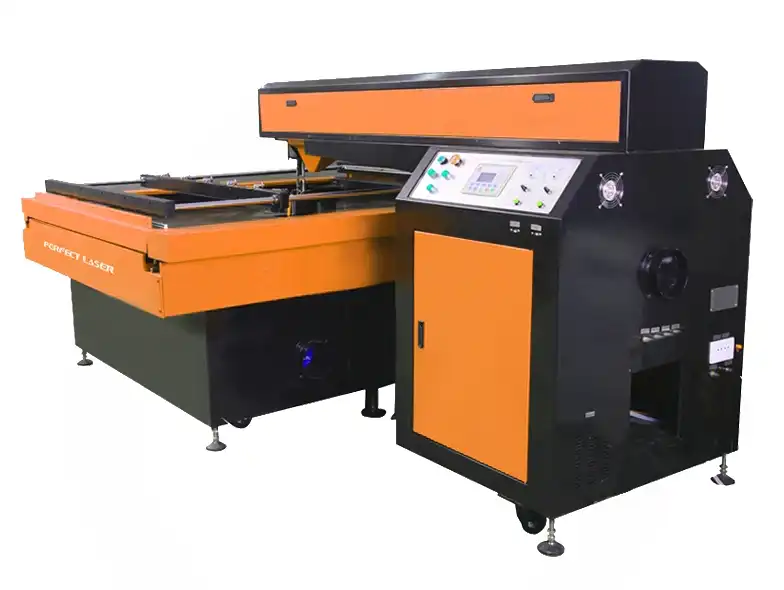
Dieboard laser cutting works by combining laser generation, computer numerical control systems, and precise motion parts in a very complex way. At the center of this process is a sealed CO2 laser tube that produces a highly focused infrared beam. Its power output is usually between 300W and 600W. Before it gets to the top of the material, this beam goes through a set of mirrors and focusing lenses. There, it quickly heats the wood above its vaporization point with focused thermal energy.
Precision in die board laser cutters comes from the way their movement systems are handled by CNC. Along with imported ball screws, linear guide rails, and Panasonic servo motors, the cutting head is placed with micron-level accuracy on both the X and Y axes. An advanced auto-following and focus system constantly checks the distance between the cutting head and the dieboard surface. It then changes the focal point during the cutting process to keep the best beam concentration, even if the thickness of the material changes or the surface isn't smooth.
The Step-by-Step Cutting Process
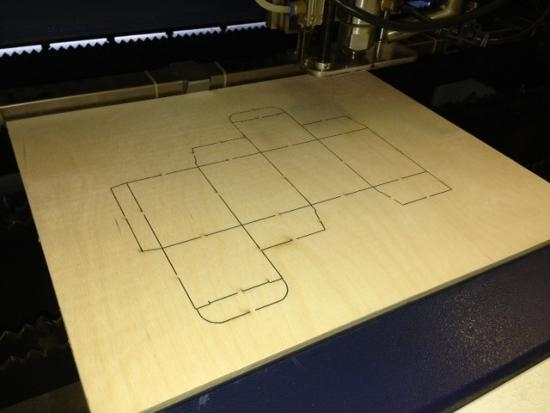
A laser die cutting machine starts when workers connect CAD design files to the DSP offline control system via USB or LCD touchscreen. The die cutting system turns vector lines into exact motion directions, eliminating manual marking or templates. The laser beam instantly heats wood above 300°C, removing material through melting and burning. Compressed air removes debris and prevents excessive charring. Single-head cutting and flight optical path design enable reliable beam transmission for this laser die cutting machine over long production runs.
Comparison with Traditional Mechanical Methods
Traditional dieboard production requires manual line drawing before motorized saw cutting, causing alignment errors. A die cutting machine eliminates these problems through non-contact operation requiring no physical tools. Cutting speeds increase 300–500% with a laser die cutting machine. Productivity improves dramatically. Dieboard laser cutting automates output quality regardless of operator skill. Accuracy improves from ±0.5mm tolerances to ±0.1mm or better with a die cutting machine. Continuous operation without warm-up times maximizes equipment useful life.
Key Applications and Benefits of Dieboard Laser Cutting Machines
Industrial Applications Across Sectors
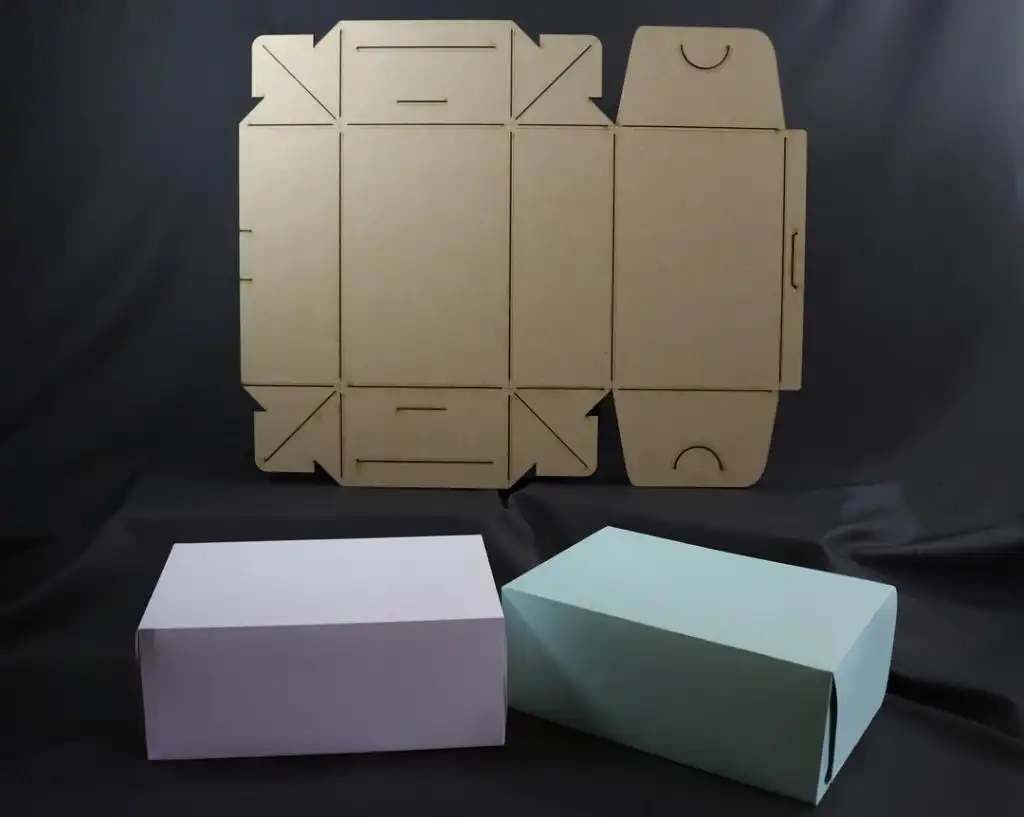
The packaging industry primarily uses a die cutting machine for custom cutting dies for corrugated cartons and folding cartons. Packaging experts use laser die cutting machine accuracy for elaborate perforation patterns and complex geometric cutouts. Advertising and signage companies need reusable stencils and templates from a die cutting machine. Textile manufacturers cut fabric patterns using laser dieboard cutting. Print companies create cardboard prototypes. A laser die cutting machine serves automotive, electronics, and consumer goods packaging with quick design iteration.
Measurable Operational Advantages
A die cutting machine delivers precision with positional accuracy within hundredths of a millimeter, ensuring packaging dies work reliably for thousands of pressing cycles without adjustment. Material waste drops from 10–15% with traditional sawing to under 3% with a laser die cutting machine by eliminating human error and optimizing nesting. Kerf width is 60% smaller than motorized saw blades. This die cutting machine keeps more usable material on each board, directly reducing raw material costs over high-volume production runs.
Real-World Performance Improvements
Complex dieboard designs took 6–8 hours to finish but now take 2–3 hours with a laser die cutting machine. Prototyping time drops from days to hours, enabling packaging makers to respond quickly to customer feedback. A die cutting machine provides flexibility for markets launching new products frequently or changing packaging seasonally. Packaging companies switching to laser dieboard cutting see ROI in 18–24 months through reduced labor and increased output. One medium company saw 340% productivity increase after replacing four manual sawing stations with two laser die cutting machines.
Types of Dieboard Laser Cutters and Technology Trends
CO2 Laser Technology for Dieboard Applications
CO2 laser systems lead die cutting machine technology with 10.6 micrometer wavelength optimal for wood absorption. A laser die cutting machine with 300W to 600W power cuts through 20–25mm thickness in a single pass while maintaining edge quality. Perfect Laser die cutting machine offers 400W for 15–20 dieboards daily and 600W for over 30 boards daily. Modular design principles make upkeep easier on this die cutting machine than integrated industrial platforms. DSP offline control enables USB file loading without continuous computer connection.
Automation and Efficiency Innovations
Auto-following focus systems on a laser die cutting machine use non-contact sensors to constantly measure distance between cutting head and material surface. This feature instantly corrects variations that would affect cut quality in fixed-focus die cutting machine systems. Shielded CO2 lasers use about 10% of the power of older high-wattage systems while cutting equally well. Cutting directly with compressed air instead of expensive nitrogen reduces running costs. Facilities report 40–50% energy savings with modern die cutting machine compared to older laser systems.
Selecting the Right Machine Configuration
Choose a die cutting machine based on production volume. Facilities processing less than 10 dieboards daily get excellent results with 300–400W laser die cutting machine systems. Those processing over 25 boards daily benefit from 600W die cutting machine for faster processing. Work area must fit largest dieboards plus 100–150mm for clamping and material movement. Material thickness capacity affects which die cutting machine handles specific dieboard types. Standard 18mm plywood needs less power than 25mm industrial boards on a laser die cutting machine.
Maintenance, Safety, and Operational Tips for Dieboard Laser Cutters
Establishing Preventive Maintenance Schedules
Daily maintenance for a laser die cutting machine includes checking focusing lens cleanliness, verifying mirror alignment, and confirming compressed air pressure. Weekly maintenance on a die cutting machine includes thorough optical system cleaning with proper lens tissues, guide rail lubrication verification, and motion system belt tension checks. Cooling system maintenance on this die cutting machine includes water levels, filter condition, and circulation pump operation. Monthly ball screw and linear guide inspection finds wear patterns before positioning accuracy is affected on a die cutting machine.
Safety Protocols and Regulatory Compliance
Class 4 laser die cutting machine requires proper machine enclosures with interlocked safety doors preventing operator access during cutting. Warning signs, restricted laser area access, and appropriate eye protection are mandatory for a die cutting machine. Ventilation systems must capture wood combustion byproducts, maintaining negative pressure in cutting rooms. Filtration systems remove particulates before air discharge. Operator training for a laser die cutting machine includes machine operation, emergency procedures, and fire suppression methods. Many facilities require certification before independent die cutting machine operation.
Troubleshooting Common Issues
Cut quality problems on a laser die cutting machine typically result from incorrect focus position, dirty lenses, or wrong parameter settings. Operators should check focus distance, verify lens cleanliness, and confirm power settings for material thickness on the die cutting machine. Inconsistent cut depth across the working area usually indicates misaligned mirrors needing optical path adjustment on a laser die cutting machine. Dimensional errors suggest dirty guide rails, worn ball screws, or loose mechanical connections requiring immediate attention on this die cutting machine to prevent further production issues.
Buying Guide: Procuring Dieboard Laser Cutting Machines
Investment Considerations and Pricing Factors
The cost of a die board laser cutting machine depends on its power level, the size of its work area, its automatic features, and the name of the brand. Basic systems that are good for small packaging businesses start at prices that most people can afford. On the other hand, high-production industrial platforms with more advanced technology and bigger work areas cost a lot more. Instead of just looking at the purchase cost, people who are thinking about buying something should think about the total cost of ownership, which includes things like setup, training, upkeep supplies, and running costs.
Businesses can keep their working cash while getting the production tools they need by using equipment leasing programs or maker payment plans. A lot of providers have flexible terms that can work with the yearly cash flow trends that are popular in the packaging industry. Tax breaks in the US like equipment depreciation and Section 179 deductions can help businesses that qualify lower their actual purchase costs by a large amount.
Evaluating Supplier Credentials and Support
Picking a dependable seller turns out to be just as important as picking the right tool specs. Companies that have been in the business for a long time—Perfect Laser has been making laser and CNC parts for 20 years—have a track record of success and a lot of technical knowledge. Approaches that focus on the customer and long-term ties over one-time sales show that the provider wants the client to succeed.
How well suppliers handle operational problems when they happen depends on their technical help system. Manufacturers who offer free lifetime advice, engineer-assisted foreign installation, and full training programs are much more valuable than sellers who only sell equipment and don't offer ongoing support. Long-term owner happiness is affected by the ease of getting new parts, the length of time it takes to get service, and the quality of the technical documents.
Having certifications from organizations like CE, TUV, and SGS shows that you are committed to high standards and following the rules. These validations by a third party give you peace of mind that the equipment meets safety and performance standards. Supplier sites with specialized research and development centers and patent files show that they are committed to ongoing innovation rather than just reselling standard equipment.
Installation and Commissioning Process
For a die board laser cutter installation to go smoothly, the building needs to be properly prepared. This includes installing the electricity service, setting up the cooling system, and making sure there is enough floor space. It is important for suppliers to provide thorough building requirements paperwork that lists things like power needs, cooling water specs, compressed air quality standards, and environmental conditions. Taking care of these things before the equipment arrives will keep installation from taking too long and ensure the best conditions for use.
Professional installation services, especially abroad installation with the help of an expert given by well-known makers, greatly lower the risks of starting. Before putting equipment into actual use, experienced workers check the mechanical assembly, align the optics, adjust the motion systems, and test its full performance. This method is used by professionals to find and fix problems in controlled settings instead of during critical work situations.
Operator training, which is done during installation, helps people get used to using machines, doing regular upkeep, and fixing basic problems. Training that is done by hand using customer materials and real output files works much better than just reading instructions. Comprehensive training programs that last three to five days make sure that workers are confident and skilled before they are allowed to operate machines on their own.
Conclusion
Innovative die board laser cutter technology is a big step forward from old-fashioned mechanical methods. It offers higher accuracy, faster production cycles, and lower costs for both packing and manufacturing. These days, CO2 laser systems can cut through boards up to 25 mm thick. They have easy-to-use settings and can automatically focus, so businesses of all kinds can use this technology. Businesses that use these systems will have a clear competitive edge thanks to the measurable benefits, such as 300–500% higher output, less waste (below 3%), and accuracy (within 0.1mm). Selecting a provider carefully and making sure they offer technical help, full training, and proven experience in the field is key to a smooth adoption and long-term operating success.
FAQ
1. How does laser cutting precision compare to traditional dieboard sawing methods?
Positioning accuracy is within ±0.1mm with die board laser cutting machines, but within ±0.5mm with mechanical sawing machines. Because it is non-contact, there are no displacement forces that would cause actual cutting tools to have different sizes. During the cutting process, automated focusing devices keep the beam focused at its best, which makes the kerf lengths the same from top to bottom. With traditional methods, mistakes in blade wear, vibration, and human setting can add up over complex cutting patterns. Computer-controlled laser systems, on the other hand, can make exact copies of designs over thousands of production cycles.
2. What dieboard materials and thicknesses work with laser cutting systems?
CO2 die board laser cutters can cut through plywood, hardwood, and mixed wood products that are often used to make package dieboards. Standard methods can work with thicknesses ranging from 15 mm to 25 mm in a single pass. The most common material standard is 18 mm plywood. Depending on the job, the cutting width can be anywhere from 0.45 mm to 1.42 mm. The auto-following focus systems can handle small differences in thickness between boards, so the quality of the cuts stays the same across the whole work area, even if the materials are warped or have flaws.
3. What safety precautions do you need to take when using dieboard laser cutting equipment?
Class 4 laser systems need protected work areas with safety doors that lock into each other to keep the beam from shining on people while they're working. Proper ventilation systems must collect and remove the leftovers of combustion that are made when cutting wood. Operators need to be properly trained in emergency stop procedures, fire control techniques, and how to wear the right eye protection when doing repair tasks that require entry to an enclosure. Warning signs and limited access to areas where lasers are used are in line with OSHA and FDA rules about laser safety in industrial settings. Regular safety checks and programs that certify operators lower the risk of accidents and make sure that rules are followed.
Partner with Perfect Laser for Superior Die Board Laser Cutter Solutions
Perfect Laser has been a top die board laser cutter maker, meeting the needs of over 10,000 satisfied customers around the world with high-performance systems designed for packaging and advertising. Our dieboard cutting machines are very good at cutting materials up to 25 mm thick. They have advanced auto-following focus systems, imported precise components, and modular designs that make them easy to maintain and keep going. We have 400W and 600W versions that can be changed to fit your business needs. Our focus on the customer means that we offer free advice for life, engineer-assisted installation overseas, and full technical support to make sure that your investment gives you the most output from the start. Get in touch with us at [email protected] to talk about how our die board laser cutters for sale can change the way you make dieboards and help your business grow faster.
References
1. Schmidt, P., & Williams, R. (2021). Advanced Laser Cutting Technologies for Industrial Manufacturing. Manufacturing Technology Press.
2. Henderson, M. (2020). Packaging Die Production Methods: Comparative Analysis of Traditional and Laser Cutting Approaches. Journal of Packaging Engineering, 45(3), 234-251.
3. Liu, Y., & Zhang, H. (2022). CNC Laser Systems: Design, Operation and Maintenance. Industrial Press Publishing.
4. Thompson, J. (2019). Precision Manufacturing with CO2 Laser Technology. International Journal of Advanced Manufacturing, 58(2), 412-429.
5. Morrison, D., & Peterson, L. (2023). ROI Analysis for Automated Cutting Systems in Packaging Industries. Business Technology Publications.
6. Carter, S. (2021). Laser Safety Standards and Best Practices for Manufacturing Environments. Occupational Safety Quarterly, 37(4), 156-173.

share your inquiry, get the quotation accordingly.
第一张审核员说包含其他公司不能用_1755049724891.webp)
Perfect Laser – Global Manufacturer of Reliable Laser Solutions


