Laser Beam Welding Process and Applications
Laser beam welding is a revolutionary way to join things together. It uses focused photon energy to make strong links between different types of materials. A laser welding machine concentrates electromagnetic waves into a very small area. This creates heat in that area that melts base metals without spreading the heat out over a large area. This controlled energy transfer creates small fusion zones with very high strength-to-weight ratios. This technology is very useful in fields that need accuracy, speed, and dependability. Modern systems have better vision, customizable controls, and real-time tracking features that help makers get consistent results with less material distortion and post-processing needs.
Understanding the Laser Beam Welding Process
How Laser Energy Creates the Weld Pool
A very narrow beam of uniform light is focused on a very small area of metal to make laser beam welding work. When this much energy is sent by a laser welding machine, the material quickly soaks it up and turns into a pool of molten metal. The process can work in either conduction mode (shallow, smooth welds) or keyhole mode (deep, narrow entry), depending on how the settings are set. The main benefit is that workers can finetune how quickly and deeply the material burns, which has a direct effect on the power and look of the weld.
Key Process Parameters That Control Weld Quality
Power, speed, and centre point all need to be just right for a good weld. Higher power makes entry better, but if it's not managed properly, it can lead to overheating. How much heat builds up in the weld zone is affected by travel speed, and how concentrated the energy is is affected by focus distance. Modern systems like fiber-based laser welding machines improve stability by maintaining consistent beam quality. Adjusting the pulse and watching in real time are features that help lower errors. This makes it easier to get clean, repeatable welds even in complex production settings.
Shielding, Precision, and Thermal Control in Practice
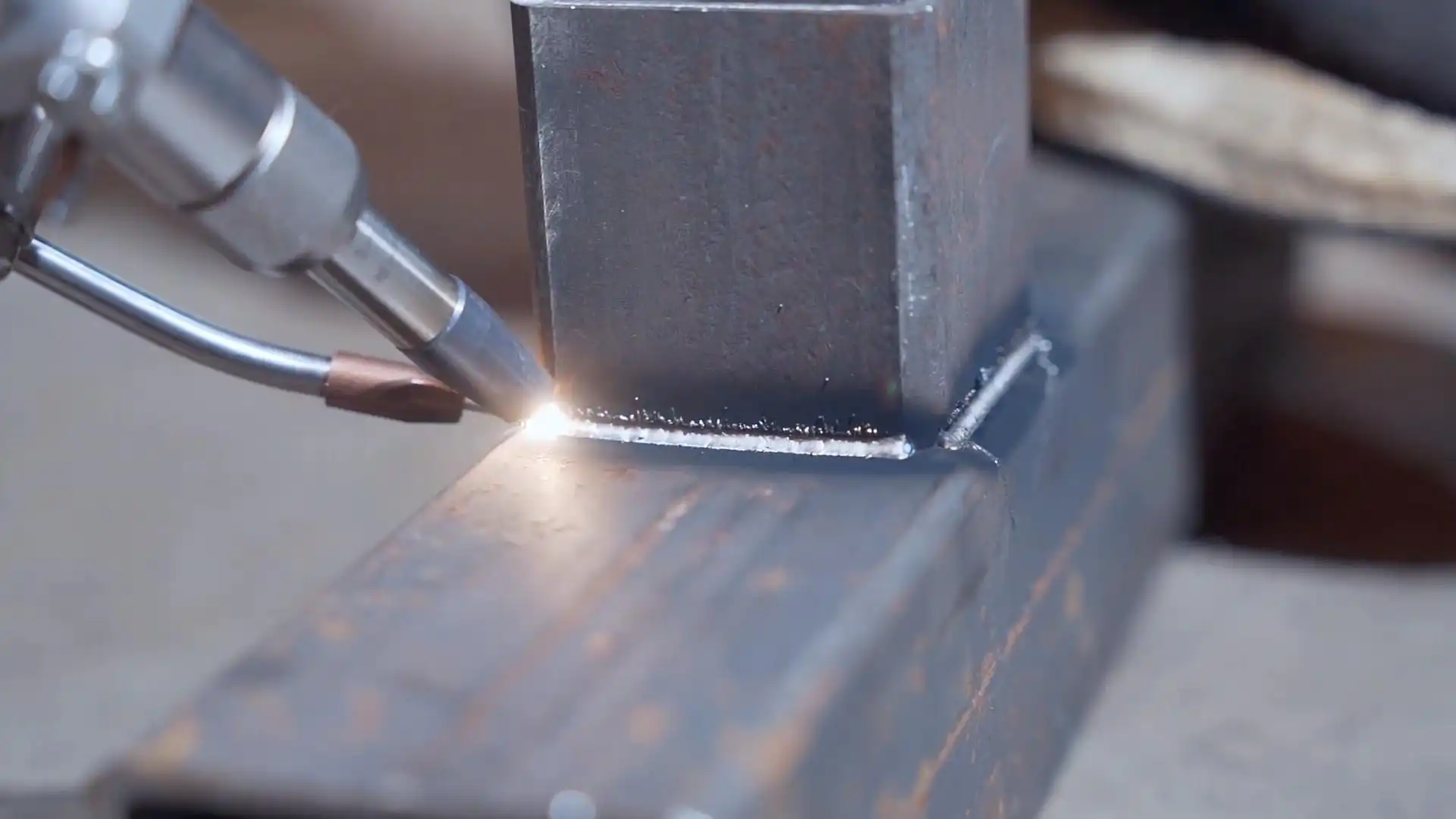
Shielding gas is a very important part of welding because it keeps the hot pool from rusting and getting dirty. This makes sure that the joints are stronger and cleaner, especially when using aluminium and stainless steel. The best thing about laser welding is that it leaves behind very little heat damage, which helps keep the structure of the material around it. When exact energy transfer is used, warping is a lot less than with older welding methods. Because of this, producers get more accurate measurements and don't have to do as much post-processing, which makes production more efficient overall.
Applications of Laser Beam Welding Machines in Industry
Automotive and Aerospace Manufacturing Solutions
Laser beam welding machines are used in many fields. For body-in-white assembly, automakers depend on laser beam welding machine technology a lot. This is because aluminum and advanced high-strength steels need to be joined precisely by a laser beam welding machine without affecting structural integrity. The small heat input from the laser beam welding machine keeps thin-gauge panels from warping and maintains dimensional accuracy during multi-station production processes.
Aerospace applications demand even more stringent quality standards. Laser welding can make full-penetration joints with little parent material loss, which is useful for fixing turbine blades, fuel system parts, and aircraft structures. This method works especially well for combining titanium alloys and nickel-based superalloys, which are hard to join with other methods.
Precision Electronics and Semiconductor Applications
Microwelding pushes laser limits for circuit manufacturing. The PE-W350 excels at miniature component assembly where other methods cause thermal damage. Applications include mobile phone vibration motors, picture tube electron guns, and missile detectors. Semiconductor packaging requires hermetic sealing with continuous leak-proof joints. The non-contact process eliminates tool wear and accesses tight spaces. Laser seam welding creates particle-free seals around package edges without excessive temperature rise.
Luxury Goods and Jewelry Craftsmanship
The PE-W350's low heat input protects gemstone integrity during setting and prong repair. Jewelers achieve nearly invisible seams on precious metals, reducing finishing steps. Watch component assembly benefits from controlled energy delivery maintaining aesthetic appearance while ensuring mechanical strength. The moving fixture and impact-resistant work platform accommodate diverse jewelry shapes. Laser welding creates strong joints without damaging delicate parts during positioning on finished pieces.
Heavy Industrial and Shipbuilding Operations
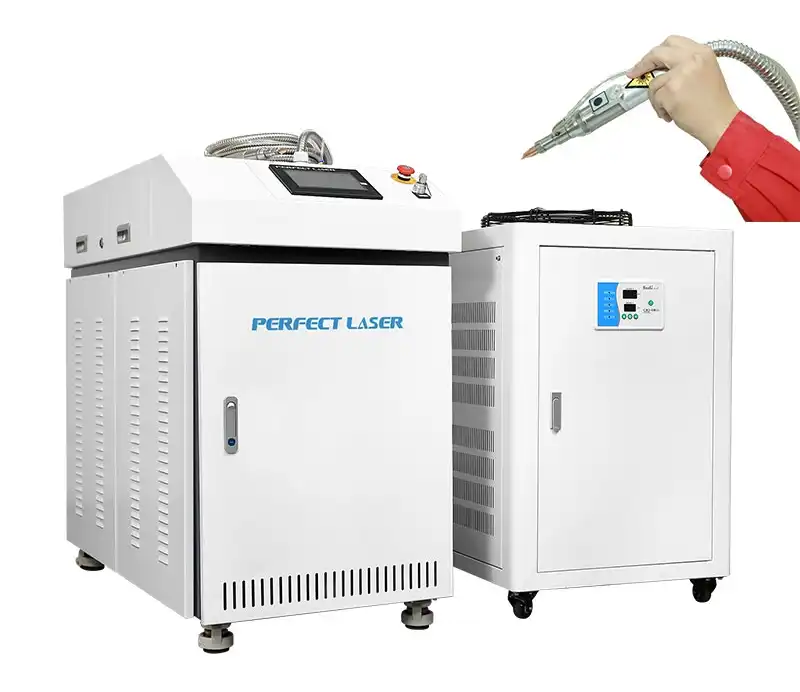
Multi-kilowatt fiber lasers fuse parts over one inch thick in a single pass, competing with submerged arc processes. Shipbuilding uses laser for deck panel joining, bulkhead fabrication, and pipe systems. Portable configurations enable welding of large structures immovable to fixed equipment. Steel fabricators report reduced distortion and less post-weld straightening compared to standard arc methods. Deep penetration welding makes laser viable for structural steel assembly.
Emerging Trends and Industry 4.0 Integration
Hybrid laser-arc systems combine deep penetration with filler metal addition. Smart manufacturing integrates laser units into networked production. Real-time quality monitoring via spectroscopy or acoustic sensing enables immediate adjustments, reducing waste. Artificial intelligence analyzes historical weld data to recommend optimal parameters for new material combinations. Solid-state lasers offer longer service life than technologies requiring frequent consumable changes. Sustainability drives energy-efficient, consumable-free laser systems.
Selecting the Right Laser Welding Machine for Your Business
Assessment of Production Requirements
Material fit is critical—fiber lasers excel with reflective copper and aluminum; CO2 suits steel. Joint complexity affects beam delivery flexibility. Handheld systems benefit job shops with varied small batches; automated CNC platforms suit production lines. The PE-W350's crane design fits between, repositioning large workpieces and automating repetitive jobs. Duty cycle standards ensure reliable operation. Continuous operations need robust thermal management and durable components.
Technology Comparison: Fiber Versus CO2 Systems
Fiber laser uses low electricity, compact footprint, and minimal upkeep. Solid-state design eliminates beam alignment and provides better beam quality for smaller spot sizes, enabling faster working times on difficult materials. CO2 lasers suit some plastics and biomaterials, offering cost savings above 10kW, but mirror and beam path cleaning adds operational complexity. The PE-W350 uses flexible optical fiber transmission, eliminating fragile mirror systems.
Evaluating Manufacturers and Support Infrastructure
Equipment reliability depends on initial build quality and ongoing technical support. Established manufacturers maintain global service networks. Perfect Laser's 30+ year history features CE-certified, TUV-inspected products. Spare parts availability for optical components and cooling systems is critical years after installation. Companies with in-house R&D demonstrate technical depth. Perfect Laser's 24/7 expert service provides operator training, process development support, and immediate troubleshooting across all time zones.
Maintenance, Safety, and Operational Best Practices
Preventive Maintenance Protocols
Systematic checking routines keep laser welding machines working well and stop them from breaking down without warning. Checking the quality and flow rate of the cooling water every day is important because optical components don't last as long when the water is dirty or doesn't move around enough. Operators must keep an eye on the state of the protective lens and replace any parts that show spatter buildup or heat stress before the beam quality gets worse.
As part of weekly maintenance, gas delivery systems are checked to make sure they are working properly and that the protecting gas is pure enough. Gases that are contaminated or not mixed properly make welds that are weak and have lower tensile properties. The intelligent management system in the PE-W350 constantly checks important parameters. It notifies workers when conditions go beyond what is considered normal, and it stops water temperature extremes that could threaten the security of the system.
Every year, trained experts do calibration services to make sure that the beam is aligned correctly, the focal point is accurate, and the power output is consistent. A professional evaluation finds that optical components or cooling systems are slowly losing their effectiveness before problems get worse and cause expensive failures. Perfect Laser's support system includes full calibration tools backed by ISO-traceable standards. This makes sure that machines stay in original specs for as long as they are used.
Safety Standards and Hazard Mitigation
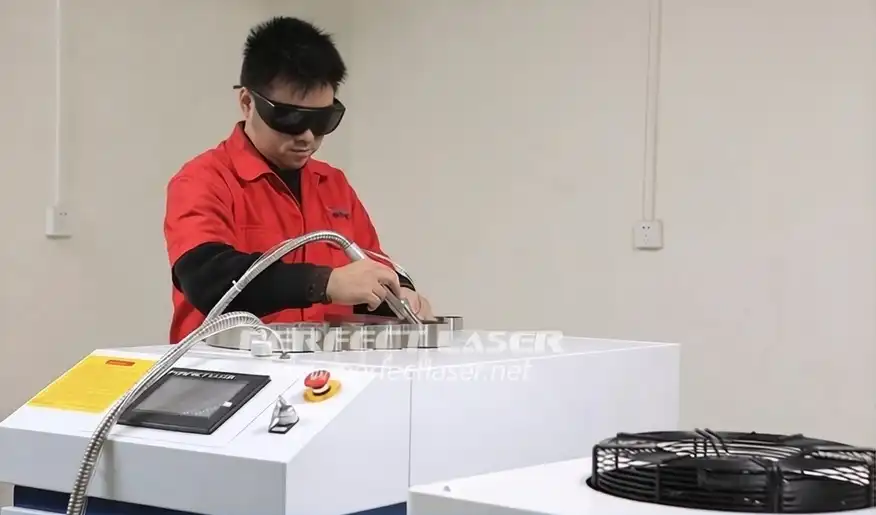
Class 4 industrial laser systems require interlocked enclosures preventing worker exposure during operation. Protective eyewear matched to specific wavelengths is essential. Lockout-tagout procedures prevent accidental laser activation during maintenance. All personnel must complete safety training covering direct beam hazards, metal dust, and reflected radiation. Fume extraction systems collect vaporized materials. The PE-W350 integrates easily with building exhaust systems and maintains stable fume production rates.
Operational Excellence Through Process Documentation
Detailed weld procedures ensure consistency across production shifts. Parameter sheets document power settings, travel speeds, focal positions, and shielding gas specifications. Statistical process control detects drift before non-conforming parts reach customers. Destructive testing validates joint strength, penetration depth, and porosity levels. The PE-W350's programmable control system stores parameter sets for various applications, enabling repeatable operations with full activity logging and quick job changeover.
Procurement and Investment Insights for Laser Welding Machines
Financial Planning and Acquisition Strategies
When investing in capital tools like a laser beam welding machine its important to carefully weigh the original costs against the long term operating expenses and added productivity that a laser beam welding machine provides New laser beam welding machines cost more upfront but come with manufacturer warranties the newest technology and an established support system for the laser beam welding machine Companies that want to minimize risk and maximize uptime for their laser beam welding machine usually choose new equipment even with higher initial cost
For businesses on a tight budget or for testing purposes where performance needs aren't as high, refurbished systems can save them money. Buyers should make sure that the repair process included replacing worn-out parts, inspecting the camera system, and testing the whole thing to make sure it works properly. Refurbished equipment from reputable sellers comes with warranties, but the covering length and scope are usually not as good as for brand-new machines.
Leasing turns one-time costs for capital items into steady costs for running the business, while keeping cash flow available for other needs. This method helps businesses that don't know how much they'll be able to produce or whose technologies are changing quickly and making tools obsolete a worry. You can get financing from equipment sellers or third-party lenders, which lets you buy things without using up your operating capital. The payment terms are based on when you expect to make money.
Cost-Benefit Analysis and Return on Investment
Laser welding ROI comes from increased throughput, improved quality, and reduced labor. Faster cycle times increase capacity without facility expansion. Reduced scrap from better process control eliminates rework and rejected parts. Welding expensive metals like titanium or Inconel quickly offsets equipment costs. The PE-W350's high-speed, multi-position welding increases output with less floor space. Automated systems eliminate arc flash exposure and reduce reliance on highly skilled welders.
Conclusion
Laser beam welding has grown into an important industrial tool with laser welding machine being used across many fields to solve a wide range of joining problems Modern laser welding machine systems like the PE-W350 give producers the accuracy speed and adaptability they need to reach quality standards and output efficiencies not possible with older methods To successfully adopt a new laser welding machine you need to carefully consider application needs carefully evaluate suppliers and commit to continuously improving the process Companies that buy the right laser welding machine and set up solid support systems will stay ahead of competition in markets getting tougher all the time.
FAQ
1. What advantages does laser welding offer compared to traditional arc welding?
Laser welding creates much smaller heat-affected zones, which keeps the material's qualities near the joints while reducing warping. When compared to arc processes, the focused energy input lets the travel speeds go faster, which increases output. Automation makes it possible to do the same thing over and over, and the non-contact process gets rid of the need for electrodes and frequent tool changes.
2. How do I determine appropriate laser power for my application?
Power needs are mostly determined by how thick the material is and how well it conducts heat. Thin parts less than 2 mm usually need 500W to 1500W, while thicker materials need systems with many kilowatts of power. Metals that reflect light, like aluminum, need more power than steel of the same width. Talking to application engineers will help you choose the best tools for your business needs.
3. What maintenance does a laser welding machine need?
Consistent performance is maintained by checking the quality of the cooling water, protected glasses, and shielding gas supply every day. The slow breakdown is stopped by checking the beam delivery parts once a week and cleaning the air systems once a month. Professional testing once a year checks the balance and power output, which extends the life of the equipment and ensures consistent weld quality.
Partner with Perfect Laser for Superior Welding Solutions
Advanced fiber laser welding technology from Perfect Laser is ready to change the way you make things. Our PE-W350 system has great beam quality, adjustable pulse control, and crane-style freedom that can be used for a wide range of tasks, from making small electronics to big industrial parts. With CE certification, TUV validation, and 63 patents covering new features, our equipment is a known example of engineering excellence around the world.
As a well-known laser welding machine manufacturer since 1995 serving customers, we offer full support, including application testing, special configurations, and expert help 24 hours a day, 7 days a week. Our expert team works closely with your production staff to find the best process settings and get the most out of your investment. Get in touch with [email protected] right away to talk about your unique welding problems and find out how Perfect Laser solutions can give you a competitive edge by making your work more precise, reliable, and productive.
References
1. Dowden, J. (2009). The Theory of Laser Materials Processing: Heat and Mass Transfer in Modern Technology. Springer Series in Materials Science.
2. Ion, J.C. (2005). Laser Processing of Engineering Materials: Principles, Procedure and Industrial Application. Elsevier Butterworth-Heinemann.
3. Katayama, S. (2013). Handbook of Laser Welding Technologies. Woodhead Publishing Series in Electronic and Optical Materials.
4. Duley, W.W. (1999). Laser Welding. John Wiley & Sons, Inc., New York.
5. Steen, W.M. & Mazumder, J. (2010). Laser Material Processing, Fourth Edition. Springer-Verlag London Limited.
6. Messler, R.W. (2004). Principles of Welding: Processes, Physics, Chemistry, and Metallurgy. Wiley-VCH Verlag GmbH & Co. KGaA.

share your inquiry, get the quotation accordingly.
第一张审核员说包含其他公司不能用_1755049724891.webp)
Perfect Laser – Global Manufacturer of Reliable Laser Solutions


