Laser Marking Machine Buying Guide for Beginners
Technical specifications, application needs, and long-term operating goals must all be carefully considered when selecting the appropriate laser marking for metal operations tools. Whether you're marking big industrial materials, jewelry, semiconductor parts, or car parts, knowing the basic rules and how to choose the right one will help you make a smart investment. This guide walks you through the most important things that buying professionals, engineers, and business owners looking for reliable, high-performance metal marking options should think about.
Understanding Laser Marking for Metal
Laser marking technology uses focused light to leave lasting, high-contrast marks on metal surfaces that don't need to be touched. Focused laser beams are shone on the material, which takes the energy and changes its surface in a specific way, such as by heating, cutting, etching, or changing color.
How Laser Marking Works on Metal Surfaces
When the laser beam hits the metal, it quickly heats the surface, which can turn it into a cloud, melt, or oxidize based on the power and speed settings. Because metals are good at absorbing this wavelength, fiber lasers that work at wavelengths around 1064nm are great for laser marking metal. This makes a mark that lasts and can stand up to heat, chemicals, UV light, and wear and tear. This is very important for businesses that need to keep track of things for a long time.
CO2 lasers (10,600nm) aren't used as much on bare metals because they don't absorb light as well, but they're great at marking metal surfaces that have been polished or oxidized. The base material and covering properties play a big role in deciding between fiber technology and CO2 technology.
Key Benefits Over Traditional Marking Methods
Laser systems are better in many ways than mechanical cutting, chemical etching, or dot peen writing. Laser marking for metal can go up to 2000mm/s in some modern systems, which cuts cycle times by a large amount. Precision is another strength. Many machines can achieve accuracy within 0.05 mm, which lets you work on small parts like circuit boards or jewelry designs with a lot of small details.
Laser marking also gets rid of the need for products like inks and chemicals, which lowers the cost of running the business and its effect on the environment. The process doesn't touch the material, so it doesn't get stressed out or deformed. This is very important when working with delicate metals or thin-gauge materials.
Safety Standards and Operator Protection
International safety rules must be followed when using laser tools. Class 4 laser systems are often used for marking things in factories, but they can hurt your eyes and skin if they are not properly contained. Machines should have protective housings, interlocks, and emergency stop features that meet CE approval standards. To avoid unintentional exposure, operators should be taught how to use the equipment correctly, wear the right safety eyewear when needed, and stick to repair plans.
How to Choose the Right Laser Marking Machine for Metal
There are many technical and practical factors to consider when choosing the best laser marking for metal device. Figuring out what your exact output needs are will help you choose the right setup.
Defining Your Production Requirements
Start by making the subject of your application clear. What kinds of metals are you going to mark? Copper, titanium, stainless steel, or valuable metals? What kind of markings do you need? Do you need barcodes, QR codes, names, or complicated graphics? How many parts do you think will be made every day, and what cycle time is fine?
For part tracking, auto and aircraft makers usually need high-speed devices that can mark aluminum alloys and titanium with deep engraving. Ultra-precise micro-marking is needed in the electronics and chip businesses to keep sensitive parts from getting damaged. Fine details and seams that can't be seen on gold and silver are important to jewelry companies. Deep-penetration writing is needed on thick steel plates and forgings for use in heavy industry.
Core Technical Parameters to Evaluate
Laser power is one of the most important specs. Most metal fiber laser writing devices have power levels between 20W and 100W. Low power (20–30W) works best for fine marks on thin materials, while high power (50–100W) lets you engrave deeper and work faster on thick or hard metals.
The quality of the galvanometer device and the control software determine how fast and accurately the markings are made. Industrial systems use fast galvo scanners that can place things at speeds of over 7000mm/s and with an accuracy of less than ±0.01mm. The focal lens is also important. Shorter focal lengths make finer features, but they also make the working area smaller. Longer focal lengths make the working area bigger, but they make the sharpness a little lower.
Machine footprint and portability vary widely. Desktop models, like the PEDB-10, are small enough to be used in workshops or for small-batch production. Large-format systems, on the other hand, can handle parts that are too big or combined production lines.

Cost Analysis and Budget Considerations
It can range from a relatively low-cost entry-level setup for basic desktop systems to a significantly higher investment for fully automatic production line systems. Aside from the initial purchase price, you should also think about the total cost of ownership, which includes factors such as energy consumption, replacement parts, maintenance schedules, and consumables.
Long-term value is greatly influenced by warranty coverage and after-sales support. Laser sources from reputable companies typically come with extended warranty protection along with technical assistance, online diagnostics, and training services. Perfect Laser has been operating since 1995 and has obtained CE, TUV, and SGS certifications, providing comprehensive support in more than 60 countries.
Sourcing from Reputable Manufacturers
When buying a mini laser marking machine for metal manufacturing tools, the reliability of the supplier is very important. Check to see if the makers have the right certifications, do their own research and development, and offer customization choices. Companies with their own tech teams can make systems fit the needs of each production run, connect them to other automated systems, and keep the software up to date.
Global service networks make sure you get expert help quickly. Perfect Laser has support services available 24 hours a day, seven days a week. They offer free consultations, sample tests, OEM customization, and standard product lines.
Comparing Laser Marking Technologies & Methods for Metal
Knowing the differences between the different types of lasers and other ways to mark things will help you choose the best technology for laser marking for metal.
Fiber Laser vs CO2 Laser for Metal Applications
Fiber lasers are the most common way to mark metal because they are better at absorption and easier to maintain. They make waves that metals can easily absorb. This makes lasting marks with high contrast and few areas that are affected by heat. Fiber systems don't need much upkeep—no gas refills, mirror adjustments, or lamp replacements—so they're great for places with a lot of production.
CO2 lasers are great for working with painted surfaces, coated metals, or polished aluminum. By removing layers of covering, they can get to the base metal, which creates contrast through color difference. But marking bare metal with CO2 devices works less well and usually needs special marking chemicals.
Laser Marking vs Alternative Technologies
In mechanical engraving, spinning tools are used to remove material physically, leaving deep lines. This way is strong, but it takes longer, makes more mess, wears out tools, and can put stress on materials. A carbide or diamond pen is used for dot peen marking to make holes in objects by hitting them quickly. It's strong and doesn't need power to keep marks on it, but it's not good for pictures or small words that need to be clear.
To carefully remove material with chemical etching, resist masks and acidic chemicals are used. This method works well for big areas, but it uses dangerous materials, takes a long time to process, and doesn't give you much design freedom.
Laser technology blends the long-lasting effects of engraving with the speed and accuracy needed for micro-components, all without the need for supplies, tool wear, or chemical dangers.
Optimizing Laser Parameters for Different Metals
To get the best writing quality, you need to change the power, frequency, and speed based on the features of the material. With modest power and high speed, you can make dark rust layers on stainless steel that look good. Aluminum is reflective and conducts heat, so it needs more power or slower speeds to get around these problems. Lower frequencies are good for brass and copper because they keep heat from building up too much.

Anodized surfaces are easy to mark with little force, which takes off the covering to reveal the base metal. Gold, silver, and other precious metals need to be carefully controlled so that they don't get damaged and marks can be seen.
Practical Tips and Checklist for Buying Your First Laser Marking Machine
It can be scary to buy your first piece of laser equipment. Using an organized method lowers your risk and helps you choose a laser marking for metal system that will work for you now and in the future.
Pre-Purchase Evaluation Steps
Set a clear budget range that includes costs for setup, training, and the first few months of running the business. Document your technical requirements: materials, mark types, output number, and available floor space. Do research on several suppliers and compare not only the specs of their tools but also their customer service, image, and list of past customers.
Before making a buy, ask for samples of the material and test it. Reliable sellers offer display services where you can send them sample parts to be marked. In this way, you can be sure that the system meets your quality and output needs. Check that machines have the right approvals for your market. For example, machines in Europe should have a CE mark, medical devices should be FDA-approved, and electricity safety standards in your area should be met.
Installation Planning and Operator Training
Check out the foundations of your building. For best performance, laser marking devices need a stable power source, enough air flow, and a temperature-controlled environment. Desktop systems, like the PEDB-10 Mini Multifunctional Automatic Portable Metal Laser Engraving Machine, only need a small amount of room and regular electricity. Industrial systems, on the other hand, might need their own electrical lines and extraction systems.
Training for operators is necessary to get the most out of tools and keep everyone safe. Good makers offer thorough training that includes how to use the software, how to change parameters, how to do regular maintenance, and how to fix problems. The software on the PEDB-10 model is very easy to use, so even a beginner can learn it quickly. It has simple menus and supports many file types, such as DXF, PLT, and JPG.
Long-Term Maintenance and Support Considerations
Set up a plan for preventative care that includes cleaning the lenses, checking the cooling system, and updating the software. Modern fiber laser systems don't need much maintenance. The PEDB-10's double red light metal moving mirror and sealed optical path design make it work without any adjustments or maintenance.
Check to see if extra parts are available and how long it will take to get them. Galvanometers, lenses, and power supplies are some of the most important parts that should be easy to get from manufacturers or area dealers. As technology improves, software updates add new features and make sure that programs work with new versions of running systems.
Introducing the PEDB-10 Mini Desktop Laser Marking Solution
There are now a lot more options for and easy access to small laser marking devices. The PEDB-10 model is a great example of how modern engineering can offer industrial-grade performance in a small, easy-to-use package that can be used for many things.
Technical Specifications and Design Features
The body of this small desktop laser engraver is made of high-strength anodized aluminum, and it was designed in a way that makes it structurally strong and stable over time. The professional laser module blends industrial high-speed oscillator technology with precise field mirror focusing to achieve cutting accuracy of 0.05 mm at speeds of up to 2000 mm/s.
The system has three working modes that can be used in different writing situations. Standard mode gives you a stable PC function for doing a lot of work at once. In handheld mode, users can mark big items, vertical surfaces, or fixed parts that can't be moved. Anti-mode configuration lets you place the machine upside down for specific tasks, meeting the needs of businesses that need to engrave multiple scenes.
Advanced Functionality for Precision Work
With its powerful 4K resolution, it can create precise, detailed writing effects that work well for designs with lots of small details, fine text, and complicated images. "What you see is what you get." Accuracy is provided by the built-in graphics sample placement function, which cuts down on setup time and material waste. This real-time image helps workers make sure that the marks are in the right place before the processing starts.
The electric lifting design can move things of different heights without having to be adjusted by hand, which speeds up the process of working with parts of different sizes. The double red light marking indicator makes it easy to see where to place things, which improves alignment accuracy and lowers the chance of human mistakes.
Software Capabilities and Ease of Use
The companion software strikes a good mix between powerful features and easy-to-use controls. Simple layouts and pre-made templates make it easy for people who have never used a program before to quickly build and make marks that look professional. The system works with common file types, so it can be easily added to current design processes. Making serialization and tracking uses easier is automatic date stamping, barcode generation, and QR code generation.
Material and Industry Applications
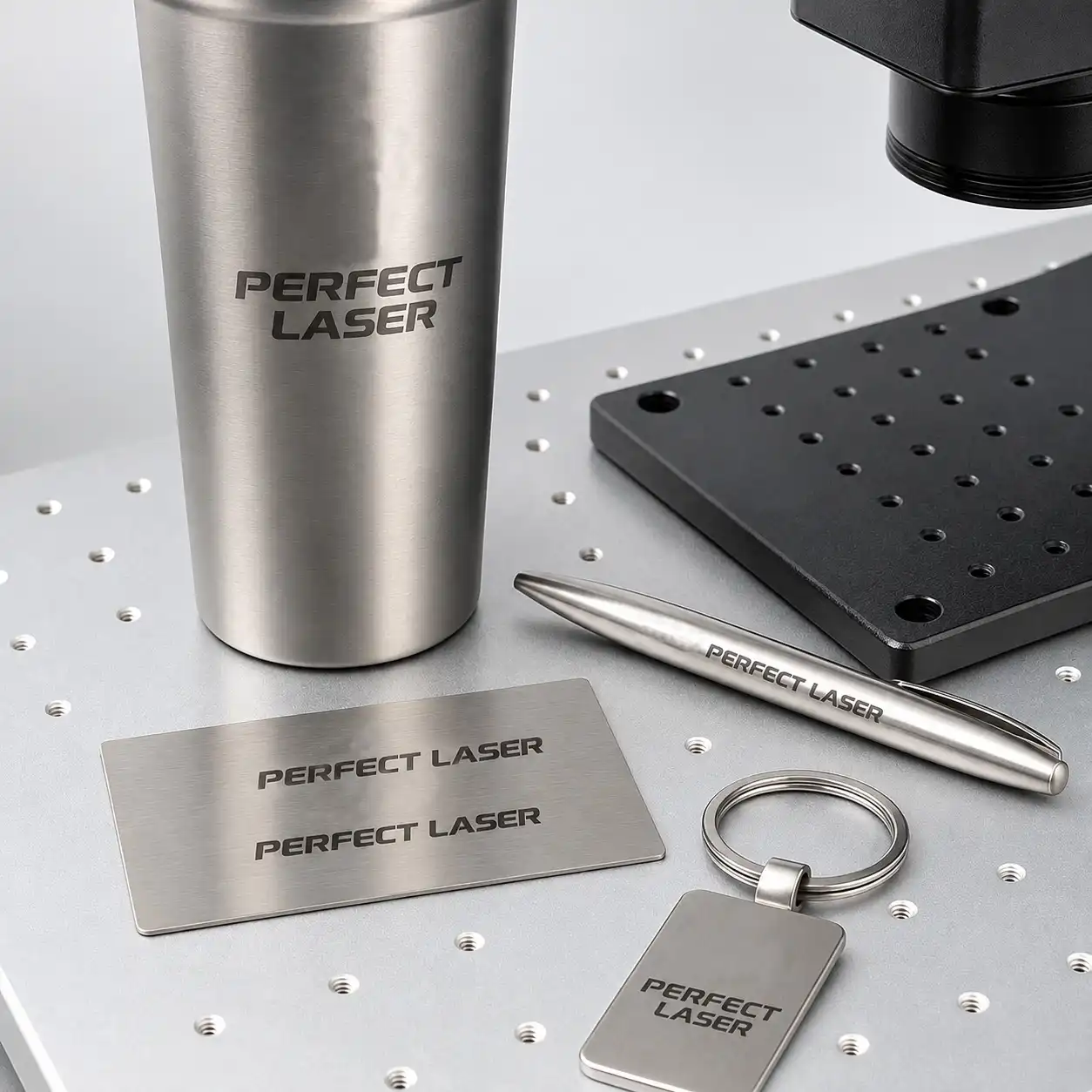
This platform can work with a lot of different materials, such as pure gold, pure silver, copper, iron, hard metal plastics, PVC, glass, and aluminum oxide. Because it's so flexible, it's useful in a lot of different areas, from home DIY enthusiasts to businesses looking to experiment with laser marking for metal without investing in expensive, large-format systems.
Case Studies: Successful Laser Marking Machine Applications in Metalworking
Laser marking for metal laser engraving machine metal technology has real-world applications that show how useful it is in a wide range of business settings.
Automotive Component Traceability
Automotive makers have to follow strict rules about being able to track parts throughout the lifecycle of a car. Laser-marked VIN parts, engine parts, and safety-critical pieces must still be readable even when they are exposed to high temperatures, oils, and wear and tear. Permanent alphanumeric codes, 2D matrix codes, and identification data can be marked with fiber lasers on aluminum engine blocks, steel frame parts, and titanium exhaust systems. Because laser marks are lasting, they make sure that international safety standards are met and make it easier to handle recalls and check the quality of products.
Medical Device Identification
Implants, surgery instruments, and diagnostic tools must all have UDI codes, lot numbers, and details about the maker marked on them by the companies that make them. These marks must not fade even after being sterilized many times, coming into contact with body fluids, and being exposed to chemicals. Laser marking on metal medical equipment is biocompatible and doesn't rust, and it meets FDA and EU MDR standards for recognition. Laser systems that are very precise can write and code on sub-millimeter-sized orthopedic screws, dental implants, and endoscope tools without damaging the materials or the finish on the surface.
Jewelry and Luxury Goods Branding
Luxury goods and jewelry need brand marks that are either hard to see or look good and don't take away from the design. Laser technology makes tiny carvings on expensive metal items like wedding bands, watches, and fashion accessories. These markings are too small to see with the naked eye, but they can be read with a magnifying glass to prove ownership. The process doesn't touch the surface, so it protects sensitive surfaces and fine features while also letting you personalize and stop counterfeiting.
Electronics Manufacturing Precision
In the semiconductor and electronics businesses, heat-sensitive parts need to be marked in ways that would not damage them with standard methods. With accuracy down to the micron level, laser devices can mark brands, serial numbers, and QR codes on circuit boards, connectors, and component housings. The controlled heat input keeps nearby electrical parts from twisting, discoloring, or losing their functionality. This keeps the product reliable and lets the supply chain be tracked.
Conclusion
When choosing the right laser marking device, you need to think about both its technical skills and how it will be used. Your investment will pay off in the long run if you know the basic differences between laser types, think about the materials and output needs you have, and work with experienced makers. Modern options like the PEDB-10 show that small systems can work just as well as industrial-grade ones. This means that businesses of all kinds can use modern laser marking for metal. If you work with the right tools and provider, you can improve the quality, efficiency, and competitiveness of your production, whether you're marking aerospace parts, semiconductor parts, high-end jewelry, or heavy industrial materials.
FAQ
1. Which metals work best with laser marking technology?
Fiber lasers can mark most metals well for laser marking for metal applications, such as copper, brass, aluminum, titanium, stainless steel, and even valuable metals like gold and silver. Oxidation makes dark lines that stand out on stainless steel. Aluminum needs a little more power, but it leaves clean lines. By taking off the coatings or anodizing, you can quickly mark coated or anodized metals by getting to the base material.
2. How permanent are laser marks on metal surfaces?
Metal that has been marked with a laser doesn't wear off easily and can stand up to chemicals, UV light, and changes in temperature. Instead of being printed or coated, the marks are caused by changing the surface of the material physically through oxidation, cutting, or heating. Industrial tests have shown that laser marks can still be read after decades of being in tough environments.
3. What safety measures are necessary when operating laser marking equipment?
Class 4 laser writing systems need protected housings, interlocks that turn off the laser when the door is opened, and emergency stop controls. Operators should get the right training on how to do their jobs safely. When things are enclosed, there are no direct contact risks. If there is enough air flow, any fumes that are made during writing can be removed. All safety measures work properly when they get regular repair.
Partner with Perfect Laser for Your Metal Marking Needs
When it comes to laser marking for metal, Perfect Laser is a trusted company that has been doing great engineering since 1995. Our wide range of products includes more than 300 different types of tools in 20+ series. These are protected by 63 national patents and meet worldwide standards set by CE, TUV, and SGS. When you choose Perfect Laser, you get access to dedicated research and development centers, strict quality testing with cutting-edge measurement tools, and service coverage in more than 60 countries, such as the US, Japan, Germany, and many other countries in Europe and Asia.
We provide technical help 24 hours a day, 7 days a week, free consultations, sample tests, and solutions that are specifically designed to meet your business needs. Our laser marking tools for metal come with full warranties that last for two years, training for the operator, and regular software changes. Whether you need desktop systems like the PEDB-10 or fully automatic production line integration, our experienced team can help you through the whole process, from choosing the right system to setting it up and running it.
Contact our team at [email protected] to talk about how you want to mark metal, get more information, or set up a trial of our tools. Use proven laser marking technology from a reputable provider that cares about your success to improve the quality of your products, make your production more efficient, and make it easier to track them.
References
1. Dahotre, N.B. and Harimkar, S.P. (2008). Laser Fabrication and Machining of Materials. Springer Science & Business Media.
2. Ion, J.C. (2005). Laser Processing of Engineering Materials: Principles, Procedure, and Industrial Application. Elsevier Butterworth-Heinemann.
3. Steen, W.M. and Mazumder, J. (2010). Laser Material Processing, Fourth Edition. Springer-Verlag London Limited.
4. Chryssolouris, G. (1991). Laser Machining: Theory and Practice. Mechanical Engineering Series, Springer-Verlag New York.
5. Migliore, L. (2017). Laser Material Processing for Industrial Applications. Industrial Press Inc.
6. Ready, J.F. and Farson, D.F. (2001). LIA Handbook of Laser Materials Processing. Laser Institute of America, Magnolia Publishing.

share your inquiry, get the quotation accordingly.
第一张审核员说包含其他公司不能用_1755049724891.webp)
Perfect Laser – Global Manufacturer of Reliable Laser Solutions


