Laser Marking Machine Basics: How Laser Mark Technology Works
Understanding the fundamentals of laser marking technology is crucial for manufacturers seeking efficient, precise marking solutions. A laser marking machine utilizes concentrated light beams to create permanent marks on various materials through controlled heat application. This non-contact process ensures high precision while maintaining material integrity, making it ideal for applications requiring durability and accuracy across industries like electronics, automotive, and aerospace manufacturing.
Understanding How a Laser Marking Machine Works
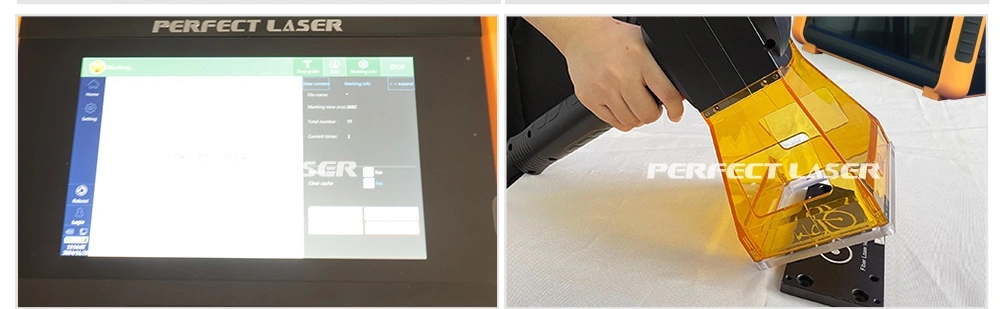
The regulated transmission of photon energy to material surfaces is the foundation of contemporary laser marking technologies. The target material's molecular structure is changed when the laser beam comes into contact with it, producing localized heat that leaves visible markings without jeopardizing the integrity of the underlying substrate.
Core Components and Functionality
Three main parts make up the laser marking system, and they all function together flawlessly. The coherent light beam is produced by the laser source, usually using CO2 gas or fiber optic media. The computer software controls the whole process using configurable settings, while the galvanometer scanning system precisely guides the beam over the marking area.
Fiber laser systems are very useful for metal marking applications since they operate at wavelengths of about 1064 nanometers. These devices are excellent at producing the deep, long-lasting markings needed for aerospace and automotive components, where traceability regulations are strict. Regardless of position, the beam delivery system ensures uniform mark quality by maintaining a constant energy density throughout the marking field.
Step-by-Step Marking Process
Material placement inside the selected marking field is the first step in the marking operation. In accordance with the predetermined design specifications, the control system initiates the galvanometer mirrors and turns on the laser source. The material surface undergoes long-lasting visual changes as a result of heat reactions caused by the focussed beam tracing the desired pattern.
Throughout the procedure, quality control systems keep an eye on the focal location, beam intensity, and speed. In order to ensure constant mark quality even while processing various material thicknesses or surface conditions, advanced systems include real-time feedback loops that automatically modify settings. For electronics makers that need to label fragile components with incredibly precise accuracy, this capacity is vital.
Types of Laser Marking Machines and Their Applications
Different laser technologies, such as the laser marker, serve specific industrial requirements based on material compatibility and application demands. Understanding these distinctions helps procurement professionals select optimal solutions for their manufacturing processes.
Fiber Laser Marking Systems
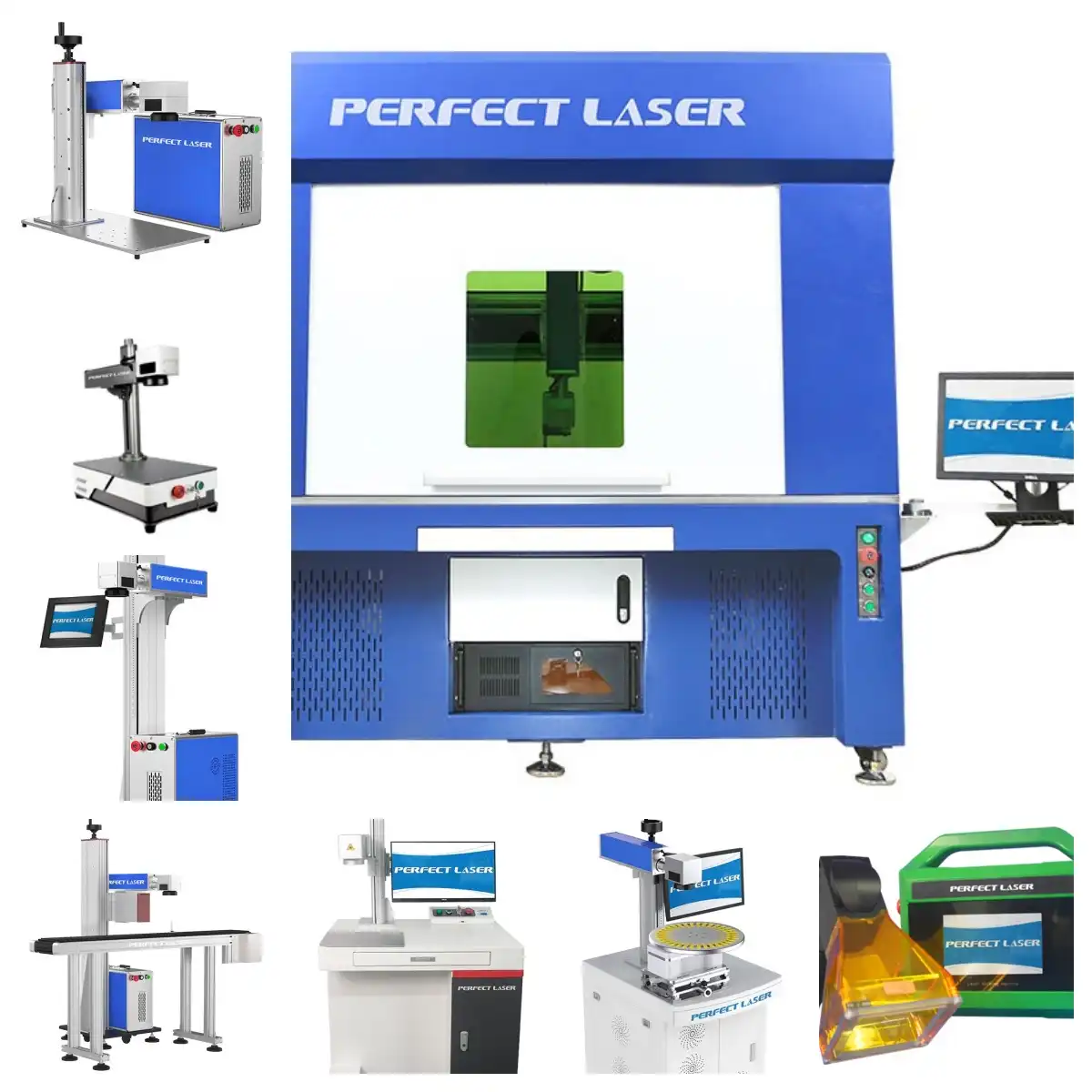
Fiber laser technology dominates metal marking applications due to its exceptional beam quality and energy efficiency. Complete fiber laser solutions, such as tiny, portable, desktop, lifting, colorful, standby, and full-closed types, are provided by Perfect Laser. These systems retain exact control over mark depth and contrast while achieving marking rates of up to 7000mm/s.
By extending its capabilities to circular items, the rotary type fiber laser engraver makes it possible to mark components like precision tools, electrical housings, and automobile parts with ease. The two-year laser source guarantee offers operational security for high-volume manufacturing environments, and the air cooling system benefits industrial applications by ensuring steady performance throughout prolonged production cycles.
UV and Specialized Marking Technologies
UV purple light laser systems are perfect for marking PCBs and delicate electronic components because they perform well in situations needing less heat effect. These devices preserve the integrity of heat-sensitive substrates by operating at lower wavelengths that allow for accurate material removal without thermal stress.
The superior marking capacity for intricate geometry is represented by the 3D dynamic focus changing working table. In high-volume manufacturing applications, this technology reduces cycle times and eliminates the need for human repositioning by automatically adjusting focus position to meet curved surfaces and different part heights.
Machine Configuration Options
For big components that are difficult to move to permanent marking stations, portable laser marking systems offer flexibility for on-site marking requirements. While industrial systems provide the throughput and dependability required by large-scale manufacturing processes, desktop designs maximize space usage in laboratory and small-scale production contexts.
These different setups meet a range of industry-specific operating needs. While automotive suppliers use industrial systems for high-volume part identification, electronics makers profit from small desktop PCB marking equipment. Regardless of scale or industry sector, the adaptability of contemporary laser marking technology guarantees compliance with current production operations.
Benefits of Using Laser Marking Machines for B2B Procurement
Laser marking technology delivers measurable advantages over traditional marking methods, particularly in terms of operational efficiency and mark quality. The non-contact process eliminates tool wear and reduces maintenance requirements, translating directly to lower operational costs and improved production uptime.
Precision and Quality Advantages
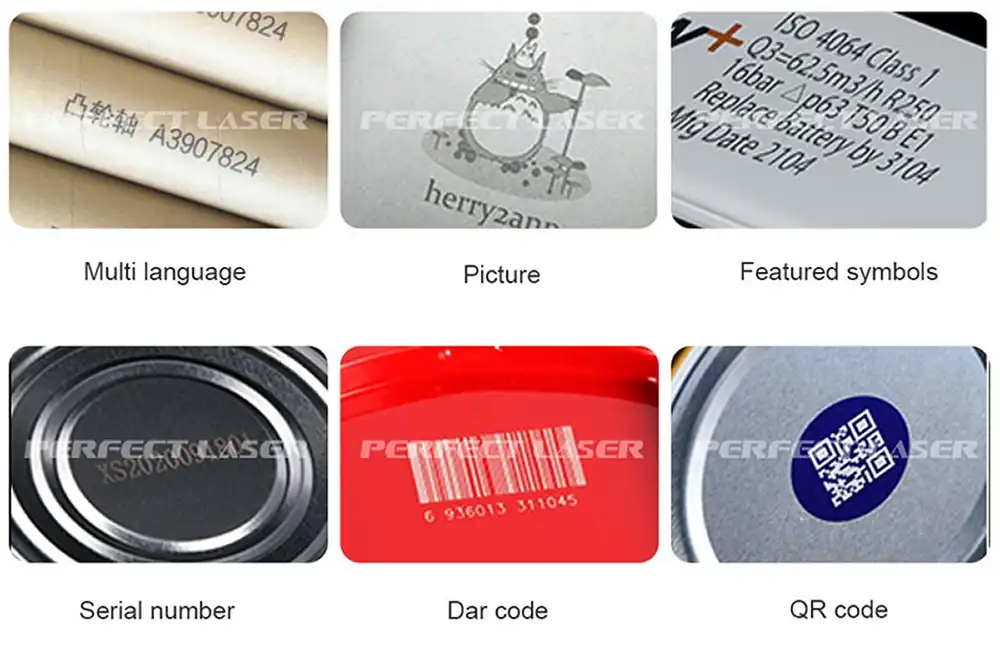
The inherent precision of laser marking systems enables creation of marks with tolerances measured in micrometers, critical for applications requiring fine detail reproduction. Electronics manufacturers achieve ultra-fine marking on components as small as individual IC packages, while maintaining legibility throughout the product lifecycle.
Mark durability is far better than traditional options. In contrast to printed or stamped identifications, laser-created markings are resistant to abrasion, chemical exposure, and temperature cycling. For automotive and aerospace applications, where component traceability must last for decades of service life, this permanence is crucial.
Economic and Environmental Benefits
The elimination of consumable marking materials reduces ongoing operational costs while supporting environmental sustainability initiatives. Traditional marking methods require inks, solvents, or mechanical tooling that generate waste streams and recurring expenses. Laser marking systems operate with minimal consumables, requiring only periodic maintenance of optical components.
Energy efficiency represents another economic advantage. Modern fiber laser systems convert electrical energy to marking power with exceptional efficiency, reducing utility costs compared to alternative technologies. The stable laser source design extends service life while maintaining consistent performance characteristics throughout the operational period.
Production flexibility enables rapid changeover between different marking patterns without tooling modifications. This capability proves particularly valuable for manufacturers producing multiple product variants or custom configurations, eliminating the inventory and setup costs associated with dedicated marking tooling.
Maintenance Tips and Safety Precautions for Laser Marking Machines
Proper maintenance protocols for the fiber laser marking machine ensure consistent performance and extend equipment service life while protecting operational personnel from potential hazards associated with laser radiation exposure.
Essential Maintenance Practices
Regular cleaning of optical components maintains beam quality and prevents gradual performance degradation. The protective lenses require inspection and cleaning according to manufacturer specifications, typically involving specialized solvents and lint-free cleaning materials. Contamination on optical surfaces can cause beam distortion and reduced marking quality.
Calibration procedures verify scanner accuracy and maintain marking precision over time. These procedures involve marking test patterns and measuring dimensional accuracy using precision measurement tools. Any deviation from specified tolerances indicates the need for adjustment or component replacement.
System diagnostics monitor laser power output, cooling system performance, and control system functionality. Modern systems incorporate self-diagnostic capabilities that alert operators to potential issues before they impact production quality, enabling proactive maintenance scheduling that minimizes unplanned downtime.
Safety Protocols and Compliance
Laser safety requires adherence to established industrial standards including ANSI Z136.1 and IEC 60825 guidelines. Personal protective equipment includes appropriate laser safety eyewear rated for the specific wavelengths in use. Safety interlocks prevent laser operation when enclosure doors are open, protecting personnel from accidental exposure.
Training programs ensure operators understand proper safety procedures and emergency response protocols. Regular safety audits verify continued compliance with applicable regulations and identify opportunities for safety improvements. Documentation of safety training and maintenance activities demonstrates due diligence in regulatory compliance.
Choosing the Right Laser Marking Machine for Your Business
Selecting appropriate laser marking technology requires careful evaluation of application requirements, production volumes, and material compatibility factors. This analysis ensures optimal return on investment while meeting current and anticipated future needs.
Application-Specific Considerations
Material compatibility represents the primary selection criterion. Laser marking machines with fiber lasers excel with metals and engineering plastics, while CO2 systems work effectively with organic materials and certain ceramics. UV lasers provide the minimal heat input required for sensitive electronic components and specialized polymers.
Production volume requirements influence system configuration selection. High-volume applications justify industrial systems with advanced automation features, while smaller production runs may benefit from portable or desktop configurations that offer operational flexibility without excess capacity costs.
Marking precision requirements vary significantly across industries. Luxury goods manufacturers need aesthetic finishes that complement product appearance, while automotive suppliers focus on durability and contrast for functional identification. Understanding these requirements guides technology selection and system specification.
Supplier Selection Criteria
Access to thorough technical support and service skills is ensured through collaboration with reputable manufacturers. The basis for dependable product development and customer support services that last the whole equipment lifespan is provided by Perfect Laser's 24 years of industry expertise.
When calculating the total cost of ownership, warranty coverage and servicing availability are important considerations. Perfect Laser provides extensive after-sales service, including installation, training, and continuing technical support, along with two-year laser source warranties. This support system guarantees quick technical problem solving and reduces operational risks.
Adherence to international quality and safety standards is demonstrated by certification compliance. In order to streamline procurement procedures and guarantee regulatory compliance, Perfect Laser maintains CE, TUV, and SGS certifications that verify product quality and safety compliance across international markets.
Perfect Laser: Your Trusted Laser Marking Technology Partner
Since 1995, Perfect Laser Co., Ltd. has made a name for itself as a leading producer of industrial laser equipment, creating all-inclusive solutions that meet various marking needs in a variety of sectors. With over 20 series and 300 different types of laser equipment, our broad product portfolio offers clients solutions that are exactly tailored to their particular needs.
Comprehensive Product Portfolio
Our fiber laser marking systems span the complete range of industrial requirements. The mini type and portable configurations provide flexibility for field applications and space-constrained environments, while desktop and lifting type systems optimize laboratory and production line integration. Specialized colorful marking and full-closed type systems address unique application requirements including aesthetic finishes and controlled environment operations.
Advanced technology integration distinguishes our product offerings. The 3D dynamic focus shifting working table enables marking on complex geometries without manual repositioning, while our UV purple light systems provide the minimal thermal impact required for sensitive electronic components. These technological capabilities ensure compatibility with the most demanding industrial applications.
Our presence in Germany, Japan, Italy, Russia, South Korea, Turkey, Brazil, India, and the United Arab Emirates shows our dedication to global markets and a wide range of application needs. Our product development approach is informed by this worldwide expertise, which guarantees that our solutions satisfy a variety of operational and regulatory criteria.
Technical Excellence and Support Services
Our research and development capabilities center around two dedicated R&D facilities that collaborate on advancing laser marking technology. With 63 patents and numerous core technological achievements recognized at international levels, we maintain our position at the forefront of laser marking innovation.
Advanced testing tools such as CO2 laser meters, CNC grinding machines, and focus system analyzers are part of quality assurance procedures. These thorough testing methods guarantee constant product quality and performance dependability that satisfies the rigorous demands of industrial applications.
We promise to provide free product consultations, round-the-clock online assistance, solution suggestions, and thorough after-sales support. This support structure extends through OEM customization capabilities and extended warranty coverage that provides operational security for our customers' investments.
Conclusion
Laser marking machines represent a fundamental shift toward precision, efficiency, and sustainability in industrial marking applications. The comprehensive understanding of laser marking principles, system types, and application considerations enables informed procurement decisions that align with operational requirements and long-term business objectives. Modern laser marking machines deliver exceptional precision, durability, and operational flexibility while reducing environmental impact and operational costs compared to conventional marking methods.
FAQ
1. What is the difference between fiber and CO2 laser marking systems?
With a wavelength of 1064 nm, fiber lasers are very good for marking technical metals and plastics fast and accurately. CO2 lasers work effectively on certain polymers, ceramics, and organic materials. Their wavelength is 10,600 nm. Longer service life and greater energy efficiency are often provided by fiber systems.
2. Which materials are compatible with laser marking technology?
Stainless steel, aluminum, titanium, engineered plastics, ceramics, and specialty alloys are just a few of the materials that laser marking can handle. Laser type and wavelength determine material compatibility; UV systems are made for heat-sensitive materials like electronics components, whereas fiber lasers are intended for metals.
3. What maintenance schedule should I follow for laser marking equipment?
Optimal performance is maintained by monthly calibration checks and weekly cleaning of protected lenses. Every quarter, thorough system diagnostics should take place, and yearly expert service checks are advised. For steady functioning, the air conditioning system's filter has to be changed every six months.
Ready to Transform Your Production with Advanced Laser Marking Solutions?
Modern laser marking equipment made especially for demanding industrial applications is provided by Perfect Laser. From small portable devices to comprehensive industrial systems, our extensive product line offers specialized configurations that guarantee the best answers for your particular needs. We offer the dependability and performance your operations require with our 2-year laser source warranty, 7000mm/s marking speed capabilities, and worldwide certification compliance.
Discover the benefits of working with a reputable provider of laser marking machines that provides full technical assistance, installation services, and continuing maintenance plans.Contact our technical specialists at [email protected] to discuss your specific marking requirements and discover how our advanced laser marking technology can enhance your production efficiency and product quality.
References
1.Migliore, Larry R. "Laser Materials Processing Fundamentals and Applications." Industrial Laser Solutions Magazine, 2019.
2.Steen, William M. and Mazumder, Jyoti. "Laser Material Processing: Fourth Edition." Springer-Verlag Engineering Publications, 2010.
3.Ready, John F. "Industrial Applications of Lasers: Second Edition." Academic Press Advanced Manufacturing Series, 2018.
4.Dahotre, Narendra B. "Laser Fabrication and Machining of Materials." Kluwer Academic Publishers Manufacturing Technology Series, 2008.
5.Chryssolouris, George. "Laser Machining: Theory and Practice." Mechanical Engineering Series, Springer Publishing, 2013.
6.Powell, John. "CO2 Laser Cutting and Welding Technology in Manufacturing Applications." Industrial Manufacturing Processes Handbook, 2016.

share your inquiry, get the quotation accordingly.
第一张审核员说包含其他公司不能用_1755049724891.webp)
Perfect Laser – Global Manufacturer of Reliable Laser Solutions


