Pneumatic Dot Peen Engraver Marking Machines: Features, Accuracy, and Use Cases
The pneumatic dot peen marking machine is an important piece of modern industrial production technology. It can permanently and accurately identify metals and hard plastics. These strong systems use compressed air to move a carbide stylus, leaving deep, tactile marks that can last in hard conditions and offer the best tracking. From engine parts for cars to precise electronic parts, pneumatic dot peen technology meets the most important marking needs in a wide range of industries while keeping high accuracy and dependability.
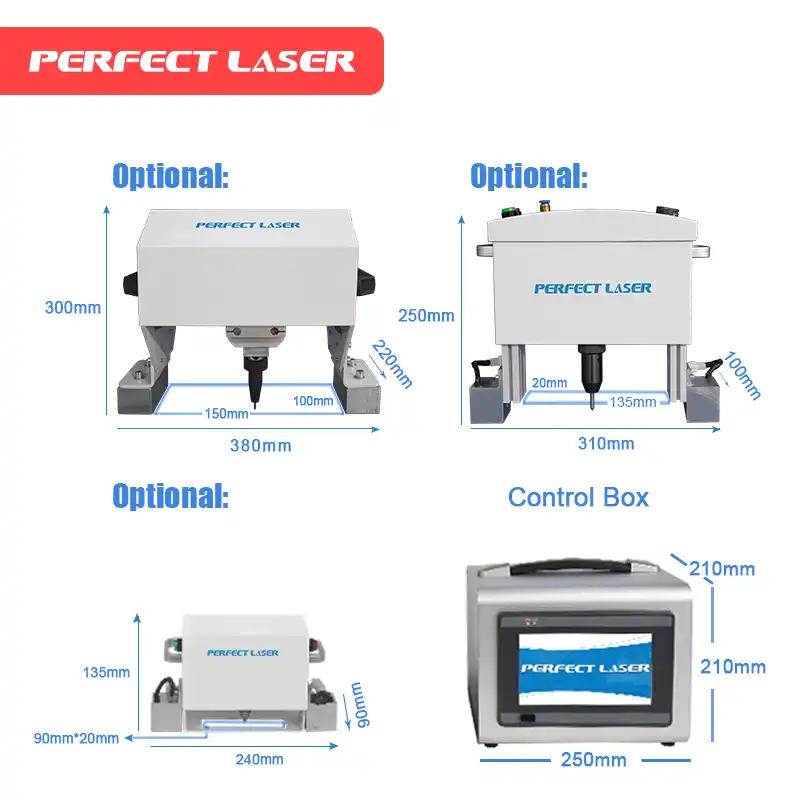

Understanding Pneumatic Dot Peen Marking Machines
The basic idea behind pneumatic dot peen marking machine technology is simple but complex, and it has been used in industry for decades and worked well every time. A precision marking pin is powered by compressed air and quickly hits the workpiece's surface to make lasting dot patterns that can be used to make characters, logos, and codes.
Core Components and Working Mechanism
The marking head assembly, pneumatic actuator, digital driver, and safe base fixture are the most important parts of a pneumatic marking system. A hardened carbide or diamond-tipped stylus inside the writing head gets its power from the pneumatic cylinder. The cylinder changes the pressure of compressed air into a controlled hitting force. The controller controls the depth, speed, and formation of the design by using complex software to precisely organize the movement of the pins. Air pressure is usually between 60 and 90 PSI. This provides a steady flow of force that ensures a consistent mark level across a range of material hardnesses. This pneumatic method is clearly better than electromagnetic ones, especially in places where electrical interference could affect the quality of the marks or where long-term use requires better sturdiness.
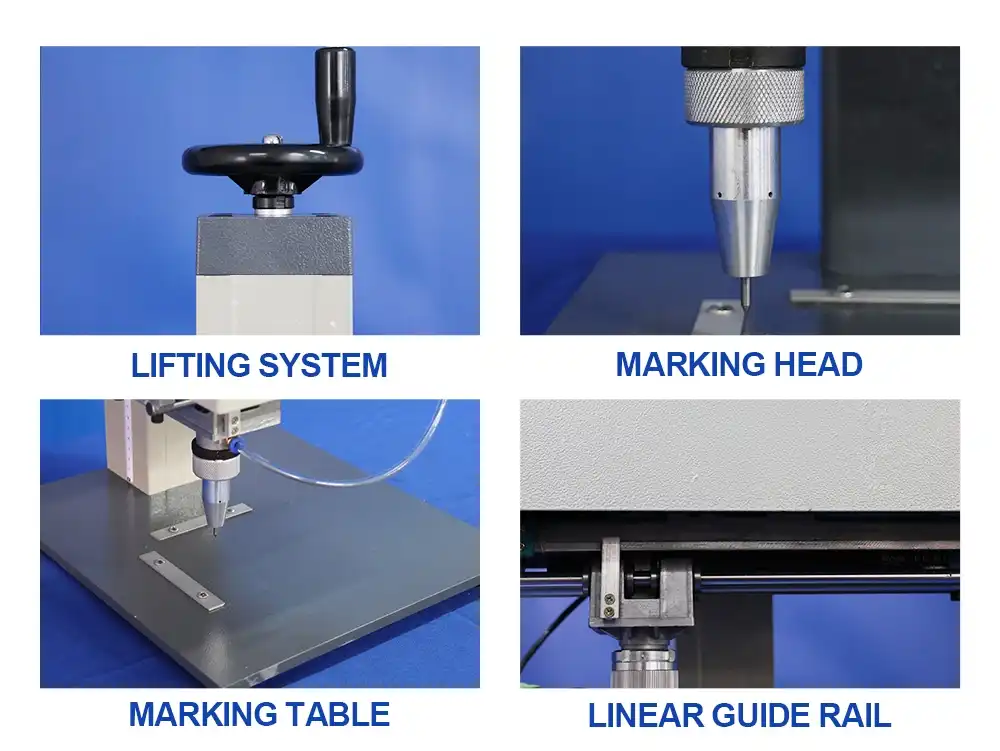
Precision Engineering for Industrial Applications
Modern pneumatic systems use advanced tracking technology to make markings accurate to within ±0.1mm, which meets strict industry standards for identifying parts. The air drive system lasts a very long time. High-quality units can write millions of times before they need to be serviced. This dependability comes from the fact that air-powered devices are more resistant to damage and wear than complicated electrical drive systems. Perfect Laser's air marking solutions are a great example of these engineering ideas because they use precision-machined parts and smart control systems that can adapt to different marking needs while keeping quality high over long production runs.
Comparing Pneumatic Dot Peen Machines with Other Marking Technologies
When purchasing tools for marking, knowing the competition helps procurement workers make smart choices. When it comes to marking ways, pneumatic dot peen marking machine technology stands out because it has special benefits for certain uses.
Pneumatic vs. Electric Dot Peen Systems
In harsh industrial settings where dust, shaking, and changes in temperature can damage electrical parts, pneumatic systems work better than other types. Electric units might be faster at marking things in controlled settings, but pneumatic options are more reliable and need less upkeep. The air-driven device, like a dot peen engraver, always produces the same amount of force, no matter what the environment is like. This makes sure that the quality of the marks stays the same throughout production processes. Electric systems usually cost less to set up, but they may need to be serviced more often, especially in tough industrial environments. Pneumatic units are better for high-volume production settings because they last longer and require less downtime, which makes them worth the extra money.
Comparison with Laser Marking Technology
Laser systems are great for writing surfaces that need to be done quickly and with great accuracy. But they leave marks that aren't very deep and may wear off in harsh circumstances. Pneumatic dot peen makes deep, felt marks that can be read even after a lot of wear and tear, chemical contact, or changing temperatures. Because of this deep benefit, pneumatic marking is necessary for parts that need to be identified permanently throughout their service life. Because of the radiation risks, laser systems also need a lot of safety infrastructure and training for operators. Pneumatic units, on the other hand, can work safely with just a few pieces of protection gear. When it comes to compatibility, materials are very different. Lasers may have trouble with surfaces that reflect light a lot, but air pins work well with all kinds of metal.
Traditional Marking Method Comparison
Pneumatic dot peen is more flexible and can be automated than methods like embossing, etching, or pressing. With traditional methods, you often need to make your own tools for each marking pattern. But with software changes, customizable pneumatic systems can quickly adapt to new needs. This flexibility cuts down on setup time and makes small-batch marking more cost-effective.
Applications and Industry Use Cases of Pneumatic Dot Peen Marking Machines
The usefulness of pneumatic dot peen marking machine technology is seen in many fields, where it solves specific labeling problems reliably. Knowing about these uses helps buyers see how the technology could be useful in their own individual work situations.
Automotive and Machinery Manufacturing
Automakers rely on air marking to identify engine parts, and the lines have to be able to withstand high temperatures, chemicals, and mechanical stress. Permanent labeling is used to keep track of engine blocks, transmission housings, and other important safety parts throughout the lifecycle of a car. Perfect Laser's rotary dot peen marking machines excel in these applications, accommodating curved surfaces like cylinder heads and bearing systems. Manufacturers of bearings use air systems to mark batch numbers and size codes on hardened steel surfaces that are too difficult to mark with any other method. The deep etching feature makes sure that the identification can still be read even when oils and abrasives are used.

Metalworking and Hardware Tools Industry
Permanent marking is an important way for tool makers to create brand character and give important measurement references. Markings on precision instruments need to be able to be seen clearly for the whole time the tool is being used and not get in the way of the useful surfaces. Tools like precise measuring instruments and heavy-duty building equipment can all have safety certifications, serial numbers, and calibration data marked on them by pneumatic systems. Portable pneumatic marking units can work with complex shapes without the need for special fixtures on curved and uneven tool surfaces. Perfect Laser's portable metal marking machines make it possible to mark big tools and assemblies that can't be moved to fixed marking sites.
Electronics and Appliance Manufacturing
For quality control and to stop cheating, marking electronic components needs to be precise and consistent. When writing small parts like circuit boards and connector housings, you have to be very careful not to go over the allowed dimensions. LCD control pin marks give these delicate tasks the accuracy they need while keeping the long-lasting benefits of air operation. Manufacturers of appliances put information about their products, model numbers, and safety codes on metal building parts so that they can be easily identified in the future. During the life of the device, the mark will stand up to paint processes, cleaning chemicals, and normal wear and tear.
Specialized Industrial Applications
Marking pressure vessels is an important safety measure because lasting labeling makes sure that maintenance and inspection schedules are followed. The flange pin marking and oxygen bottle cylinder neck pin marking systems from Perfect Laser meet these specific needs with precision engineering for safety-critical uses. These specialized systems show how pneumatic marking technology can be used to meet the specific needs of different industries while still offering the main benefits of long-lasting, accurate, and reliable operation that define good pneumatic systems.
Maintenance, Safety, and Operational Tips for Pneumatic Dot Peen Machines
For hydraulic marking systems to work as well as possible and last as long as possible, you need to know the right way to maintain them and follow safety rules. When units are well taken care of, they work consistently and have less unwanted breaks.
Essential Maintenance Procedures
Proper maintenance ensures consistent performance and longevity of pneumatic dot peen machines. Clean, dry compressed air prevents contamination and wear, while filters and moisture control protect internal components. Regular inspection of air lines, seals, and lubrication reduces failures. Monitoring stylus wear and ensuring correct alignment maintains marking quality, consistent depth, and prevents damage to the marking head.
Safety Protocols and Best Practices
Safe operation requires understanding compressed air risks and following strict procedures. Operators should be trained in shutdown and emergency protocols, while protective gear like safety glasses prevents injury from debris. Proper ventilation removes particles, and pressure relief procedures avoid accidental activation. Lockout/tagout practices and routine pressure testing ensure system stability and reduce potential safety hazards during maintenance.
Troubleshooting Common Issues
Inconsistent marking depth often results from unstable air pressure or worn components. Checking pressure at the marking head helps identify supply issues, while verifying stylus alignment ensures uniform marking patterns. Control system diagnostics detect electrical faults affecting performance. Modern systems, such as those from Perfect Laser, include user-friendly diagnostic tools that simplify troubleshooting and reduce downtime.
Buyer's Guide – Selecting and Procuring Pneumatic Dot Peen Marking Machines
To buy pneumatic dot peen marking machine tools successfully, you need to think about a number of things that will affect their long-term performance. Knowing about these things helps you make smart choices that match the capabilities of your tools with the needs of your output.
Key Selection Criteria
【包装】
Selecting pneumatic dot peen marking machines requires evaluating marking accuracy, depth consistency, and production rate needs. Material compatibility ensures reliable performance across substrates, while integration requirements determine connectivity for standalone or automated systems. Workspace constraints influence machine type, from portable units to rotary systems. Perfect Laser offers flexible interfaces and configurations for diverse applications.
Evaluating Supplier Capabilities
Supplier evaluation should consider technical support, spare parts availability, and service response time beyond initial cost. Strong warranties reflect product reliability, while training and documentation improve operator efficiency. Customization is essential for specialized applications. Perfect Laser provides global support and tailored solutions, helping businesses optimize performance and meet unique operational requirements.
Financial Considerations and ROI Analysis
A full cost analysis includes purchase price, installation, training, and ongoing expenses like energy, maintenance, and spare parts. Pneumatic systems often reduce operating costs compared to alternatives. ROI is driven by improved productivity, reduced labor, and consistent quality. Permanent marking eliminates labeling costs and enhances traceability, delivering long-term value beyond basic functionality.
Conclusion
Dot peen marking machine technology keeps showing its worth in a wide range of industrial settings where lasting identification is still very important. Pneumatic systems are a smart choice for makers looking for long-term marking solutions because they are accurate, reliable, and easy to use in a variety of situations. Perfect Laser has a wide range of products that can be used for a variety of tasks. Their high quality and excellent customer service make sure that the products are installed correctly. When procurement professionals understand the features, accuracy levels, and use cases described in this guide, they can make choices with confidence that improve operational efficiency and offer long-term value over an extended service life.
FAQ
1. What materials can pneumatic dot peen marking machines mark effectively?
Metals like stainless steel, aluminum, brass, copper, and strengthened steel alloys work great with pneumatic writing systems. They also do a good job of marking hard metals, PVC, and composite materials. Because they can make strong impressions, they are perfect for things that need to be permanently marked and can stand up to harsh circumstances.
2. How does marking accuracy compare between pneumatic and laser systems?
Positional accuracy for pneumatic systems is usually within ±0.1mm, while precision for laser systems may be a little better. But gas marks are better because they are more consistent in depth and last longer. The choice relies on the needs of the application. Pneumatic methods are better when mark durability is more important than fine detail.
3. What maintenance schedule should be followed for optimal performance?
Checking the air system once a week and lubricating it once a month keep it running at its best. Inspections of the pen every three months keep the quality from going down, and servicing of the hydraulic parts once a year makes sure they work properly. When filters and moisture control are done right, upkeep needs are kept to a minimum and component life is greatly increased.
Perfect Laser: Your Trusted Pneumatic Dot Peen Marking Machine Manufacturer
If you need high-quality pneumatic writing options that work really well in tough industrial settings, Perfect Laser is the company you can trust. We have a wide range of products, such as flat dot pin marking machines, rotary dot peen systems, portable metal marking units, LCD control pin markers, flange marking systems, and oxygen bottle cylinder neck markers that are made to leave permanent, professional marks on metals and hard plastics. We have been making things for more than 25 years, are CE-certified, and offer professional help around the world. We offer custom solutions that are backed by full warranties and quick service. Our pneumatic dot peen marking machine systems are easy to use, produce high-quality marks, and are built to last, so they can meet your toughest labeling needs. Talk to our technical experts at [email protected] about your unique marking needs and find out how Perfect Laser's air marking solutions can help you improve the speed and accuracy of your production.
References
1. Industrial Marking Standards and Practices for Manufacturing Traceability, American Society for Quality, 2023.
2. Pneumatic System Design and Applications in Industrial Automation, International Fluid Power Society, 2022.
3. Comparative Analysis of Direct Part Marking Technologies in Automotive Manufacturing, Society of Automotive Engineers Technical Paper Series, 2023.
4. Materials Science Considerations for Permanent Industrial Marking Applications, Materials Research Society Proceedings, 2022.
5. Safety Guidelines for Compressed Air Systems in Manufacturing Environments, Occupational Safety and Health Administration Technical Manual, 2023.
6. Quality Control and Traceability Requirements in Aerospace Component Manufacturing, Aerospace Industries Association Standards, 2022.

share your inquiry, get the quotation accordingly.
第一张审核员说包含其他公司不能用_1755049724891.webp)
Perfect Laser – Global Manufacturer of Reliable Laser Solutions


