What Is a Rotary Die Cutting Machine and When Should You Use One
When making things, a rotary die cutting machine is very accurate. It uses cylinder-shaped dies on spinning cylinders to cut, shape, and score materials all the time. Rotary die cutters are ideal for high-volume processes needing uniform cuts in materials like cardboard, labels, gaskets, and flexible packages because they keep constant material flow, unlike flatbed systems that move back and forth. Industries that need to do precise cutting over and over again, like those that make packaging, auto parts, and labels, can benefit from rotary die cutting technology when speed of production, accuracy in measurements, and efficiency become important for staying ahead of the competition.
Understanding Rotary Die Cutting Machines
The Fundamental Working Principle
Rotary die cutting involves rotating a cylinder-shaped die and anvil. This slices the material between the surfaces. The anvil provides counter-pressure, and the cutting die's raised edges match the desired form. Modern rotary die cutting machines can cut over 500 feet per minute, quicker than conventional methods. With continuous motion, there are no speeding up and stopping down pauses as with flatbed systems. This reduces part mechanical stress and manufacturing time.
The material passes via tension-controlled unwinders, inspection stations, and the die cutting zone to become finished pieces that may be picked up or moved. Precision registration systems align printed images and cut patterns within 0.5 mm over thousands of cycles.
Comparing Rotary Die Cutting with Alternative Methods
Manufacturing businesses must consider many cutting processes before buying new equipment. Flatbed die cutting works effectively for thick materials and small production runs since it reciprocates. However, cycle speeds are still substantially slower than rotary systems. Laser cutting is exact and doesn't need dies, making it ideal for testing and generating changeable designs, although large manufacturing may increase unit cost.
Digital cutting methods allow small quantities and frequent design changes without die costs. Rotary die cutting is superior when thousands of comparable cuts must be produced per hour at low cost. Which technique to choose depends on quantity, material qualities, design difficulties, and budget. Laser-based solutions are increasingly used in vehicle and electronics manufacturing. Packaging procedures that need stable designs favor rotation technology.
Machine Types: Manual, Automatic, and Hybrid Systems
Manual rotary die cutters need material, tension, and quality control. These simple approaches work well for small to medium-sized firms with limited budgets and volume demands, but high labor costs and irregularity make them uneconomical in the long run.
Automatic rotary die cutting machines use logic controllers, servo motors, and sensor arrays to move materials, set dies, and discover faults without human input. Over time, production rates increase but quality remains constant. Human-filled hybrid systems use automated cutting cycles. They provide a compromise for organizations heading toward complete automation.
To pick the correct machine types, consider production demands, worker skills, quality standards, and corporate expansion ambitions. Fully automated systems with inspection tools are preferred by aviation and electronics part manufacturers. This manner, they can ensure every item satisfies tight specifications without manual inspection.
When and Why Should You Use a Rotary Die Cutting Machine?
Typical Application Scenarios
Rotary die cutting is utilized in numerous industries with varied material and precision requirements. Packaging, which produces millions of folding boxes, corrugated displays, and flexible bags every month, is the largest application. Covered paperboard, plastic films, and laminates work well with the technology.
Label manufacture is another rotary system use. They cut pressure-sensitive labels, product tags, and ID badges as fast as printing machines. Automotive part producers employ rotary die cutting machines for precision gaskets, insulation, and interior trim pieces with clean lines. Medical device manufacturers cut surgical gowns, wound bandages, and diagnostic test pieces using rotary equipment in cleanrooms.
In electronics assembly, rotary die cutters manufacture component spacers, EMI shielding gaskets, and insulation pads from specific materials. The method works for heat-sensitive materials because controlled pressure and sharp cutting edges prevent heat buildup.
Rotary Die Cutting Machine vs Flatbed Cutting Machine
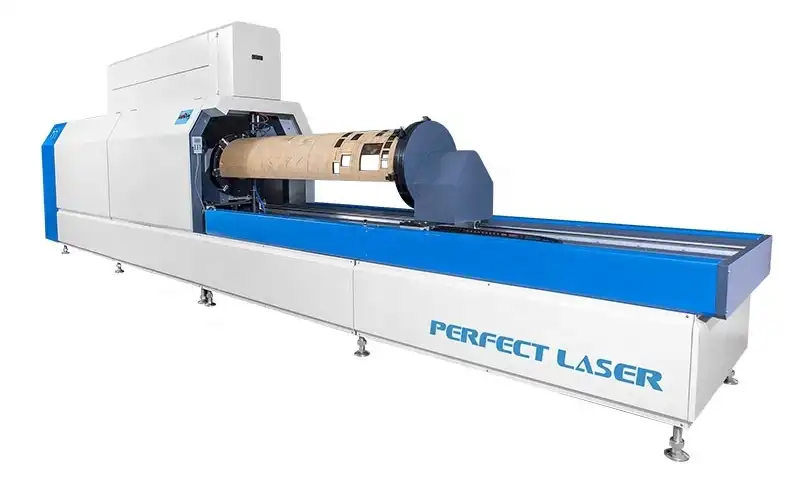
A rotary die cutting machine is the better choice when manufacturers need fast, continuous production with consistent cutting accuracy. Compared with flatbed cutting machines, rotary systems can handle large-volume jobs more efficiently, especially in packaging, printing, and label production. Perfect Laser's PEC-3000 rotary die cutting machine uses a sealed CO₂ laser and advanced NC control system to achieve stable cutting performance on round die boards from 180–540mm in diameter. Its lower maintenance cost, smooth operation, and high automation make it ideal for businesses seeking higher productivity and cleaner cutting results in long-term industrial applications.
Manual vs. Automatic Decision Factors
The optimal technology depends on the business's size and production method. Manual rotary die cutting machines are ideal for organizations that generate less than 10,000 units per day and change product forms monthly. Lower capital expenditure preserves cash flow and provides the organization additional customer service alternatives.
Automatic systems are economically feasible when more than 50,000 units are manufactured daily, design modifications occur every three months or fewer, and human expenses dominate operational costs. Along with speed, decreased scrap rates, consistent quality, and worker safety from automation systems affect throughput.
Cost variables include purchase price, installation, training, maintenance contracts, and estimated service life. Instead of manual techniques, automated rotary die cutters pay for themselves in three to five years for light labor. They pay for themselves in 12–18 months when utilized for heavy labor.
How Perfect Laser Die Board Cutting Technology Enhances Production
Addressing Die Board Manufacturing Challenges
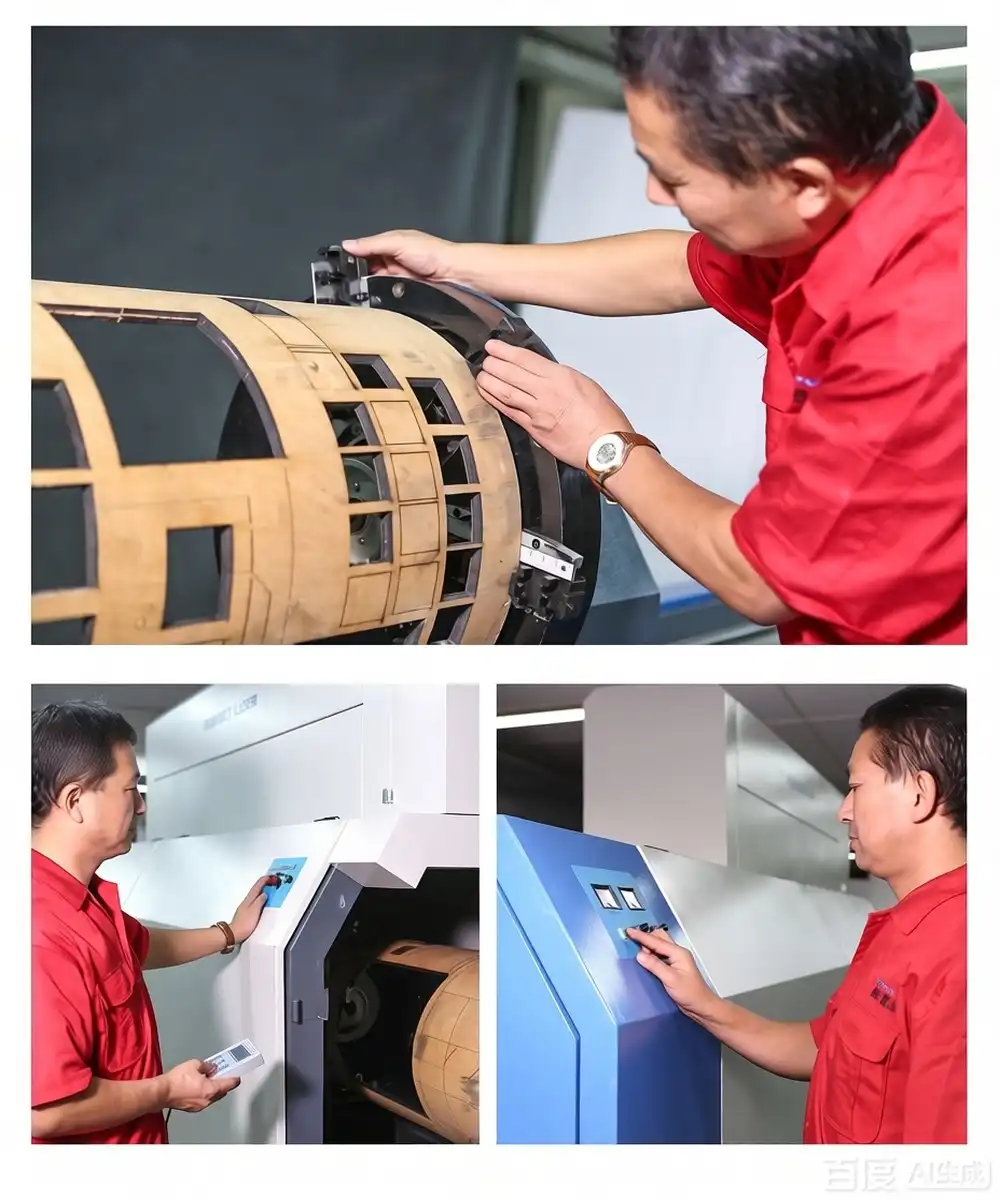
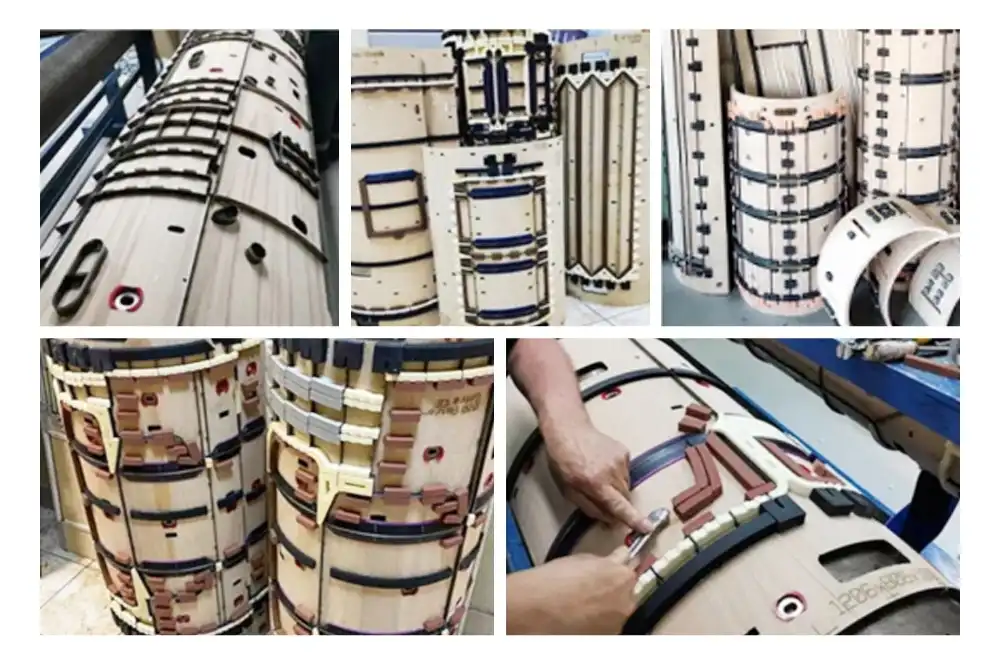
Traditional rotary die manufacture uses difficult techniques to create sharp-cutting cylinder dies. Another way aids die manufacturers by manufacturing die boards instead of cutting final items. Perfect Laser specializes in die board laser cutting instruments for rotary die production that cut hardwood die boards up to 25 mm thick.
Our die board cutting equipment can handle 15 mm to 25 mm thick materials and create kerfs from 0.45 mm to 1.42 mm consistently from top to bottom. This capability is crucial for die producers in the packaging, sign, and automotive sectors, since die quality directly influences product accuracy.
The technique eliminates hand-marking, cutting, and polishing die boards, which caused size variances and longer wait times. Laser-based die board cutting improves computer-aided designs without contacting the material, preventing movement.
Technical Specifications and Performance Advantages
Perfect Laser's die board cutting tools use 300W and 400W CO2 laser tubes for long-lasting, high-quality beams. Laser systems cut 25 mm hardwood boards in one pass, which is suitable for this purpose.
Our die board cutting procedures are superior for these technical reasons:
1. High-Precision Components: Panasonic servo motors, imported ball screws, and guide rails make the machine faster and more precise than conventional cutting techniques. Die manufacturers that deal with quality-conscious companies need the powerful numerical control system to maintain cutting performance over thousands of cycles.
2. Stability and Reliability: Precise two-dimensional work tables and a specific optics design maintain the laser beam steady and the cutting breadth even for complex patterns. Tempering heat-treated lathe beds don't change form when temperatures change or mechanical force is applied, therefore they last longer.
3. Operational Efficiency: Single-head cutting with a flying optical route simplifies optical alignment and improves dependability over multi-head configurations. The auto-following and focus technology automatically adjusts the focal point to maintain cutting quality by measuring the distance between the cutting head and the die board.
4. Economical Operation: It utilizes 10% less power than a high-power laser system yet achieves the same die board effects. Compressed air powers the equipment, eliminating the expense of gas, which is required in standard laser systems.
These technological benefits aid die producers who wish to increase productivity, cut costs, and improve product consistency. The modular design idea combines functions into compact places, making maintenance simpler and reducing service interval downtime.
Available Configurations and Working Parameters
Perfect Laser provides die board cutting equipment with working surfaces of 900x900mm, 1200x1200mm, 1200x1500mm, and 1200x1800mm for typical packaging and label die sizes. Customers may pick between 300W and 400W laser power systems depending on material thickness, job volume, and cutting speed.
The devices include modern LCD touch screen interfaces, USB connectivity, and DSP offline control to function without a computer after design transfer. This skill is important in businesses with restricted computer access or when network access is risky.
No warming up is needed, so the machine can start manufacturing items straight away. However, some laser systems need to be thermally stabilized before reaching their optimal cutting settings, which reduces production time throughout shifts with several start-ups.
Procurement Considerations for Die Cutting Equipment
Assessing Production Volume and Material Requirements
Procurement managers must determine current and future production needs before defining equipment powers. Human systems may work for operations under 5,000 units per day. For businesses processing over 20,000 units per day, automated equipment like die cutters may be necessary, despite higher initial costs.
Also crucial in design is material compatibility. Laser devices can cut 25 mm wood composites are needed for die boards. When cutting final objects, you may use plastics, cloth, or composites that absorb light differently. Knowing material supplies ensures that equipment used can fulfill current and future demands.
A machine's working area, cutting speed, and maximum material thickness must match the part shape and output plan. Small equipment slows output, whereas huge systems take up space and cost more without enhancing productivity.
Evaluating Supplier Reliability and Support Services
Quality of manufacture and supplier support determine equipment reliability. Perfect Laser has made laser and CNC equipment for over 30 years and has over 10,000 clients in the automotive, electronics, aerospace, and packaging sectors. This operational history indicates that we continuously deliver dependable tools and assistance.
In a customer-focused firm, mutually beneficial relationships with agents and end users are more vital than tool sales. Lifelong service guarantees provide technical assistance for as long as the equipment is used, and free consultation helps purchasers pick the proper installations.
Engineer overseas installation services eliminate equipment setup concerns abroad. Customer locations are visited by qualified technicians to install, calibrate, and train personnel on equipment operation. Manual assistance speeds up production and reduces the risk of a faulty repair hurting long-term performance.
Budget Management and Investment Strategies
Balance performance demands, budget restrictions, and estimated return timeframes while buying capital equipment. New equipment is the most costly option to receive the latest technology, warranties, and manufacturer support.
Used tools are cheaper, but you don't know how well they've been maintained, how long they'll last, or whether new parts are available. Warranty coverage is usually limited or nonexistent, so buyers face little risk. When you can't afford new equipment or need additional capacity for operating production lines, old tools make sense.
Perfect Laser provides lengthier laser marking machine warranties than others. Their warranties cover laser marking machines for two years and larger systems for one. Extended coverage demonstrates confidence in the manufacturing process and reduces consumer risk in the first few months, when hidden problems often appear.
OEM and customization options enable consumers pick installations that match their requirements. Instead of adding custom work spaces, movement systems, and checking tools afterward, which would cost more and be less dependable, they may be implemented during production.
Maintenance, Troubleshooting, and Safety Protocols
Scheduled Maintenance Guidelines
Maintenance prolongs equipment life and prevents breakdowns during shifts. Die board laser cutting machines must have their laser tube cooling water volumes and quality tested daily to remove adequate heat. Weekly ball screw and guide rail lubrication keeps motion smooth and accurate components from wearing out. The signs industry adapts to market demands and new technology. Adding a rotary die to cutting equipment boosts adaptability for specialized applications. You must understand new patterns and their effects on the CNC channel letter bending machine industry to position your firm to capitalize on them.
Monthly cleaning of mirrors and lenses removes dust and burn residue that reduces beam quality and cutting efficiency. The alignment is verified every three months to maintain the laser beam in the appropriate spot and ensure precise cutting over the work area. Annual comprehensive checks by qualified specialists identify wear patterns and aging parts before they fail.
The frequency and substance of laser tubes, focusing lenses, and cutting instruments determine when to replace them. Operators should record hours worked, materials processed, and unusual performance remarks to determine maintenance schedules.
Common Issues and Diagnostic Approaches
Operations difficulties may manifest in many ways and must be identified. Uneven cutting level variations frequently indicate an auto-following system or work surface issue. Checking the surface flatness and monitor function reveals the reason.
Too much edge burning or charring may indicate a sluggish cutting speed, high power settings, or poor assist gas flow. Most burning issues may be solved without replacing equipment by altering settings and ensuring gas delivery. The optical system must be adjusted by qualified personnel since beam alignment issues affect cut quality throughout the work area.
Mechanical concerns include loud sounds, shaking, and misplacement are frequently caused by old bearings, loose mounting hardware, or drive system faults. Inspections of fasteners, bearings, and belt tension may detect mechanical deterioration before it causes a catastrophic failure.
Workplace Safety Standards
Laser cutting poses safety issues that must be mitigated. Locking devices block beam output when access panels are opened, and enclosed machine designs protect workers from lasers. Before working alone, operators must learn how to operate machinery, handle emergencies, and solve fundamental issues.
Wear CO2 laser-appropriate eye protection while working near machinery during alignment or maintenance. When operating correctly, ventilation systems remove combustion products from the workplace. This prevents workers from inhaling cutting particles and volatile chemicals.
Firefighting gear like sprinklers must be accessible near laser cutting stations. Keep combustible objects away from working equipment and clean well to avoid dust buildup and ignite.
Conclusion
When it comes to high-volume manufacturing that needs precise cuts over and over again, rotary die cutting machine tools are the most productive option. This technology works well for things like packaging, labels, car parts, and medical supplies where speed of production and accuracy of measurements are important for staying competitive. Knowing the differences between rotary, flatbed, and laser cutting makes it easier to make smart purchasing choices that meet practical needs. Perfect Laser die board cutting systems are designed to meet the specific needs of die makers. They use 30 years of knowledge in the field and cutting-edge laser technology that can handle materials up to 25 mm thick. Picking the right equipment, keeping it in good shape, and following safety rules will make sure that it works reliably for a long time, supporting industrial greatness.
FAQ
1. What materials work best with rotary die cutting machines?
Paper, cardboard, plastic films, foils, gasket materials, fabrics, and thin alloys can all be cut with a rotary die. The thickness of the material is usually between 0.1 mm and 3 mm, but this depends on the machine and the shape of the die. Rigid materials that are more than 5 mm thick usually need flatbed devices that have more cutting force.
2. How does laser die board cutting compare cost-wise to traditional sawing methods?
Laser systems cost more to buy up front than standard cutting systems, but they are cheaper to run in the long run. Cost parity is usually reached within 18 to 24 months for businesses that make 50 or more dies a month thanks to fewer materials, less labor, better accuracy, and lower scrap rates. Design freedom that doesn't require changing the tools adds value in production settings that are always changing.
3. What lead times should buyers expect when procuring customized die cutting equipment?
Standard setup machines usually ship between 4 and 6 weeks after the order is confirmed. Lead times can go up to 8 to 12 weeks for customized systems that need special work areas, material handling systems, or built-in testing features. This depends on how complicated the changes are. Shipping items internationally and getting them through customs can take an extra two to four weeks.
Partner with Perfect Laser for Advanced Die Board Cutting Solutions
Perfect Laser is ready to help you make die boards with technology that has been used successfully for twenty years and is backed by excellent engineering. Our die board laser cutting tools give your business the accuracy, dependability, and speed it needs, whether you're making dies for signs, packaging, or other specialized industrial uses. We know how hard it is for makers and sellers of a rotary die cutting machine to get a competitive edge through better tooling production.
Email our technical team at [email protected] to talk about your unique needs and get advice on how to set up your tools. We offer full support, including free consultations, engineer-assisted installation, and service promises that last a lifetime, so you can be sure that your investment will continue to pay off. Over 10,000 makers around the world are our customers, which shows how much trust industrial businesses have in Perfect Laser products. Today, ask for full specs, application samples, and a ROI analysis that is made to fit your production setting.
References
1. Modern Die Cutting Technologies: Comparative Analysis of Rotary, Flatbed, and Laser Systems. Journal of Manufacturing Processes, 2021.
2. Precision Die Manufacturing: Materials, Methods, and Quality Control Standards. International Association of Diecutting and Diemaking, 2020.
3. Laser Processing of Wood Composites: Parameters, Performance, and Applications. Wood Science and Technology Journal, 2019.
4. Packaging Industry Equipment Selection Guide: Die Cutting Systems for High-Volume Production. Packaging Technology Association, 2022.
5. Cost Analysis of Manufacturing Technologies: Traditional vs. Laser-Based Production Methods. Industrial Engineering Research Quarterly, 2021.
6. Safety Standards for Industrial Laser Equipment: Operational Guidelines and Regulatory Compliance. Occupational Safety and Health Technical Manual, 2020.

share your inquiry, get the quotation accordingly.
第一张审核员说包含其他公司不能用_1755049724891.webp)
Perfect Laser – Global Manufacturer of Reliable Laser Solutions


