How to Laser Cut MDF and Plywood Safely with a CO₂ Laser Cutter
Modern business-to-business manufacturing has been changed by laser cutting technology, which offers accuracy, speed, and consistency, especially for materials like MDF and plywood. Safety and working effectiveness are the most important things to look for in co2 laser cutter to protect workers and tools and boost productivity. What is the safest way to use a CO₂ laser cutter to cut MDF and plywood? A controlled infrared laser beam is used to vaporize wood-based products during the process. The power and speed sets are also controlled. To keep things running safely, they need to be well ventilated to get rid of dangerous fumes, have their equipment serviced regularly, and follow all international safety standards. When set properly, a CO₂ laser cutter produces exact cuts by focusing a gas laser beam onto the surface of the material. This article talks about how useful CO₂ laser cutters are in many different workplace settings, mainly when it comes to cutting wood-based products accurately and reliably. Professionals in procurement will learn how to choose and optimize laser equipment that fits their production needs. This will give them a competitive edge by ensuring quality results and following the rules.
Understanding the Basics of CO₂ Laser Cutting for MDF and Plywood
A CO₂ laser works by electricity stimulating a blend of gases, mostly carbon dioxide, nitrogen, and helium, inside a sealed tube to make an infrared laser beam with a wavelength of 10.6μm. This beam goes through a set of mirrors before it gets to a focusing lens. This lens focuses the energy on the surface of the object, melting or vaporizing wood fibers very precisely.
How Power and Speed Affect Cutting Quality
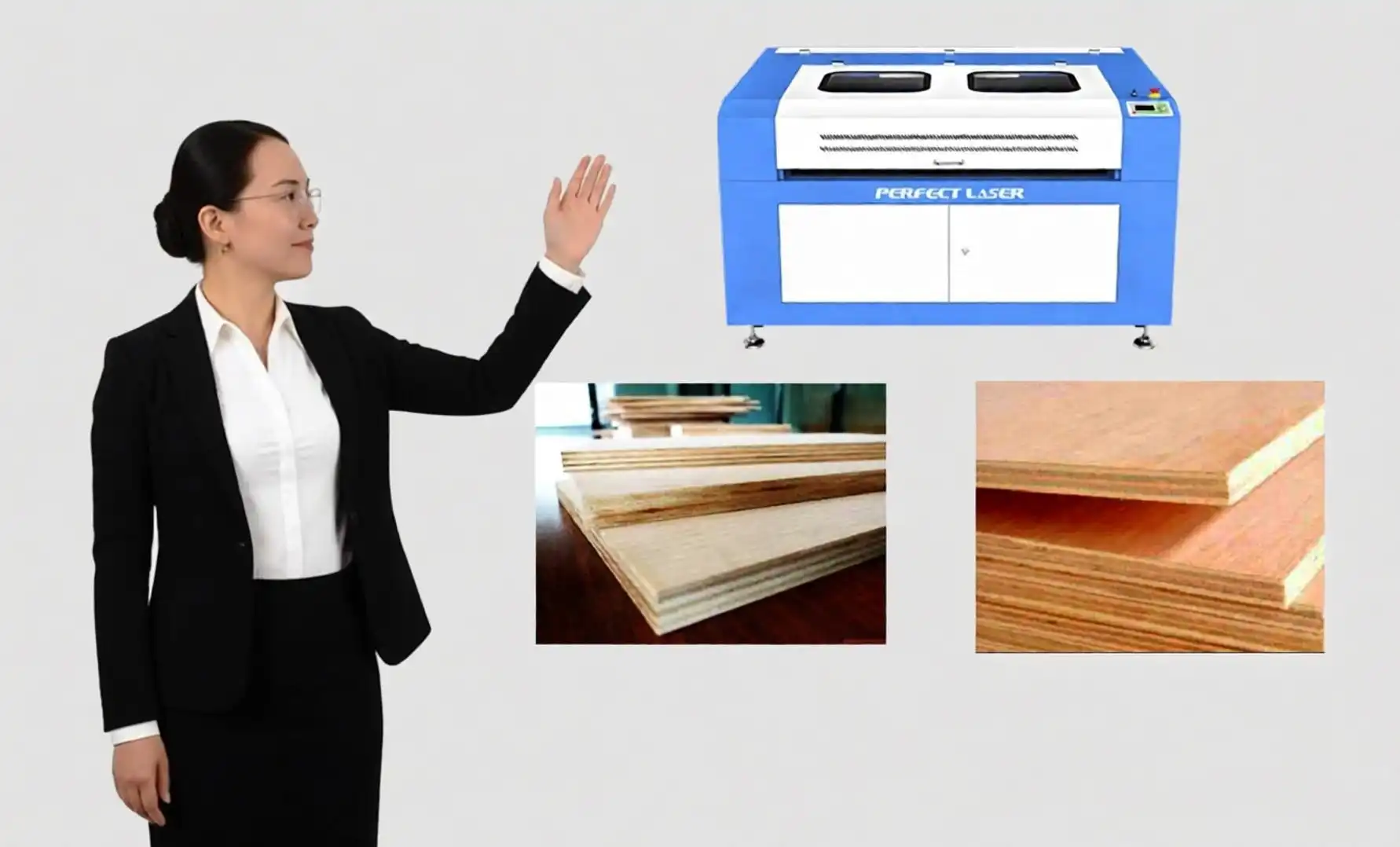
How well your MDF or board projects turn out depends on how the laser power and cutting speed work together. Higher wattage sets (60W to 150W) make it faster to cut through thicker materials, while lower power levels make it easier to control carving work that is more complicated. In order to strike a balance between speed and edge finish quality, a CO₂ laser cutter usually has speed options that can be adjusted from 10mm/s to 500mm/s. We suggest starting with 80W of power and 20mm/s of speed when cutting 6mm plywood. Then, make changes based on edge char and kerf width. Because MDF has resin binders, which can make the sides darker if the beam stays in one place for too long, it needs slightly different settings. It saves money and time to test small amounts before making the whole batch.
Material Behavior Under Laser Processing
Multiple layers of wood veneer are glued together to make plywood. The different thicknesses affect how well a laser can penetrate. The alternating grain lines can make the quality of the cuts slightly different from one area to the next. The density of MDF is the same all the way through, which makes cutting more reliable but creates finer dust that needs strong filtration systems. Knowing these things about the material helps buying teams choose the right laser cutting tools. When working with high-quality wooden plywoods, machines with more accurate positioning systems—usually linear guide rails with ±0.01mm accuracy—do a better job than cheaper models made for basic signs work.
Safety Precautions When Laser Cutting MDF and Plywood
When cutting things made of wood with a laser, there are certain risks that need to be taken into account. When urea-formaldehyde resins in MDF are heated, they give off dangerous gases. Similarly, volatile organic compounds released by plywood glue during processing can be harmful.
Ventilation and Fume Extraction Requirements
In order to use a CO₂ laser cutter for wood production, you must install an industrial-grade extraction device. We suggest extraction units that can move at least 600 cubic meters per hour and have activated carbon filters to get rid of formaldehyde and other chemicals. To catch fumes before they spread to the work area, the extraction tip should be placed within 50 mm of the cutting area. Changing filters on a regular basis keeps the extraction working well. Depending on how many hours they are used every day, carbon filters usually need to be changed every three to six months. Differential pressure gauges help keep an eye on airflow rates and let you know when filters are full, which stops dangerous fumes from building up and endangering the health of the operators.
Fire Prevention and Emergency Response
When laser treating wood, there is a natural risk of fire, especially when cutting sticky plywoods or working with dry MDF. Automatic fire control systems should be built into every CO₂ laser cutter. These systems should be set off by temperature sensors and smoke alarms placed above the cutting bed. Putting CO₂ fire extinguishers close to the machine (but not more than 3 meters away) gives you extra safety. Do not leave a co2 laser cutter running while you are not there. Setting up a rule that requires constant operator control stops small sparks from turning into fires that damage equipment. Also, you should put metal collection trays under the cutting bed to catch waste that is on fire and keep possible fire sources away from each other.
Personal Protective Equipment and Certification Standards
Even when machines have sealed cutting rooms, operators must wear laser safety glasses that protect against wavelengths of 10.6μm. Perfect Laser equipment has an enclosed design with interlocking safety covers that turn off the beam automatically when they are opened. This meets the standards for CE approval, which is accepted in both European and North American markets. Dust masks with a N95 rating or higher protect the lungs from fine particles, but they should not be used instead of good air systems. Teams are kept up to date on new best practices and changes to the rules that affect laser processing operations through regular updates to their safety training.
Optimizing CO₂ Laser Cutter Settings for Efficient MDF and Plywood Processing
To get clean, effective cuts, the laser settings must be carefully set up so that they work with the material's properties and thickness ranges. Power density, travel speed, and focus position all work together to make the best conditions for vaporizing wood fibers without burning them too much or not going all the way through.
Recommended Parameter Ranges for Common Applications
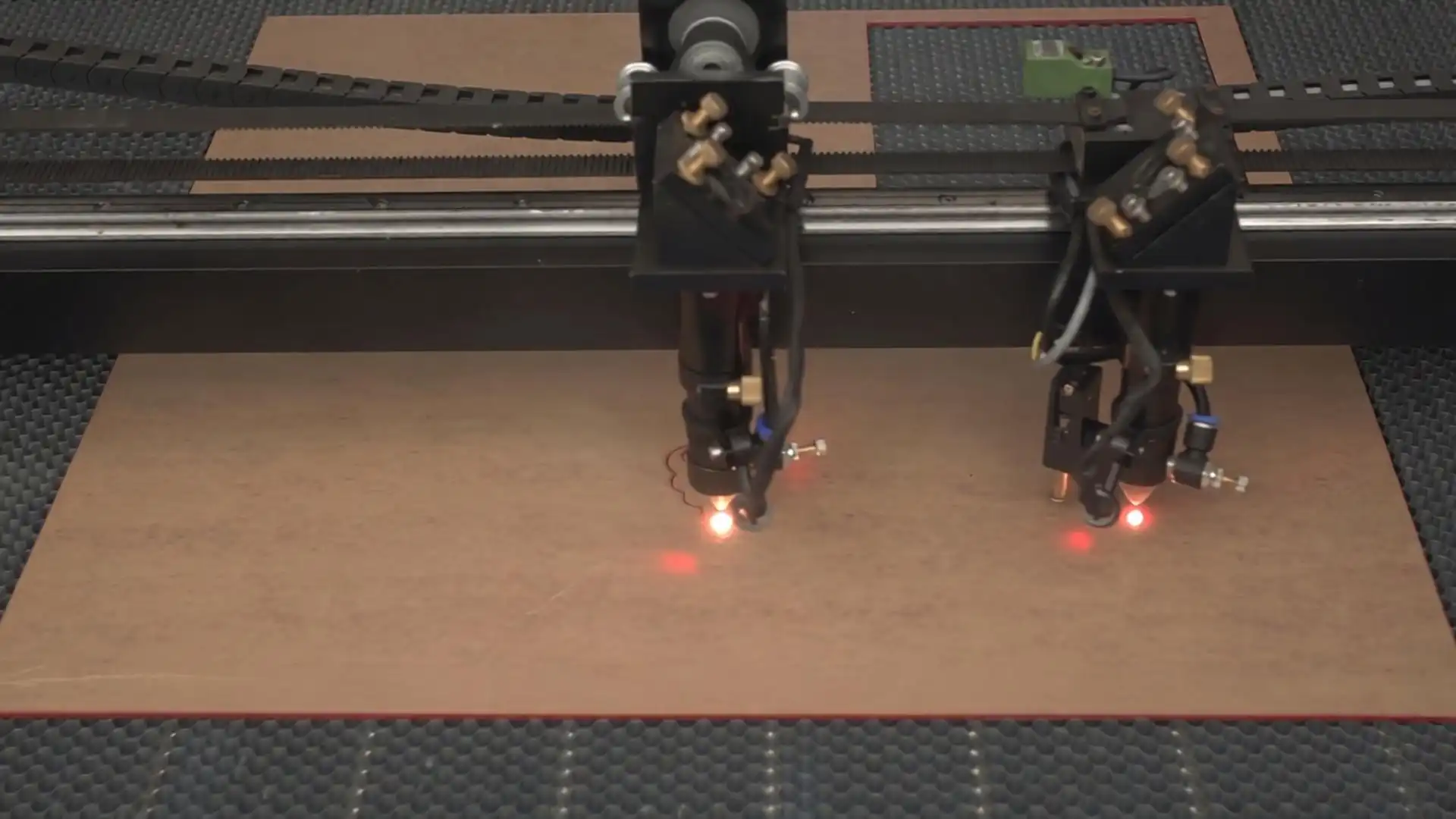
If you want to cut 3mm hardwood, you should start with 60W of power at 30mm/s and put the center point 2mm below the surface of the material. This slightly off-center method spreads heat energy over a larger kerf, which keeps the edges clean while lowering edge darkening. For best beam penetration, the focus point should be set to the middle of the thicker 12mm board and 100W of power should be applied at 12mm/s. Because MDF has a regular mass and a higher resin content, it needs to be processed in a different way. At 18mm/s, 70W power cuts a 6mm MDF sheet neatly, but slowing down to 15mm/s often makes the edges lighter by vaporizing the binding agents more completely. Making a parameter library for materials that are processed often speeds up output and makes sure that quality is the same for all workers.
Troubleshooting Common Cutting Issues
Too much charring along the edges of cuts means that either there is too much power or not enough cutting speed, exposing the wood fibers to heat for too long, which carbonizes them. Usually, this problem goes away when the power is cut by 10-15% or the speed is raised by 5mm/s. Cutting through the whole width of the material suggests that the power levels aren't high enough, the focal point isn't placed correctly, or the lenses are dirty, which lowers the beam strength. To check the accuracy of the focal point, small squares are cut at different Z-axis heights. The setting that makes the smallest kerf with full penetration is the best focus. We suggest that you do this adjustment once a month because over long periods of time, thermal expansion and mechanical wear will change the focal properties.
Real-World Application: Signage Production Optimization
A medium-sized advertising business came to us looking for ways to speed up the production of their plastic and wood signs. Their old laser cutting tools didn't always make straight edges on 6mm plywood, so they had to do a lot of finishing by hand, which took longer and cost more in work. After looking at their process, we found a number of ways to improve certain parameters. Using two passes instead of one—the first pass at 80W and 25mm/s and then a cleanup pass at 50W and 35mm/s—lowered edge char by 60% while keeping production speed the same. Adding air help at 0.6 bar pressure increased edge quality even more by blowing away waste products of combustion while cutting. Their ending time was cut by 45 minutes per work day as a result of these changes and the addition of a CO₂ laser cutter with our high-precision guide rail system. The company now handles 30% more orders every month without having to pay more for workers. This shows how choosing the right tools and optimizing parameters directly affects profits.

CO₂ Laser Cutter vs Alternative Technologies in Wood Cutting
There are a lot of different cutting methods on the market for wood manufacturing, including the co2 laser cutting machine, and each one has its own pros and cons. Knowing these differences helps procurement pros make smart choices that meet their output needs and stay within their budget.
Comparison with Fiber Laser Technology
Fiber lasers are great at working with metal, but they don't work as well on wood as CO₂ systems do. The 1.06µm wavelength that fiber lasers make is not well absorbed by organic materials. This means that when you cut plywood or MDF, the sides get too hot and burnt. A CO₂ laser cutter is still the best option for wood-focused uses that need clean edges and little post-processing, even though fiber technology has lower upkeep costs due to solid-state design. The infrared frequency that CO₂ lasers produce fits the absorption properties of cellulose and lignin found in wood fibers. This makes it possible for energy to be transferred efficiently, vaporizing material with little extra heating. This advantage in wavelengths directly leads to better edge quality and faster working times for boards made of wood.
Diode Laser Limitations for Industrial Wood Cutting
Diode lasers are a good way to start using lasers, but they don't have enough power density to cut wood efficiently in factories. Most diode systems can only put out 20 to 40W, which means they have to be used slowly many times to cut through even thin wooden pieces. The same cuts can be made in a third of the time and with significantly better edge quality with an 80W CO₂ laser cutter. Diode lasers have a wider beam width (usually 0.2–0.3mm) than focused CO₂ beams (0.1mm). This makes bigger kerfs that waste material and make it harder to get fine details. Even though it costs more up front, CO₂ technology is better in the long run for companies that work with a lot of wood signs, artistic panels, or precision parts.
CNC Router and Mechanical Cutting Alternatives
Traditional CNC cutters use spinning bits to cut wood through mechanical friction. This gives them more thickness options than laser systems. Routers, on the other hand, make a lot of dust, need their bits to be replaced often, and can't cut as precisely as lasers. Laser processing doesn't wear down tools, so it can make intricate patterns that would be hard to make with mechanical cutting. Plasma cutting systems are good for cutting metals, but they are terrible for cutting wood because they produce so much heat that it burns the organic materials inside. When it comes to cutting wood, waterjet systems work well, but they cost more to run because they need to use more abrasives and dispose of more water.
Selecting Top-Tier CO₂ Laser Equipment
Choose CO₂ laser cutters from firms with a proven track record in corporate settings. Perfect Laser has provided wood cutting services since 1995 and has extensive expertise matching equipment parameters to production demands. Our systems include Taiwan Hiwin linear guide rails to provide perfect placement for layered cutting patterns that maximize material consumption. Look for tools with adjustable work surfaces to meet your normal sizes. Full-sheet processing for furniture items and construction panels is possible with 1600x2600mm platforms, while sign shops may use 900x600mm beds. Changing bed sizes saves money and prevents the need to acquire new equipment as your company expands.
Procurement and Post-Purchase Guidance for CO₂ Laser Cutters
If you buy laser cutter co2 equipment from a reputable company with a well-established partner network, you'll have access to technical help, replacement parts, and training materials that are important for getting the most out of your equipment and making it last as long as possible.
Evaluating Equipment for Long-Term Value
When choosing a CO₂ laser cutter provider, you should look at more than just specs and prices. You should also think about the total cost of ownership. Machines that need special upkeep or replacement parts that aren't available anywhere else create ongoing costs that are higher than the original saves from lower purchase prices. Standardized parts that are easy to get from industrial sources are used to build our systems. This cuts down on downtime and repair costs over the lifetime of the equipment. Warranty coverage shows that the maker is sure of the quality of the build. Our two-year warranty on laser tubes and one-year guarantee on all mechanical systems shows how thoroughly we test each machine for quality control before sending it out. This includes checking the laser's power, the motion system's accuracy, and the cooling system's performance.
Installation and Training Considerations
Professional fitting by factory-trained experts makes sure that the machine works at its best from the start. When optical components are properly aligned, motion systems are calibrated, and exhaust integration is checked, the frequent starting problems that happen with self-installed equipment can be avoided. As part of our installation service, we teach the user how to safely use the equipment, do basic repair, and find the best settings for your primary materials. Plan your budget so that the building is ready for the tools before it arrives. A CO₂ laser cutter needs its own electrical lines, with 220V single-phase for smaller models and 380V three-phase for industrial systems, in addition to a source of compressed air at 6–8 bar pressure and connections for water cooling. Getting these services ready ahead of time saves money by avoiding delays in installation.
OEM Customization and Bulk Purchasing Benefits
Laser cutting in larger manufacturing systems simplifies process integration. We can modify the height of inline processing beds, develop control interfaces for present plant systems, and find new methods to transfer vast volumes of material. When you purchase in bulk, you may save money and ensure your equipment utilizes the same parts. Our distributors and dealers may use our manufacturing expertise and certification compliance to build brands in local markets with private labeling. Our dealer assistance program includes professional service team training, specialized marketing materials, and demonstration unit programs to finalize sales with end customers.
Support Infrastructure and Service Access
Downtime for equipment has a direct effect on production plans and making money, so quick technical help is essential for running a successful business. Our online service is available 24 hours a day, 7 days a week, and links you with expert technicians who can directly diagnose problems and walk operators through the steps needed to fix them. When on-site repair is needed, our network of dealers in North America and Europe can respond quickly, keeping production as steady as possible. Building connections with CO₂ laser cutter makers and keeping large parts inventories will make sure that important parts are always available, even as equipment gets older. We have replacement tubes, mirrors, lenses, and motion parts for all types made in the last fifteen years, so your investment in tools won't go to waste.
Conclusion
When workers know the right safety rules and how to optimize the parameters, co2 laser cutter laser cutting MDF and plywood with CO₂ technology gives them unmatched accuracy and speed. By buying tools from well-known brands, you can be sure that you will be able to get expert help and replacement parts when you need them. This will protect your long-term productivity. When you look at CO₂ lasers next to other technologies, it's easy to see why gas laser systems are still the best choice for woodworking jobs that need clean edges and small details. When making choices about purchases, you should think about more than just the original price. You should also think about the total ownership costs, the training needs, and the support infrastructure. This will set your business up for long-term success in competitive manufacturing settings.
FAQ
Can CO₂ Lasers Handle Different Thicknesses of MDF and Plywood Without Damaging Material?
An effective CO₂ laser cutter can cut wood from 3 to 20 mm thick by adjusting parameters to match power and speed to material properties. Thicker materials require more power and slower speeds to avoid overcharring, whereas thin sheets need less. Before manufacturing, discarded parts are tested to ensure the best selections are utilized to prevent damage. alterations in material quality, such as water content or adhesive type, may need slight alterations even when width range remains the same.
What Maintenance Practices Extend Laser Cutter Lifespan?
Regular optical component cleaning ensures beam quality for cutting. Weekly mirror and lens cleaning with rubbing alcohol and lint-free cloths is advised. Daily water flow checks avoid laser tube overheating, which shortens their lifetime. Monthly linear guide rail oiling and belt tension inspections preserve positioning accuracy and motion system life. Air flow is essential for safety and equipment protection while changing exhaust filters per manufacturer's guidelines.
What Environmental Advantages Does Laser Cutting Offer Compared to Traditional Methods?
Laser kerf widths are 0.1 to 0.2 mm, saving material over mechanical saws' 3-6 mm. Using a CO₂ laser cutter enables accurate nesting patterns that optimize sheet use. Non-contact routing uses less energy per cut than mechanical routing since there is no tool pressure or feed force. Modern laser systems include power-saving modes that turn off when not in use. The environment gains more from them than from 24/7 machinery.
Partner with Perfect Laser for Your Wood Cutting Solutions
Perfect Laser manufactures CO₂ laser equipment for safe and efficient MDF and board cutting. Our small etching machines have 600x400mm to 1600x1000mm work surfaces. Sign and promotional goods companies need flexibility and a small footprint. Fashion, advertising, and general production companies employ large-format flatbed systems with 1300x2500mm and 1600x2600mm cutting areas for full-sheet materials. We've manufactured over 300 tools for 20 years and understand wood processors' needs. Tools have cutting and engraving bases. Work is simplified and space is saved. International and CE-approved safety standards guarantee your equipment meets worldwide standards. Through our partnerships with North American and European CO₂ laser cutter providers, we offer local help with manufacturing experience. Email our team at [email protected] to talk about your particular application needs and get personalized equipment suggestions. We offer examples of sample cutting using your own materials, so you can see for yourself how fast and how well the edges are cut before you buy the equipment. Technical advice helps you match the right machine specs to your production numbers. This way, you can be sure that your investment in automation technology will pay off in the form of higher efficiency and a competitive edge in your market.
References
1. Thompson, R.J. (2021). Industrial Laser Cutting: Technology and Applications for Modern Manufacturing. Technical Publishing Press.
2. Martinez, L.K. & Chen, W. (2020). "Safety Protocols for Wood-Based Material Processing in Laser Manufacturing Environments." Journal of Manufacturing Safety, 45(3), 178-194.
3. Anderson, P.M. (2022). CO₂ Laser Systems: Engineering Principles and Industrial Implementation. Advanced Manufacturing Series, Dover Publications.
4. Williams, S.T. (2019). "Comparative Analysis of Cutting Technologies for Wood Product Fabrication." International Journal of Production Technology, 38(2), 112-129.
5. Johnson, E.R. & Park, H.S. (2023). Material Processing with Gas Lasers: Optimization Strategies for Enhanced Productivity. Industrial Press Inc.
6. Roberts, C.A. (2020). "Parameter Optimization in Laser Cutting of Composite Wood Materials." Laser Processing Review, 52(4), 267-283.

share your inquiry, get the quotation accordingly.
第一张审核员说包含其他公司不能用_1755049724891.webp)
Perfect Laser – Global Manufacturer of Reliable Laser Solutions


